If you run a portable power station in a van, truck, or RV, you already know the math that ruins trips. A cigarette-lighter socket trickles in power so slowly that a half-empty station is still half-empty after a long drive, and that is exactly the gap an alternator charger for portable power station setups is meant to close. This guide looks at the EcoFlow 800W Alternator Charger as the headline option, pits it against the BLUETTI Charger 1 and a very different Renogy DC-DC unit, and helps you decide if fast charging while driving is worth the wiring, the money, and the hassle for how you actually travel. Plenty of people buy one of these backwards. They see the big watt number first. They think about compatibility, alternator headroom, and where the box will physically live only after the box is already on the doorstep.
Quick Answer
The EcoFlow 800W Alternator Charger is worth it if you drive most days and your power already lives in an EcoFlow station, because it can refill roughly 1kWh in about 1.3 hours of driving instead of crawling along at lighter-socket speed. Skip it if you own another brand — the BLUETTI Charger 1 fits mixed-brand setups far better — or if you mostly stay parked, where solar will do more for you than any charger bolted to your starter battery.
Top 3 Ways to Charge While You Drive
One charger built for EcoFlow stations, one cross-brand unit, and one classic house-battery charger — the right pick depends on where your energy lives.
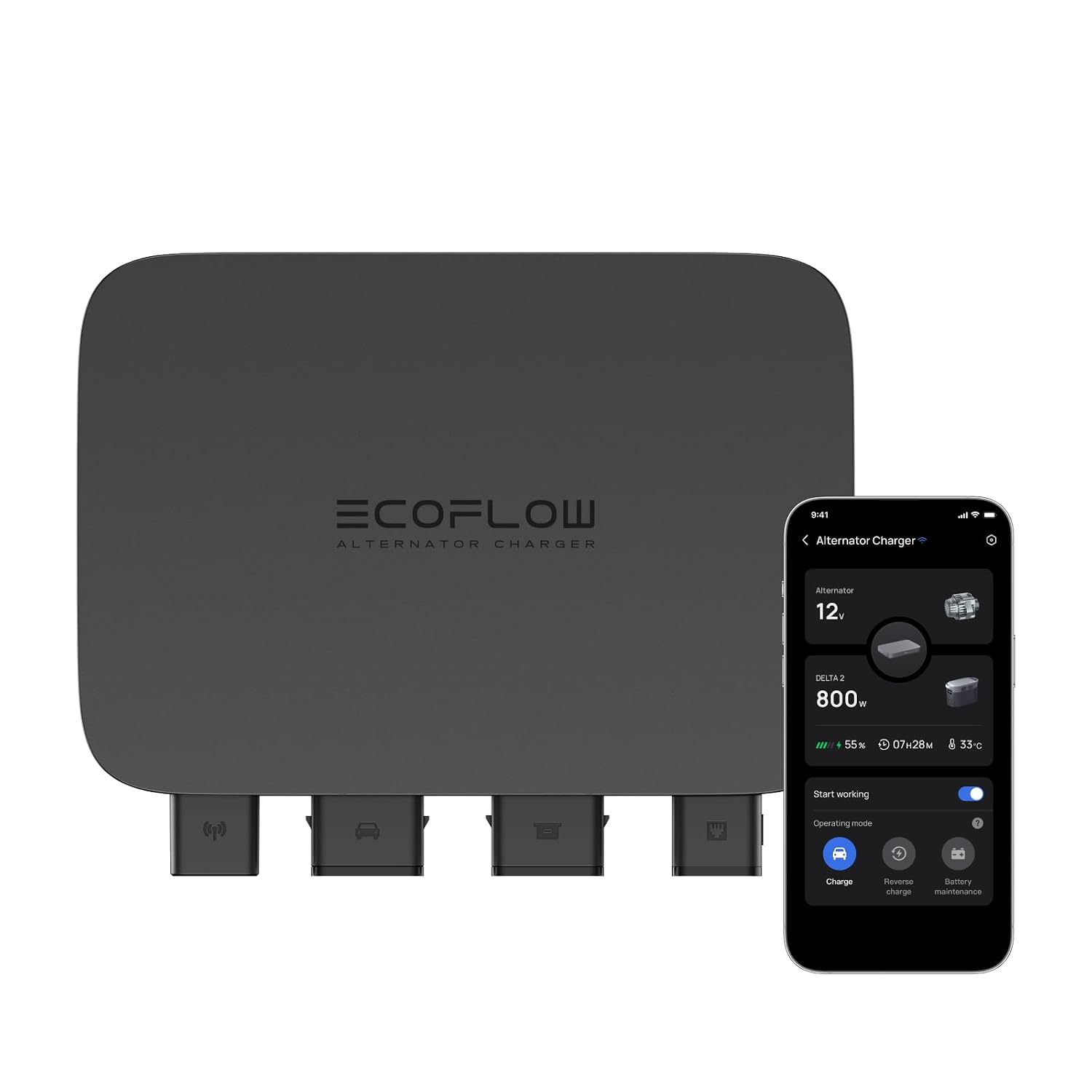
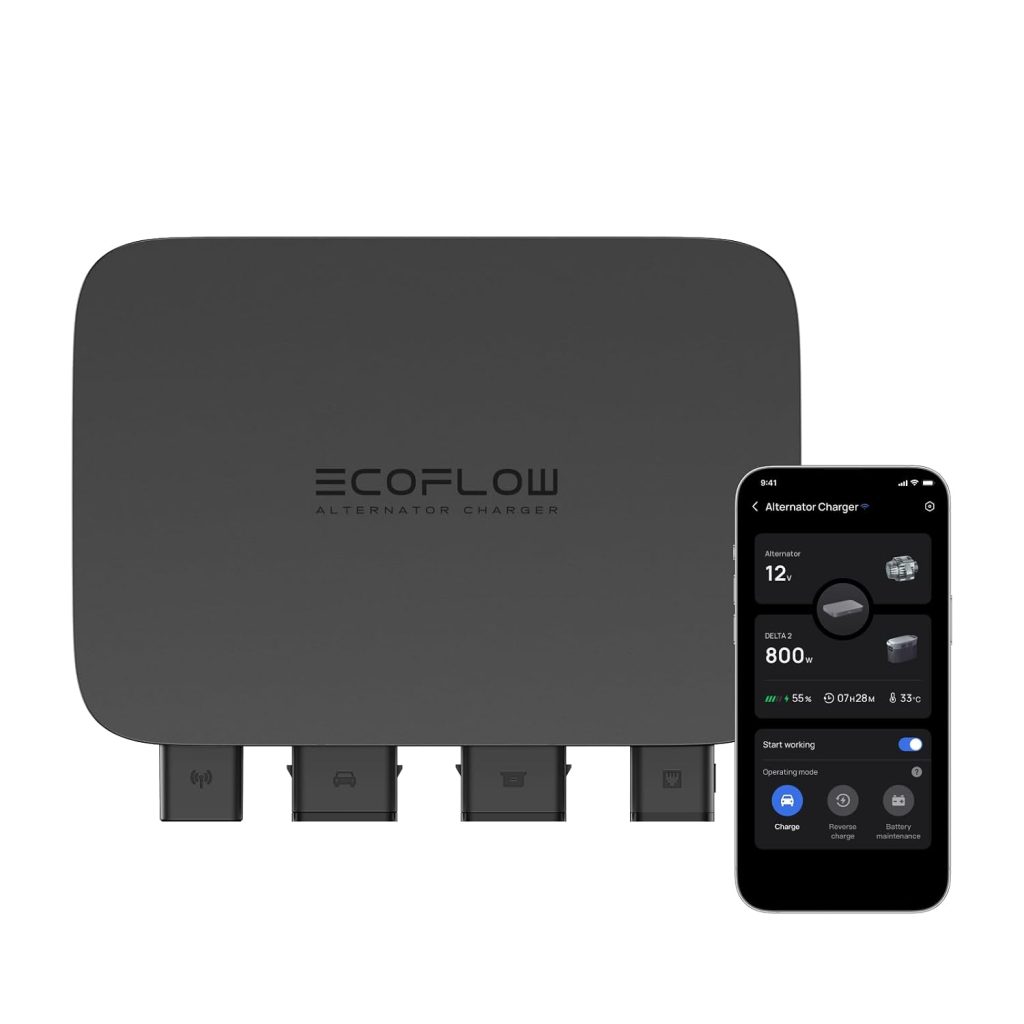
EcoFlow 800W Alternator Charger
Fastest drive-time charging here, and it doubles as a battery maintainer with reverse charging — but it only feeds EcoFlow stations through its own cable
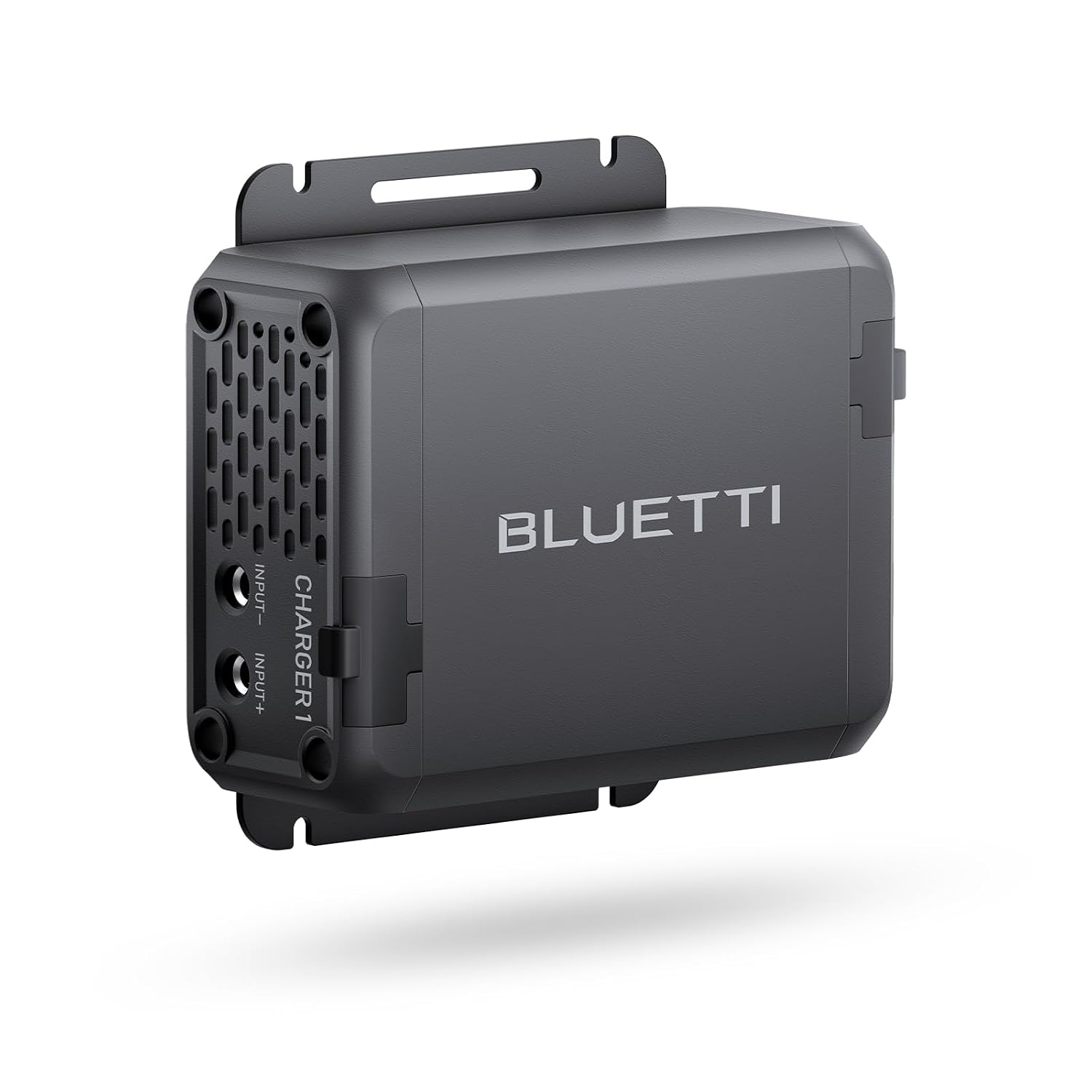
BLUETTI Charger 1 560W Alternator Charger
Lower peak output, yet it works with most power station brands and is the smallest unit here — the mixed-brand pick
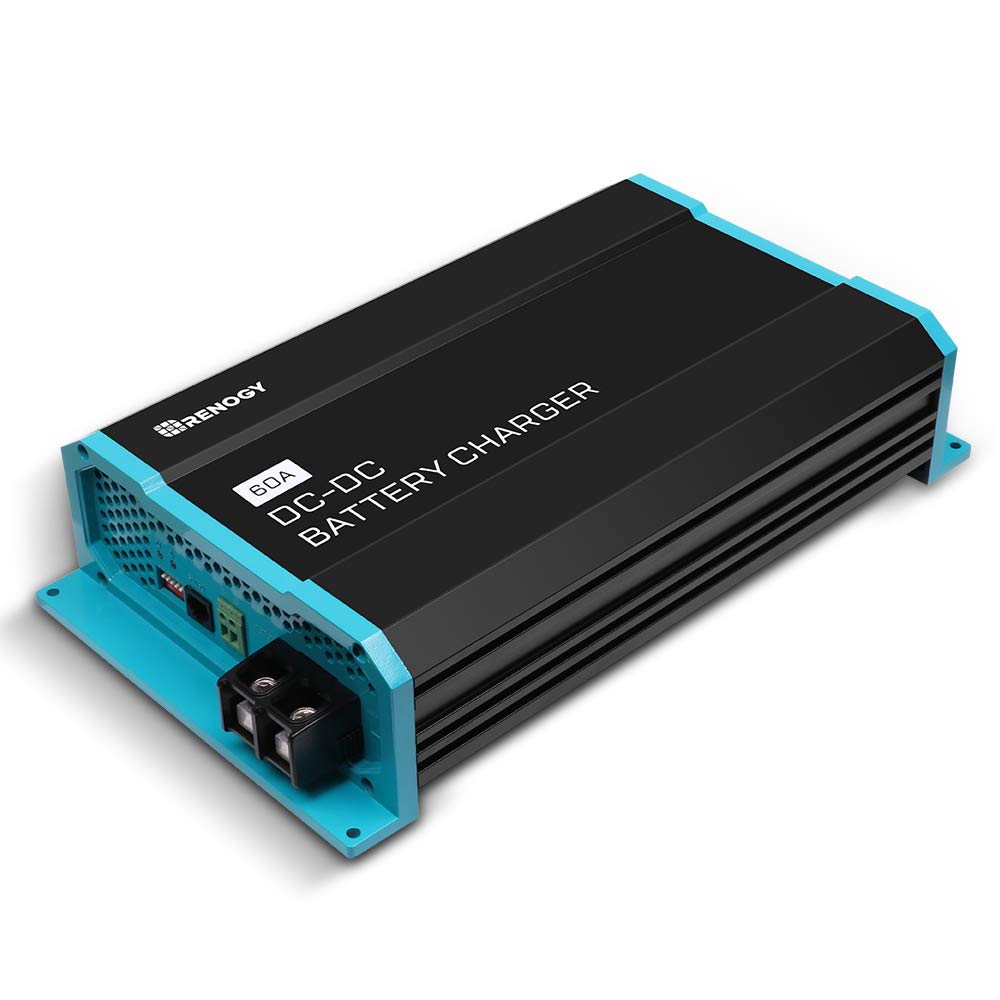
Renogy 12V 60A DC to DC Battery Charger
Charges a fixed 12V house battery bank with multi-stage profiles — ideal for built RV systems, and no use at all for a portable station
Prices and availability may vary — tap any product to check the current listing.
What to Look For in an Alternator Charger
Speed is the sales pitch. It should not be your only filter. A DC-DC charger sits between two expensive things — your vehicle electrical system on one side, your station on the other — and a bad match in either direction wastes money at minimum, or creates headaches you will be diagnosing in a parking lot at worst.
Output on paper versus output in your vehicle is the first trap. The EcoFlow unit is rated in the 800W class, several times what a typical 12V accessory socket can deliver — that socket is roughly a 100W-class source once its fuse and thin factory wiring are accounted for. But a rating is a ceiling, not a promise. Actual draw depends on spare alternator capacity after the vehicle runs itself, cable length and gauge, and heat on a summer afternoon. A small car alternator working hard with lights and air conditioning has less to spare than a truck alternator with headroom to burn. Short answer? Your mileage will vary, literally.
Compatibility deserves more attention than most listings give it. This is where the EcoFlow and the BLUETTI split hard. The EcoFlow charger talks to EcoFlow stations through its proprietary XT150 output cable. If your station is not EcoFlow, that cable has nowhere useful to go. No adapter hunt fixes a closed ecosystem — and honestly, that lock-in is the central trade-off of the whole product. The BLUETTI Charger 1 takes the opposite approach: its maker claims compatibility with roughly 95% of portable power stations, plus its own range. That makes it a safer bet if your garage holds two brands, or you suspect you will switch brands next upgrade. Lock-in only hurts later. That is still worth caring about now.
Installation difficulty separates curious shoppers from committed ones. None of these vehicle-tied chargers are plug-and-play the way a folding solar blanket is. The EcoFlow install means a heavy-gauge cable run from the starter battery back to wherever the charger and station ride, an inline fuse close to the battery, solid grounding, and a mounted unit that will not slide around or cook itself in a closed cabinet. The BLUETTI is smaller and lighter, which gives more mounting options, though the cable run is similar work. If drilling, crimping lugs, and routing cable through a firewall grommet sounds miserable, budget for a shop — or rethink the purchase.
Starter-battery protection matters more than the spec sheet suggests. A good alternator charger watches starter battery voltage and backs off before it leaves you unable to start the engine. Look for adjustable cutoff behavior and, in the EcoFlow’s case, a maintainer mode that can trickle attention back the other way when the vehicle sits. That maintainer function, plus reverse-charge support that can put energy back into a low vehicle battery from the station, is why EcoFlow markets this box as a 3-in-1 device rather than a plain charger. Useful for vehicles that sit for weeks. Not a substitute for a proper jump pack in a winter emergency, whatever the marketing implies.
Voltage flexibility and app control are quieter factors. The BLUETTI lets you adjust output voltage through its app, which helps it play nicely with stations expecting different input ranges. The EcoFlow approach is simpler because it only has to satisfy one ecosystem — fewer settings, fewer surprises, narrower usefulness. Simpler is not dumber here. Simpler is just narrower.
Heat and placement close out the list. A charger pulling hundreds of watts gets warm and needs airflow. Tossing it under blankets in a sealed bed platform invites throttled output or an early shutdown. Think about where the unit lives, where the station lives, and whether the cable between them reaches without strain — before you order, not after.
How to Match the Charger to Your Situation
Specs tell you what a box can do. Your driving pattern tells you whether it will do it often enough to matter.
The daily-driving van lifer
You move most days. Groceries, work, a new camp every night or two — van life in its restless form. Your station runs a fridge, lights, phones, maybe a laptop, and it dips daily. For this pattern, the EcoFlow charger makes its strongest case. One to two hours of ordinary driving can undo a day of moderate use, which changes power from rationing to routine. You stop planning routes around sunny parking spots. You stop idling guiltily just to charge, which wastes fuel and helps nobody. If your station is EcoFlow, this is the persona the product was built for.
The weekend overlander with mixed gear
Your trips are shorter and punchier. Out Friday, back Sunday, long dirt-road stretches in between, and a portable power station that might be any brand, because you bought what was on sale two years ago and it still works fine. Overlanding like this rewards flexibility over peak numbers. The BLUETTI Charger 1, rated in the 560W class, gives up some speed but works across brands and adjusts its output to suit different stations. A slightly slower charge you can actually use beats a faster charge your station cannot accept. A smaller unit is also less painful to move if you swap rigs.
The parked camper or RV owner with a house battery
Your pattern is the opposite of the van lifer’s. You drive six hours, then sit for five days. Or your energy does not live in a portable station at all — it lives in a fixed bank of solar batteries under a dinette, wired into lights and a water pump. An alternator charger helps on travel days and does almost nothing the rest of the week. Solar does the heavy lifting here, full stop. And if your system is a built-in 12V bank, the Renogy 12V 60A DC to DC Battery Charger is the tool shaped like your problem — it feeds a house battery with multi-stage charging while you drive, and never pretends to talk to a portable station. Different rig. Different answer.
Three Charging Routes, Side by Side
People lump these products together because they all connect near an alternator. They should not. The table below separates the two station chargers from the house-battery charger, because buying the third one to solve the first problem is an expensive misunderstanding.
| Type/Tier | Best For | Price Tier | Key Feature | Watch-Out |
|---|---|---|---|---|
| EcoFlow 800W Alternator Charger | EcoFlow owners who drive daily | Premium | 800W-class charging, maintainer and reverse-charge functions | EcoFlow stations only via XT150 cable; involved install |
| BLUETTI Charger 1 (560W) | Mixed-brand station owners | Mid-to-premium | Broad cross-brand compatibility, app-adjustable output voltage | Lower peak output than the EcoFlow; still a wired install |
| Renogy 12V 60A DC to DC Battery Charger | RV and boat builds with a fixed 12V house bank | Budget-to-mid per system | Multi-stage charging for AGM, gel, flooded, and lithium banks | Does not charge a portable power station at all |
The EcoFlow row is the speed play: if your station matches and your driving is frequent, its higher rated output shortens charge stops more than anything else here. The BLUETTI row is the flexibility play — slower on paper, usable with far more stations, and easier to justify if your gear is mixed or likely to change. The Renogy row is the systems play: cheapest route per system if a house battery already exists in your build, because it serves that bank directly, but useless — truly, completely useless — if all your stored energy sits inside a portable station.
Real Trips, Real Math
Abstract watt numbers get clearer once you attach them to actual weeks.
A work week on the road
Picture a remote worker looping between towns, driving ninety minutes most mornings. Fridge running, laptop in the evening, lights after dark. With lighter-socket charging alone, each drive returns only a small slice of what the evening spent, so the station trends downward all week. With an 800W-class alternator charger in the loop, those same ninety minutes can replace roughly a kilowatt-hour — close to a full day of modest use — and the station hovers instead of sinking. Nothing about the job changed. The drives were already happening. That is the whole argument, and on this schedule it is a strong one.
Four days parked at one lake
Now flip it. One long drive in, then the vehicle does not move for four days while you fish, read, and cook under an awning. The alternator charger contributed during the drive in. After that it contributes nothing, because the engine is off and leaving it running to charge would burn fuel at a silly rate for the energy gained. Solar panels on the roof or a portable blanket do all the work here, quietly, while you ignore them. Buyers who mostly camp like this and buy an alternator charger first usually end up disappointed — not because the product failed, but because their trip shape never gave it a chance.
The mixed month
Most real travel sits between those extremes. Drive two days, park two days, drive again. This is where combinations win. Alternator charging covers travel days and cloudy stretches; a modest solar setup, ideally run through an MPPT solar charge controller if you have a fixed array and house bank, covers the parked days. Neither has to carry the whole load, so neither has to be oversized. People who frame it as charger versus panels often overspend on one. People who frame it as charger plus a little solar usually spend less and worry less.
Common Mistakes Buyers Make
Mistake one is buying for peak output and ignoring the cable run. A long, undersized cable wastes energy as heat and drags real speed well below the rating. The charger gets blamed. The cable was the problem. Plan the route, measure honestly, and use the heavy gauge the manual calls for — not whatever wire is in the garage.
Mistake two is assuming any station works with any charger. The EcoFlow’s XT150 output makes it an EcoFlow-only device in practice. Owners of other brands have ordered it on the strength of the 800W headline and discovered the mismatch at install time. Check your station’s input port and the charger’s output cable before anything ships. Five minutes. That check saves a return and a wasted weekend.
Mistake three is idling to charge. Sitting in camp with the engine running for two hours burns fuel, annoys everyone within earshot, and wears the engine. An alternator charger is designed to harvest driving you were already doing. The moment your plan depends on idling, the economics collapse and solar or a bigger station would have served you better.
Mistake four is forgetting the parked days. Buyers tally their driving hours, feel good about the numbers, and forget a fridge runs twenty-four hours a day, including every hour the vehicle sits. If your ratio is one driving day to four parked days, charging while driving is a supplement. Treating it as the whole plan leads to a flat station on day three, like clockwork.
Why, How, and What to Know Before Wiring Anything
Why does a lighter socket charge so slowly?
Because it was never designed to move serious energy. The accessory circuit is fused for small loads, wired thin, and shared with other cabin electrics, so it tops out in that rough 100W class no matter what your station could accept. A DC-DC charger bypasses that circuit entirely, pulling power through its own fused, heavy-gauge connection to the starter battery and converting it to the voltage your station or house battery wants. The speed difference is not marketing inflation. It is mostly wiring and intent.
How does a DC-DC charger avoid killing your starter battery?
It watches voltage. When the engine runs, alternator output lifts system voltage, and the charger knows it can draw. When the engine stops and voltage settles, a properly configured charger reduces its draw or disconnects, leaving enough reserve to crank tomorrow. Some setups add ignition sensing so the unit only works when the vehicle is genuinely running. Set those thresholds carelessly — or skip them — and the protection exists mostly on paper, which is why the boring configuration steps deserve the same attention as the shiny mounting steps.
What should you check on your vehicle first?
Alternator size and age, for a start. An older, smaller alternator near its limit will not spare hundreds of watts happily, whatever the box says. Then check space: battery location, a clean cable path to the cabin or cargo area, a mounting spot with airflow, a ground point you trust. Finally, check your station’s maximum input so you are not paying for output it cannot accept. None of this requires a mechanic. All of it requires honesty, which is sometimes the harder part.
Questions People Ask Before Buying
Real buyer questions, straight answers
Is an alternator charger actually worth it for a portable power station?
Yes, but only if you drive most days — for everyone else it is a supplement, not a solution. The value of an alternator charger for portable power station owners comes from turning driving time you already spend into serious charging time, replacing a day’s moderate use in a couple of hours instead of a token trickle. If your trips involve long parked stretches, that same money buys solar capacity that works while you sit still. Worth is a schedule question disguised as a product question.
Will it drain or damage my vehicle’s starter battery?
A correctly installed and configured charger should not drain your starter battery, because it monitors voltage and backs off when the engine stops. Problems show up when cutoff settings are ignored, ignition sensing is skipped, or cheap installs cut corners on fusing and grounding. The EcoFlow’s maintainer mode can actually support the vehicle battery during long storage, which flips the risk in the other direction. Respect the setup steps and the starter battery is a partner in the system, not a victim of it.
EcoFlow 800W or BLUETTI Charger 1 — which should I buy?
Buy the EcoFlow if your station is EcoFlow and speed matters most; buy the BLUETTI if your station is any other brand or might change. The EcoFlow’s higher rated output and its maintainer and reverse-charge extras make it the stronger single-ecosystem tool. The Charger 1 answers with broad compatibility, a smaller and lighter box, and app-adjustable output voltage that suits mixed setups. This decision is refreshingly simple, because your station’s brand makes most of it for you.
Can I install one myself, or is this a shop job?
A confident DIYer with crimping tools and patience can install one; anyone uneasy about engine-bay wiring should pay a shop. The job involves heavy-gauge cable, a fuse near the battery, routing through the firewall, grounding, and mounting — no exotic skills, but no shortcuts either. A mistake here lives next to your starter battery, which argues for humility. Plenty of owners split the difference and have a shop handle the engine-bay run while they mount the unit themselves.
Alternator charger or solar panels — which do I need first?
Drivers need the charger first; campers who park for days need solar first. An alternator charger harvests energy only while the engine runs, so it suits moving travel, work vehicles, and anyone whose camp changes nightly. Solar harvests whenever the sun is up, including the long parked stretches where a fridge still runs around the clock. Many rigs eventually want both, sized modestly. Start with the one that matches how your trips already look, not how a brochure trip looks.
Key Takeaways
An alternator charger turns driving you already do into fast charging — the EcoFlow unit is rated to return roughly 1kWh in about 1.3 hours on the road, versus a small fraction of that from a lighter socket.
Ecosystem decides the EcoFlow versus BLUETTI question: the EcoFlow only serves EcoFlow stations via its XT150 cable, while the BLUETTI Charger 1 targets broad cross-brand use at a lower 560W-class output.
Installation is a real project involving heavy cable, a fuse, and mounting — factor that effort or shop cost into the decision before ordering.
Parked time breaks the alternator-only plan; solar remains the right first purchase for campers who sit in one place for days.
A Renogy-style DC-DC charger solves a different problem entirely, feeding a fixed RV house battery rather than any portable station.
Decision Tree: Which Charging Route Fits Your Trip?
You drive 2+ hours most days and own an EcoFlow station → The EcoFlow 800W Alternator Charger is the natural pick, since your existing driving can cover daily fridge, light, and device use without changing your routine at all.
You drive often but your station is another brand, or you run mixed brands → Choose the BLUETTI Charger 1, accept its lower peak output, and enjoy the fact that your next station purchase is not dictated by your charger.
You drive to a spot and then park for three or more days at a time → Put solar first — roof panels or a portable blanket sized to your daily use — and treat any alternator charger as a later top-up tool for travel days and grey weeks.
You run a built-in 12V house bank in an RV or boat → Skip station chargers entirely and look at a Renogy 60A-class DC-DC unit, which charges that bank with proper multi-stage profiles while you drive and pairs naturally with an existing solar setup feeding the same bank.
Frequently Asked Questions
How fast does the EcoFlow 800W Alternator Charger charge while driving?
EcoFlow rates the unit in the 800W class and claims roughly 1kWh of refill in about 1.3 hours of driving under the right conditions. Real speed depends on your alternator’s spare capacity, the cable run, and temperatures, so treat that figure as a healthy-vehicle ceiling rather than a guarantee. Even at well below its peak, it outruns lighter-socket charging by a wide margin. That gap, not the exact number, is the reason to buy one.
Does it work with non-EcoFlow power stations?
No — the EcoFlow charger is built around its proprietary XT150 output for EcoFlow stations, and other brands are not supported. That lock-in is deliberate ecosystem design, not a missing adapter. Owners of other stations should look at the BLUETTI Charger 1 instead, which was designed for cross-brand use. Check your station’s input before ordering anything in this category.
Do I need to keep the engine running the whole time?
Yes, meaningful charging only happens while the engine runs and the alternator is producing spare power. When you shut the vehicle off, a properly configured charger stops pulling hard so the starter battery stays protected. Idling in camp just to charge is possible in a pinch but wasteful, noisy, and hard on fuel budgets. Plan on harvesting drives, not manufacturing them.
What cable and fuse does the installation need?
Expect a heavy-gauge cable run from the starter battery to the charger, sized for the distance involved, with an inline fuse fitted close to the battery as the maker directs. You will also need solid grounding, proper terminals or lugs, and a secure mount with airflow around the unit. Exact gauges and fuse ratings follow the manual for your unit and cable length, so follow those tables rather than forum guesses. Undersized cable is the most common reason real-world speed disappoints.
Can it charge a 12V house battery instead of a power station?
The EcoFlow and BLUETTI station chargers are not the tools for that job — they are built to feed portable stations. Charging a fixed house battery is the Renogy unit’s territory, where multi-stage profiles suit AGM, gel, flooded, and lithium banks in an RV house battery system. Some advanced setups run both worlds side by side, a station for portable use and a house bank for built-in loads. Just do not expect one charger to cover both without planning it that way from the start.
Will an alternator charger replace solar panels completely?
For drivers who move daily, it can come close; for anyone who parks, no. Solar works while you are camped, silent and fuel-free, covering the background loads that never pause. An alternator charger covers movement days brilliantly and then goes quiet. Most well-sorted rigs treat the two as partners rather than rivals, and size each one modestly instead of oversizing either.
Final Recommendation
If your life on the road involves a steering wheel most days and an EcoFlow station in the back, the EcoFlow 800W Alternator Charger earns its install effort — nothing else in this category returns energy that fast while you drive, and the maintainer and reverse-charge functions add real value for vehicles that also sit between trips. Buy it with eyes open about the lock-in: you are committing to EcoFlow stations for as long as that cable lives in your vehicle.
Everyone else should pause. Mixed-brand owners get more honest value from the BLUETTI Charger 1, parked campers get more from solar panels on the roof, and RV owners with a house bank should spend on a Renogy-style DC-DC charger that actually speaks to their system. The EcoFlow is a strong answer to a specific question. Make sure it is the question your trips are asking.
Top 3 Ways to Charge While You Drive
One charger built for EcoFlow stations, one cross-brand unit, and one classic house-battery charger — the right pick depends on where your energy lives.
EcoFlow 800W Alternator Charger
Fastest drive-time charging here, and it doubles as a battery maintainer with reverse charging — but it only feeds EcoFlow stations through its own cable
BLUETTI Charger 1 560W Alternator Charger
Lower peak output, yet it works with most power station brands and is the smallest unit here — the mixed-brand pick
Renogy 12V 60A DC to DC Battery Charger
Charges a fixed 12V house battery bank with multi-stage profiles — ideal for built RV systems, and no use at all for a portable station
Prices and availability may vary — tap any product to check the current listing.
Affiliate Disclosure: This article contains affiliate links. If you buy through one of these links, we may earn a commission at no extra cost to you.