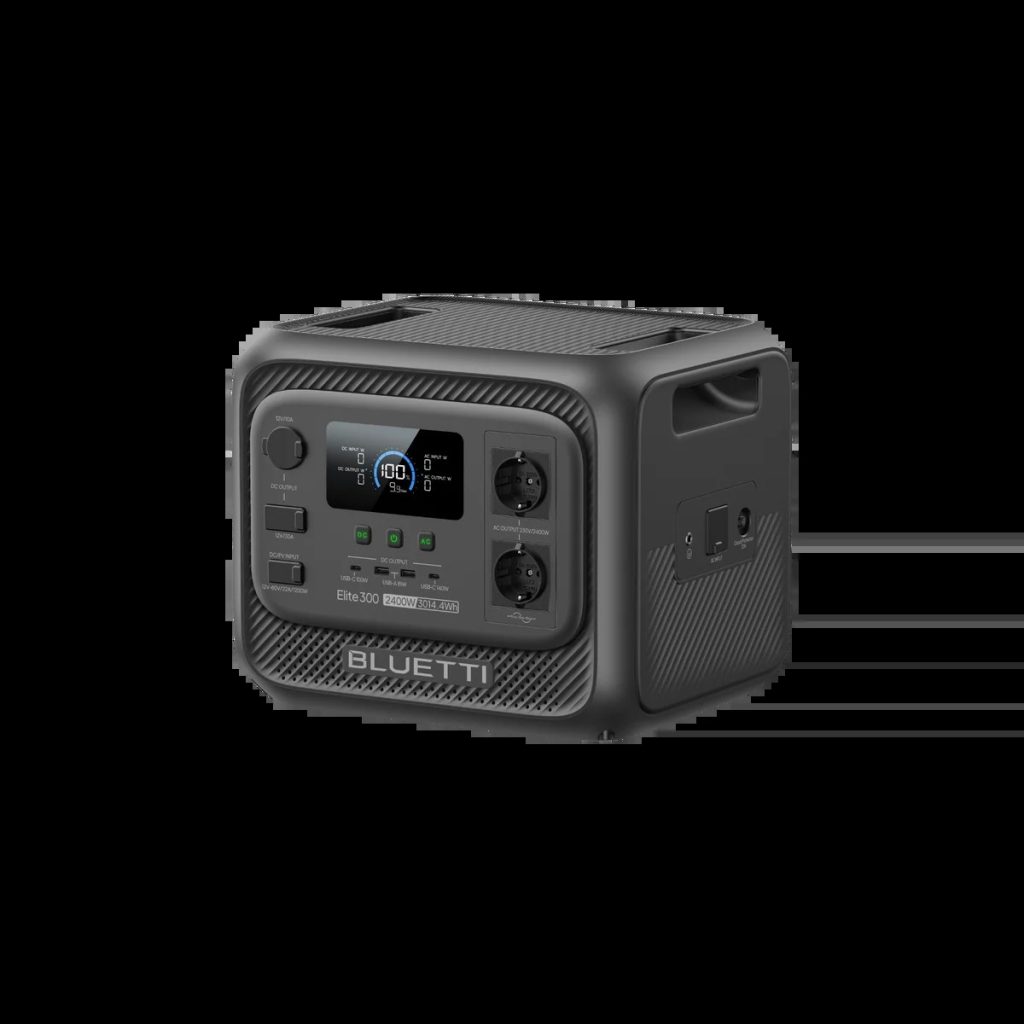
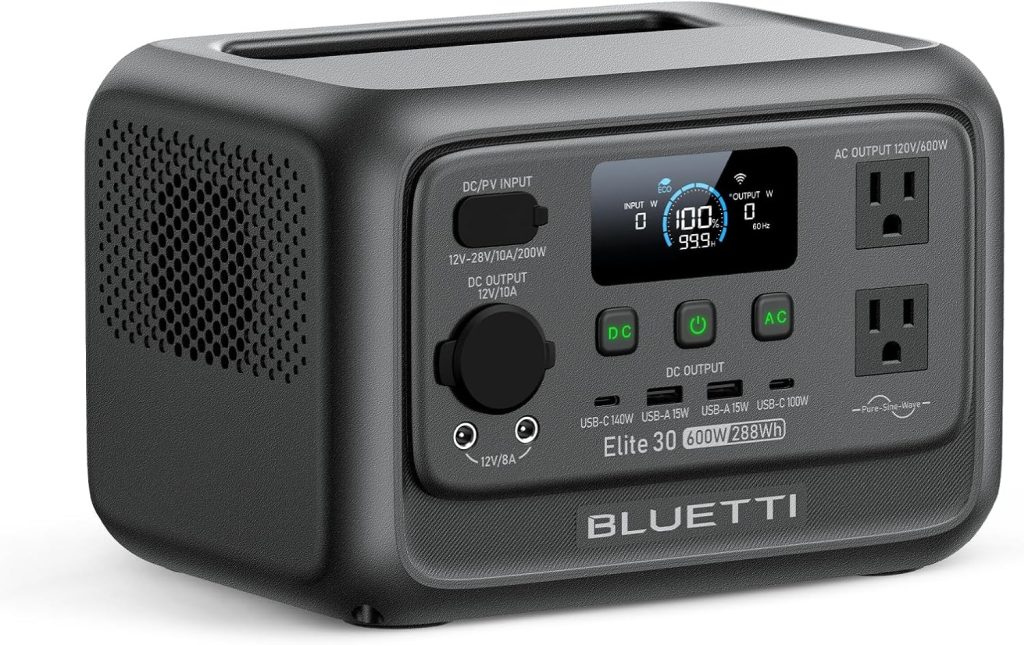
Shopping for a portable power station in the 300Wh class used to mean accepting roughly 300W of AC output and planning your whole camp setup around that ceiling. That math shifted when BLUETTI moved on from the older EB3A it replaces — November 2026 coverage has widely reported that long-running model as discontinued — and slotted the Elite 30 V2 into the same small-station role. This small portable power station pairs 288Wh of LiFePO4 storage with 600W of continuous AC output at about nine and a half pounds, which sounds like a free upgrade until you look at where the compromises sit. So does double the AC output actually change what you can run at camp, or does the small tank underneath it quietly cancel the headline out?
Quick Answer
The BLUETTI Elite 30 V2 is the small portable power station to buy if you want real AC headroom in a 300Wh-class box — its 600W continuous output is double what the EcoFlow RIVER 3 and Anker SOLIX C300 offer, and its Power Lifting mode handles a small kettle or toaster with a resistive heating element. If your camp loads are only phones, lights and a CPAP, the lighter, quieter RIVER 3 is easier to live with. If strong USB-C fast charging and a built-in light matter more than AC watts, the SOLIX C300 sits in the middle.
Compare Small Portable Power Stations
Three 300Wh-class picks side by side — same small footprint, very different AC headroom.
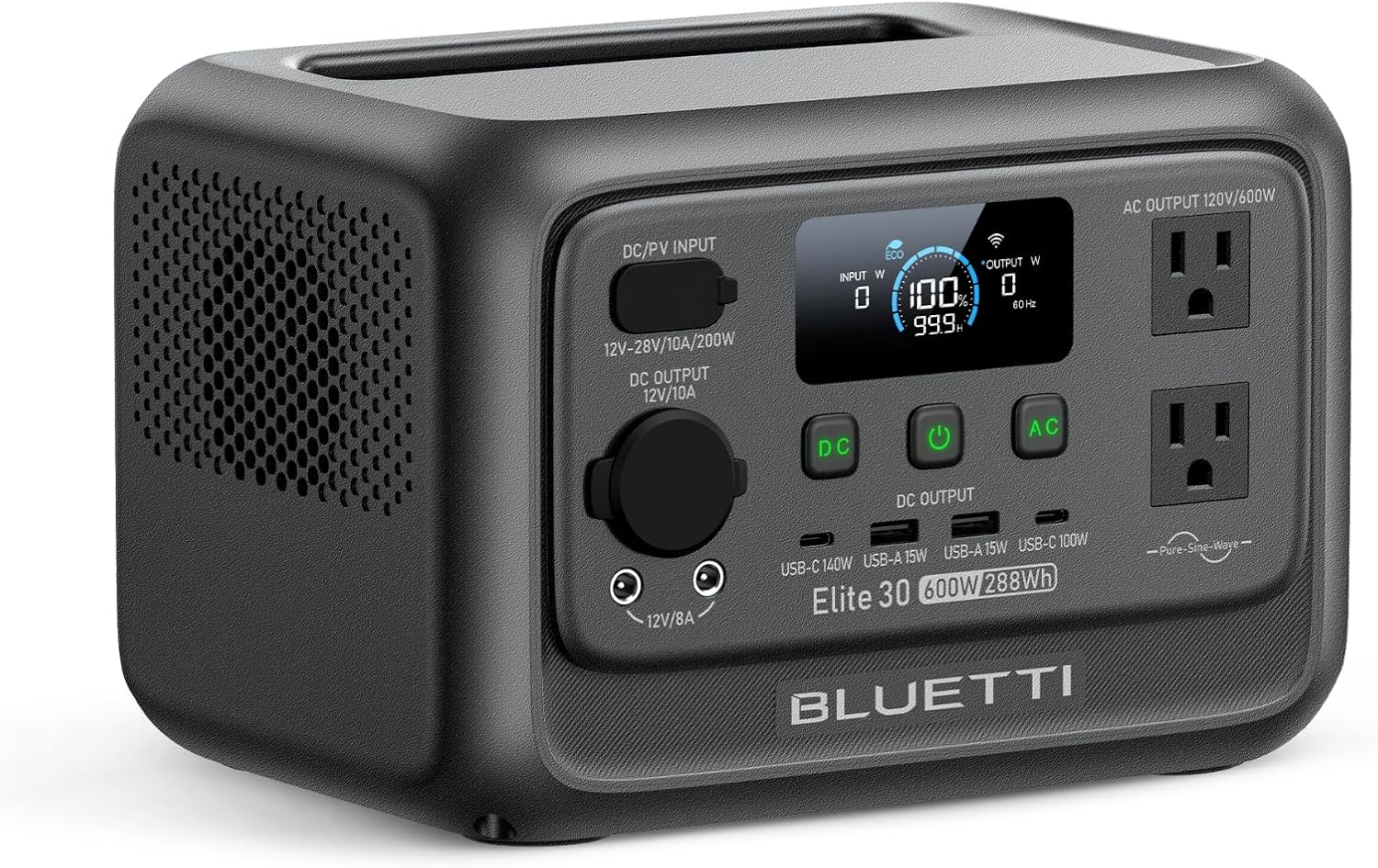
BLUETTI Elite 30 V2
288Wh with a full 600W of AC output — double its rivals here — plus 1500W Power Lifting for resistive loads like a small kettle
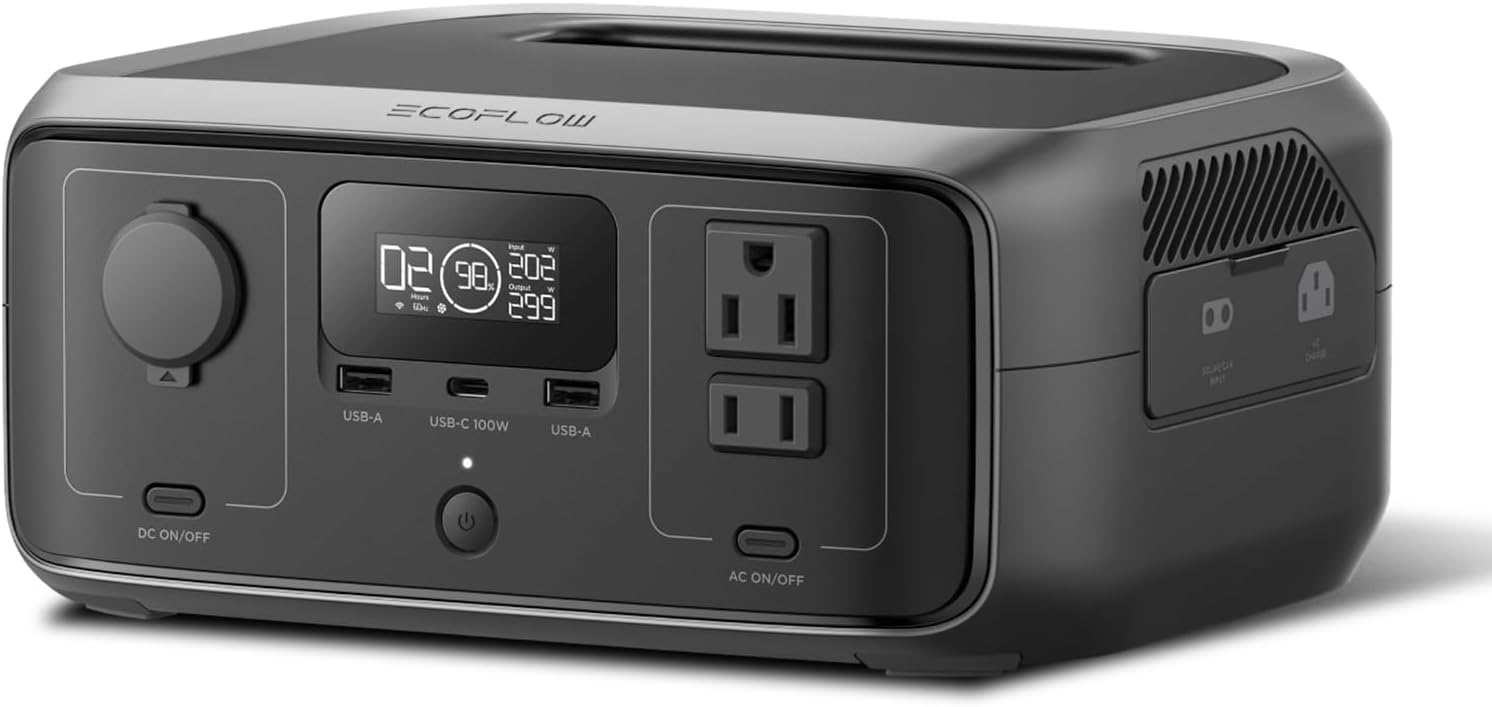
EcoFlow RIVER 3
245Wh and the lightest, quietest unit here at about 7.8 lb — 300W AC is enough for phones, lights and CPAP-class loads
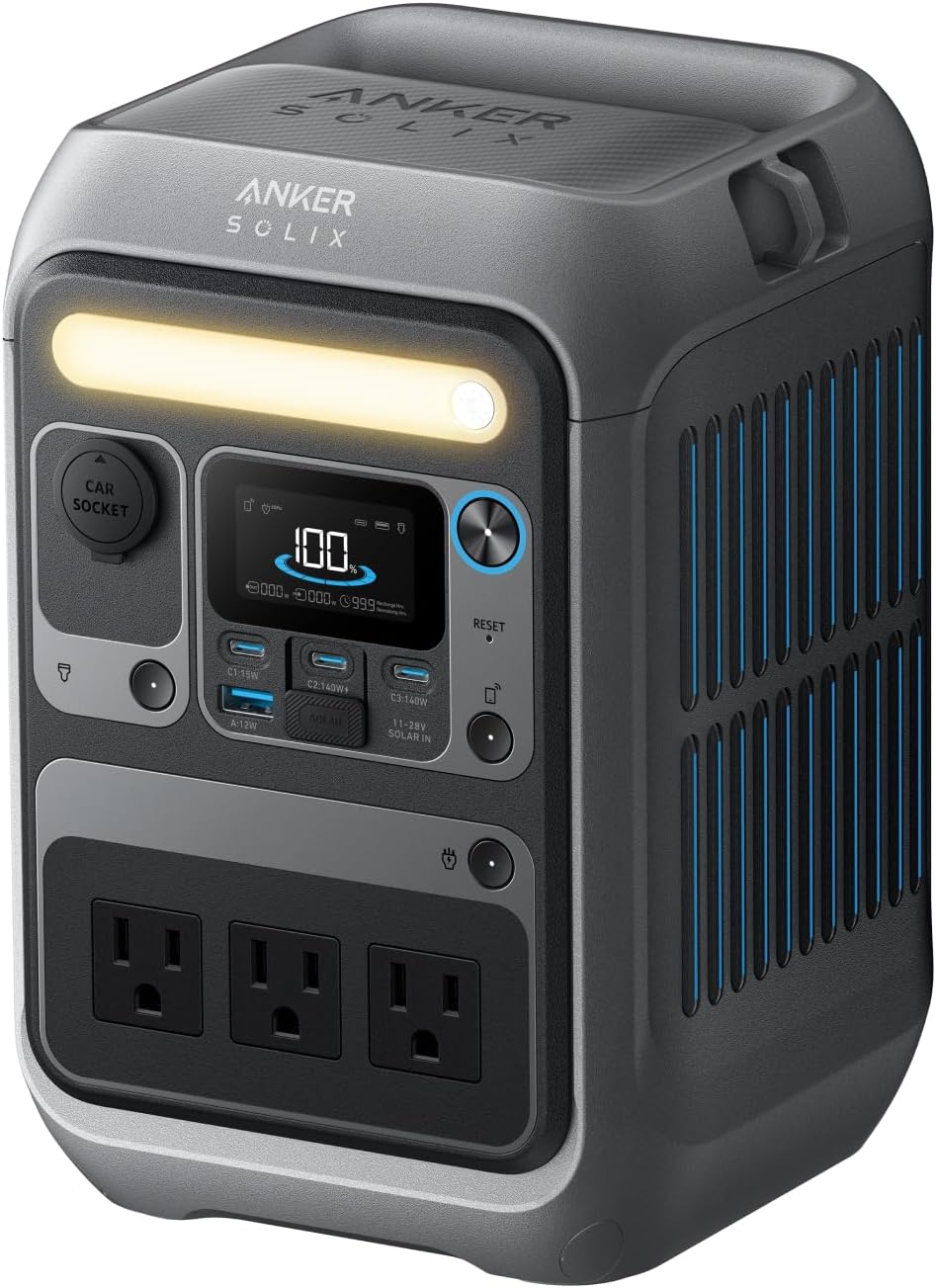
Anker SOLIX C300
288Wh and 300W AC with a built-in light bar and strong USB-C fast charging — but its solar input tops out at 100W
Prices and availability may vary — tap any product to check the current listing.
What to Look For in a Small Portable Power Station
Roundups of the best portable power stations tend to rank this class by watt-hours alone, as if storage were the only number that mattered. It isn’t. Down at 300Wh, the inverter rating, charge speed, and solar ceiling shape your weekend just as much, and each one pulls against the others. A station can be light or powerful or quick to refill. Getting all three in one small box is where the money goes.
Spec sheets rarely do.
AC output and capacity are two separate budgets. Output, in watts, decides what you can plug in at all. Capacity, in watt-hours, decides how long it runs. The Elite 30 V2 pairs a modest 288Wh battery with 600W of continuous AC output — double what the EcoFlow RIVER 3 and the Anker SOLIX C300 offer from similar-sized batteries. That headroom changes the appliance list: small heating appliances and fridge compressors that trip a 300W station will start on this one. But run anything near 600W and the tank empties in well under an hour, before inverter losses even take their cut. Work through how to size a portable power station for your actual loads before falling for either number. High output on a small battery buys capability in short bursts, not endurance.
Power Lifting deserves a skeptical read. BLUETTI rates the Elite 30 V2 at 1500W of Power Lifting, and that figure only applies to resistive loads: kettle elements, toaster coils, simple heaters. Motors, compressors, and sensitive electronics don’t get 1500W. They get the 600W continuous rating, full stop. Plenty of buyers skim the big number, assume they’ve bought a 1500W inverter, then act surprised when a power tool stalls. Read carelessly, it’s the most misleading line on the box. It works, but inside a narrower fence than the marketing suggests.
Weight decides whether the station actually leaves the house. At about 9.4 lb, the Elite 30 V2 carries one-handed from car to picnic table without a second thought. The RIVER 3 undercuts it at roughly 7.8 lb, which matters more than it sounds when the station rides in a backpack or gets hauled up apartment stairs. Still, output costs pounds — stronger inverters, bigger fans, sturdier shells — so the lightest option here is never the strongest one. A station that feels like a chore to move stays home, and a station that stays home has zero useful watt-hours.
Charge speed matters more than most people expect. A small battery that refills slowly turns every stop into a scheduling problem. Wall charging is where the Elite 30 V2 earns its keep: 0–80% in about 45 minutes, full in roughly 70, means a lunch break can rescue a flat battery. The C300 needs roughly 50 minutes to 80% by wall outlet and the RIVER 3 about an hour to full — both a step behind. The catch? Fast charging is a wall-outlet trick. Away from mains power you’re back to solar pace, and cloudy weekends don’t care about your charge curve.
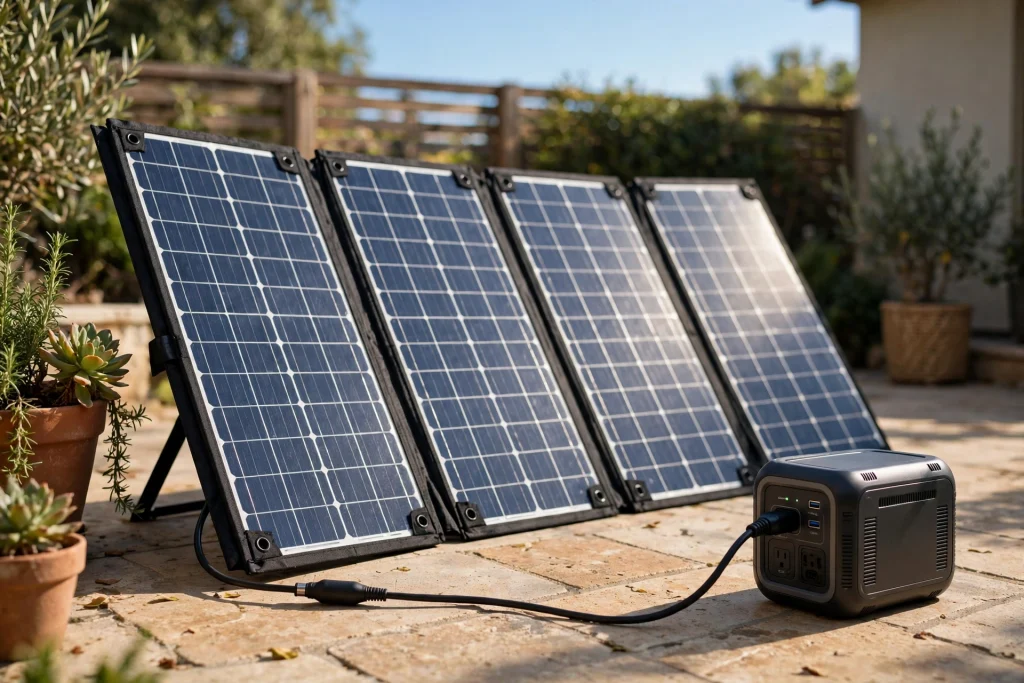
The solar input ceiling sets your off-grid pace. A station only refills as fast as its input allows. BLUETTI gives the Elite 30 V2 a 200W solar ceiling, double the 100W cap on the SOLIX C300, so on a clear day the Elite drinks in twice the sunlight per hour — and the C300 needs far longer parked in good sun to recover the same charge, a real handicap on short winter days. Panels add their own trade-off: a setup feeding a 200W ceiling is bulkier and fussier to angle, and real-world harvest always lands below the rated figure.
UPS switchover and fan noise are the quiet specs nobody checks. The Elite 30 V2 switches to battery in about 10 milliseconds during an outage, fast enough that routers and desktop gear ride through without rebooting. Small spec. Real difference at a desk. The RIVER 3 answers in under 20 milliseconds, slower on paper, yet counters with near-silent running in the under-30dB class — which tent sleepers notice far more than a 10-millisecond gap. Under heavier loads, fans on any small station become audible, and the BLUETTI’s stronger inverter gives its fans more work to do. A desk backup rewards switchover speed; a pillow two feet away rewards silence. No model here tops both lists.
How to Match the Elite 30 V2 to Your Situation
Specs don’t camp. People do, and people bring wildly different loads to the same category. These three profiles cover most shoppers circling a small portable power station, and they point at different winners.
The hot-drink car camper. You drive to the site, cook on gas, and mainly want lights, phone top-ups, and a proper kettle. The Elite 30 V2 fits neatly: its 600W output and resistive-load lifting handle a small kettle that defeats its 300W rivals outright. Your trade-off is discipline — every boil spends a visible chunk of 288Wh, so kettle habits plus a fridge plus lights can still strand you by Sunday.
The light-and-quiet tent sleeper. Everything travels on your back or in a small car, and your loads are modest — phones, headlamps, a camera battery, maybe a CPAP. Honestly, the RIVER 3 probably serves you better. It’s the lightest and quietest here, and 245Wh covers sip-sized loads for a weekend. What you give up is appliance ambition: no kettle, no toaster, no margin for a hungry gadget a friend hands you.
The outage-insurance buyer. Your station lives in a cupboard most of the year, guarding the modem, a laptop, and maybe medical gear, then camps twice each summer. Either the Elite 30 V2 or the C300 suits that double life — the BLUETTI with faster switchover and refills, the Anker with a built-in light bar that’s weirdly handy mid-blackout. A full-size fridge through a long outage sits outside this class.
Three Tiers of Small Station, Compared
Shoppers still call this category a solar generator, fair enough once a panel enters the picture, but the label hides how differently the models behave. Splitting the class into tiers clarifies the choice.
| Tier | Best For | Price Tier | Key Feature | Watch-Out |
|---|---|---|---|---|
| Light and quiet | Tent campers running phones, lights, and a CPAP | Lower end of the class | Around 7.8 lb with very low fan noise | 300W-class AC output shuts the door on kettles |
| Balanced everyday | Mixed charging, road trips, and power cuts at home | Mid-range | Built-in light bar and strong USB-C fast charging | Solar input ceiling sits at 100W, so panel refills crawl |
| High-output small | Campers who want a small kettle, toaster, or fridge surge headroom | Upper end of the small class | 600W continuous AC from a 288Wh body | No battery expansion, and full-tilt loads empty it fast |
The EcoFlow RIVER 3 defines the light tier — 245Wh, 300W of AC output with a boost mode stretching toward 600W for tolerant loads, under-20ms UPS response — and wins whenever weight and silence outrank appliance ambitions.
Anker’s SOLIX C300 anchors the middle with the same 288Wh as the BLUETTI and eight outlets including three AC sockets, and our full Anker SOLIX C300 review walks through where that balance pays off.
BLUETTI’s Elite 30 V2 sits alone in the top tier because nothing else this small sustains 600W — though that lead only matters on days you plug in something hungry.
Weekend Tent Camping: Phones, Lights, and a Hot Drink
A two-night tent trip is gentle work for any station here. Phones, LED lights, and headlamp recharges might spend 60–100Wh across a weekend, leaving every model with charge to spare. Where the Elite 30 V2 separates itself is breakfast. A small travel kettle draws serious watts for a few minutes, and only the BLUETTI’s output and lifting mode absorb that without complaint. Two boils a day is a realistic rhythm on 288Wh alongside lights and phones; push to four and you’re rationing by Saturday night. Quiet matters too — inside a tent, the RIVER 3’s hushed fan is the kinder neighbour.
Car Camping With a 12V Fridge
Fridges are where small stations get found out. A typical 12V camping fridge cycles its compressor, averaging somewhere in the 25–40W range across a day depending on heat and lid discipline. Net of conversion losses, 288Wh lands around a long night to a full day of fridge running — useful, not a carefree weekend. Compressor startup is the other trap: the switch-on surge can spike well past the running draw, and that spike is where 300W stations occasionally trip. The Elite’s 600W rating swallows it with room to spare. Still, there’s no expansion battery to bolt on later, so a fridge habit demands a refill plan — driving charges, a panel on the roof, or both.
Plan the recharge too.
Home Backup for a Modem, Router, or CPAP
Small stations make sensible outage insurance for low-draw essentials. A modem and router together often pull 10–20W, so 288Wh keeps a household online through an evening and deep into the night. The Elite 30 V2’s 10ms switchover means the connection usually survives the grid dropping — no reboots, no dropped calls mid-storm. CPAP is the nuanced case: without heated humidity, most of a night is realistic; with it, runtime shrinks to a few hours. This class covers communications, light, and one medical device for a while. It does not carry a house.
Common Mistakes When Buying a 300Wh-Class Station
Most disappointment in this category isn’t the product’s fault. It’s a mismatch bought in a hurry, usually after reading one big number on a box and stopping there.
Treating the Power Lifting figure as real inverter output. As covered above, 1500W applies to resistive heating loads only. Size expectations against the 600W continuous rating for anything with a motor or a circuit board, because that’s the number protecting your gear. Buyers who skip this end up blaming the station for a misunderstanding the spec sheet encouraged.
Spending the whole 288Wh on paper. Watt-hours on a label are the gross figure, not what reaches your devices. Inversion to AC wastes a slice, the station reserves a slice, high draws waste more. Budget roughly three-quarters of the headline capacity for real work and treat anything beyond that as a bonus.
Pairing panels by hope instead of by input ceiling. A large panel feeding a 100W input still delivers 100W-class charging; the extra glass just costs money and boot space. Match the panel to the ceiling — up to 200W of input on the Elite 30 V2, half that on the C300 — and remember rated panel output assumes strong sun you won’t always get.
Buying small now and planning to expand later. The Elite 30 V2 has no battery expansion path, and it isn’t alone. If your loads might grow — a bigger fridge, a second CPAP, regular tool batteries — growth means replacing the station, not adding to it. Cheap to learn now. Expensive to learn in a year.
Why, How, What
Why does AC output matter more than capacity in this size class?
Capacity decides endurance, but output decides permission, and permission is the crueller limit at 300Wh. A station with a huge battery and a 300W inverter still can’t start a kettle or a stubborn fridge compressor, no matter how full it sits. The Elite 30 V2 flips that priority, doubling output while keeping capacity modest.
How does Power Lifting work on the Elite 30 V2?
Power Lifting lets the station feed simple resistive loads — heating elements converting electricity straight into heat — beyond its 600W continuous rating, up to 1500W. Kettles, toasters, and basic heaters qualify because they tolerate the adjusted output. Motors and electronics don’t, since they depend on clean, full delivery within the inverter’s true rating.
What can 288Wh realistically run at a campsite?
Phones, lights, and laptops are never the problem. One 12V fridge runs roughly a night to a day, a CPAP without heated humidity lasts most of a night, and a small kettle boils a handful of times before the battery calls it quits. Mix two heavy habits together, fridge plus repeated boils, and a single day becomes the ceiling. Modest tank, honest limits.
Questions People Ask Before Buying
Real buyer questions, straight answers
Is the Elite 30 V2 worth it over EB3A-era models?
If you’re buying new, yes — with the EB3A reported discontinued, the Elite 30 V2 is the version to buy, though owners of a healthy older unit can safely skip it. The successor keeps the same 600W-class AC output and adds a slightly larger 288Wh battery in the same carry-friendly size. Anyone whose current station still holds charge has little reason to swap; first-time buyers get the current, supported model instead of leftover stock.
Will the Elite 30 V2 run a kettle?
Yes, a small travel kettle sits within its Power Lifting range, but every boil spends a noticeable slice of a small battery. Kettle elements are resistive loads, exactly the category the 1500W lifting figure covers, and smaller travel kettles draw well inside that fence. Budget a few boils per charge, not an endless tea round.
How long will 288Wh run a camping fridge?
Expect roughly a night to a day from a typical 12V camping fridge, not a full weekend, unless you recharge in between. Fridges cycle rather than run flat-out, so runtime hinges on ambient temperature, thermostat setting, and lid discipline. Hot afternoons and constant snack raids push the average draw up and runtime down. A panel or a drive recharging the station by day stretches the same battery across a weekend.
Should I buy the Elite 30 V2 or the EcoFlow RIVER 3?
Pick the Elite 30 V2 if appliance headroom matters at all, and pick the RIVER 3 if weight and quiet matter more. The BLUETTI doubles the continuous AC output, carries a bit more capacity, and accepts up to 200W of solar, making it the stronger tool for kettles and fridges. EcoFlow’s station counters by being lighter at about 7.8 lb, calmer under load, and perfectly adequate for phones, lights, and CPAP-class gear. Neither is wrong. They’re answers to different packing lists.
Does Power Lifting mean the Elite 30 V2 is a 1500W station?
No — continuous output stays 600W, and the 1500W figure applies only to simple resistive heating loads. Motors, compressors, and electronics all live under the 600W ceiling, still double what its closest rivals sustain. The lifting mode exists so a kettle or toaster doesn’t trip the station, nothing more exotic. Read the 1500W as a footnote with benefits, not the headline.
Frequently Asked Questions
How long does the Elite 30 V2 take to recharge?
On wall power it reaches 80% in about 45 minutes and a full charge in roughly 70 minutes, quick even by this fast-charging class’s standards. Solar refills depend on panel and weather, capped by that 200W input ceiling.
What battery type does the Elite 30 V2 use?
It uses a LiFePO4 battery, the chemistry that has largely taken over this category for good reason. LiFePO4 cells tolerate far more charge cycles than the older lithium-ion packs in early small stations, and handle heat with less drama. The trade-off is energy density — a slightly heavier box for the same capacity.
Can the Elite 30 V2 act as a UPS at home?
Yes, within small-station limits. Switchover takes about 10 milliseconds, fast enough that routers, modems, and most desktop gear keep running through a grid drop without restarting. Runtime is the real constraint — 288Wh carries low-draw equipment for hours, not days. For anything with a big motor, treat it as a short bridge.
How many devices can it power at the same time?
Nine outlets share the load, covering AC sockets alongside USB and DC options for the usual tangle of camp and desk gear. Outlet count isn’t the binding limit, though — the 600W ceiling and the 288Wh tank are. Nine phones at once? Fine. A kettle plus a fridge plus a heater ends the experiment quickly.
Is 288Wh enough for a CPAP overnight?
For many travellers, yes, provided the heated humidifier stays off or low. Without heated humidity, a typical CPAP draws modestly enough that 288Wh covers most of a night with a little left for a phone. Turn the heat up and the draw climbs fast, shrinking runtime to a few hours. Test your setup at home for one night before trusting it in a tent — that rehearsal removes the guesswork.
Can I add an expansion battery to the Elite 30 V2 later?
No. The Elite 30 V2 has no expansion battery option, so the 288Wh you buy is the 288Wh you keep. That keeps the design simple and light, a fair trade for campers whose loads are settled. Anyone expecting their power needs to grow within a year or two should size up to a larger station now.
Key Takeaways
The Elite 30 V2 succeeds the discontinued EB3A with 288Wh of LiFePO4 storage, 600W of continuous AC output, and about nine and a half pounds of carry weight.
Double the AC output of its 300W-class rivals is the real story — kettles, toasters, and fridge startup surges come into play that simply trip the others.
Power Lifting at 1500W covers resistive heating loads only, so plan motors and electronics against the honest 600W figure.
A 288Wh tank is still small, draining in well under an hour at full tilt, and there’s no expansion battery to rescue growing loads later.
Fast wall charging (80% in about 45 minutes) and a 200W solar ceiling make refills painless for this class.
Decision Tree: Which Small Station Fits You?
If a small kettle or toaster is non-negotiable at camp, then the Elite 30 V2 is the only one of the three built for it.
If a 12V fridge must start reliably and run overnight, then the Elite 30 V2’s 600W headroom makes it the safer pick, paired with a daily recharge plan.
If you carry everything on foot and sleep beside the station, then the RIVER 3’s lower weight and quieter fan should win.
If your loads are mostly USB gear, lights, and laptops, with the odd blackout at home, then the SOLIX C300’s light bar and balanced spec cover you for less fuss.
If your loads will clearly grow next year, then skip this whole class and buy a larger station now, because none of these three expands.
Final Recommendation
For campers who cook, boil, and chill — anyone whose packing list includes a heating element or a compressor — the Elite 30 V2 is the small portable power station to buy. It takes over from a discontinued favourite without bloating in size, and its 600W output genuinely widens what a 288Wh box can do at a campsite. Just go in clear-eyed about the tank: heavy loads are measured in minutes and hours here, not days, and no expansion battery is coming.
Everyone else should pause before paying for output they won’t use. Tent campers running lights and phones will be happier carrying the lighter, quieter RIVER 3, and mixed home-and-road users get a friendlier balance from the SOLIX C300. Match the station to the loads you actually own, not the ones a headline tempts you to imagine.
Compare Small Portable Power Stations
Three 300Wh-class picks side by side — same small footprint, very different AC headroom.
BLUETTI Elite 30 V2
288Wh with a full 600W of AC output — double its rivals here — plus 1500W Power Lifting for resistive loads like a small kettle
EcoFlow RIVER 3
245Wh and the lightest, quietest unit here at about 7.8 lb — 300W AC is enough for phones, lights and CPAP-class loads
Anker SOLIX C300
288Wh and 300W AC with a built-in light bar and strong USB-C fast charging — but its solar input tops out at 100W
Prices and availability may vary — tap any product to check the current listing.
Affiliate Disclosure: This article contains affiliate links. If you buy through one of these links, we may earn a commission at no extra cost to you.