A portable power station in the 300Wh class sounds simple to buy, right up until you notice two boxes with nearly identical names and very different sockets. This guide reviews the Anker SOLIX C300 — the version with real AC outlets — and puts it against the EcoFlow RIVER 3 Plus and the Jackery Explorer 300, so you can tell which small station fits car camping, a work desk, or a short outage, and which jobs none of them should be asked to do.
Quick Answer
The Anker SOLIX C300 (AC version) is worth it if you want the smallest, lightest LiFePO4 station that still runs things with a normal plug — laptops, camera batteries, a small fan, CPAP for part of a night. Pick the EcoFlow RIVER 3 Plus instead if AC output headroom and fast wall charging matter more than weight. And if you mostly charge phones and lights over USB, the cheaper DC-only sibling exists — just know it has no AC outlets at all, which is exactly the mix-up this guide exists to prevent.
Top 3 Portable Power Stations Around 300Wh
Similar storage, very different strengths — AC output, weight and charging are the differences that matter.
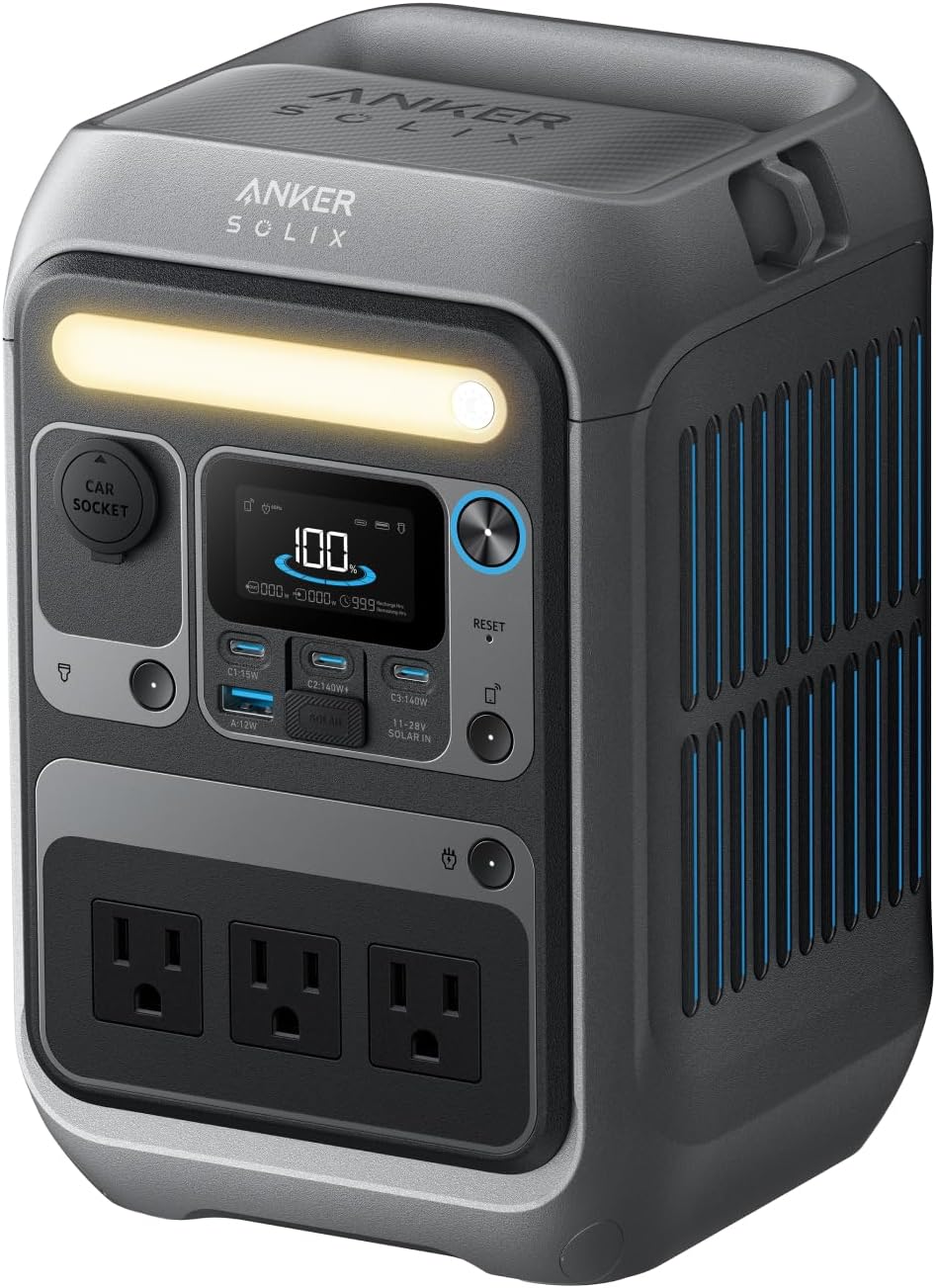
Anker SOLIX C300 Portable Power Station
The lightest LiFePO4 pick here, with three AC outlets and strong USB-C — the default for electronics-heavy car camping
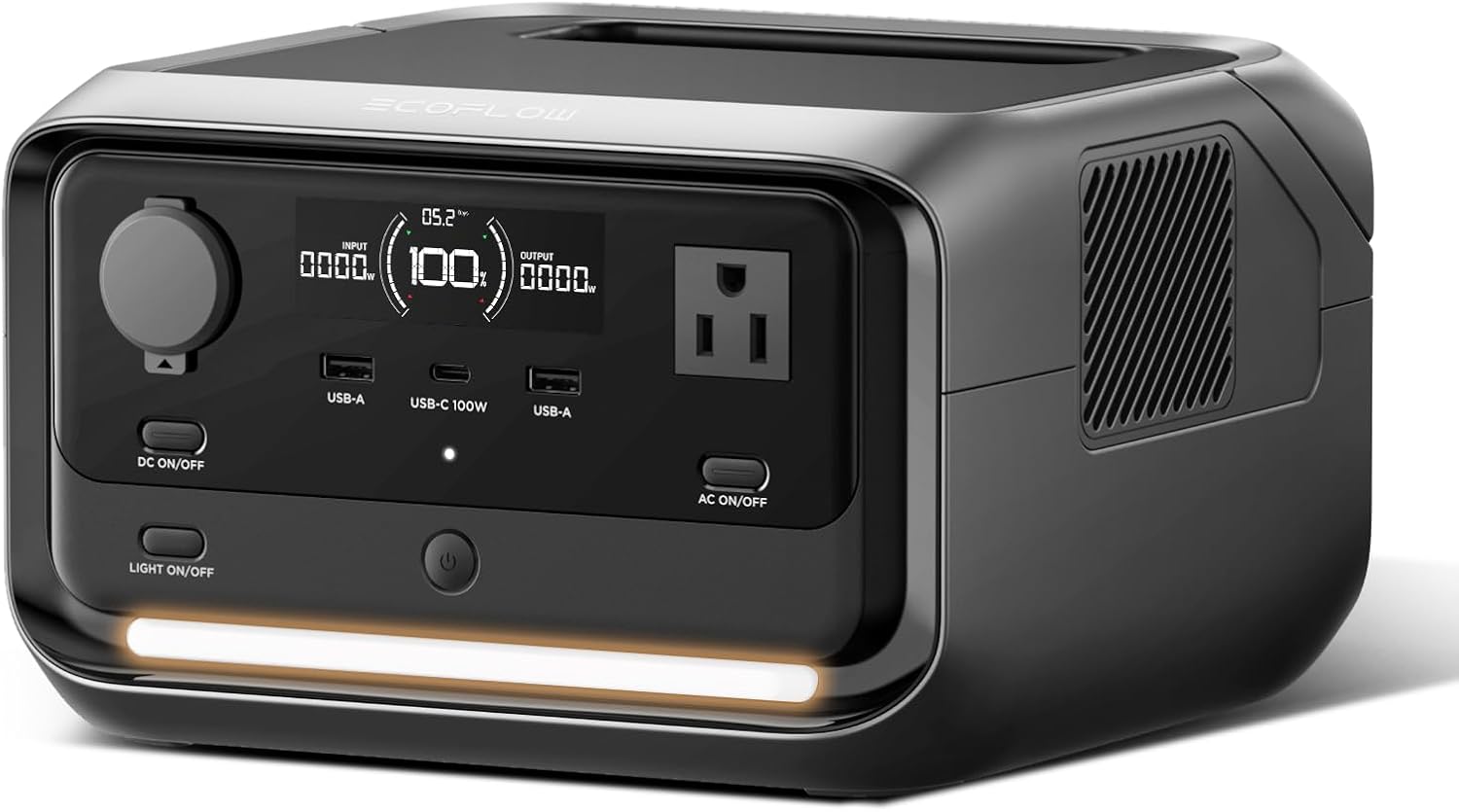
EcoFlow RIVER 3 Plus Portable Power Station
Roughly double the AC output, fast UPS switchover and expansion-battery support — the pick for desk backup and heavier plug-in loads
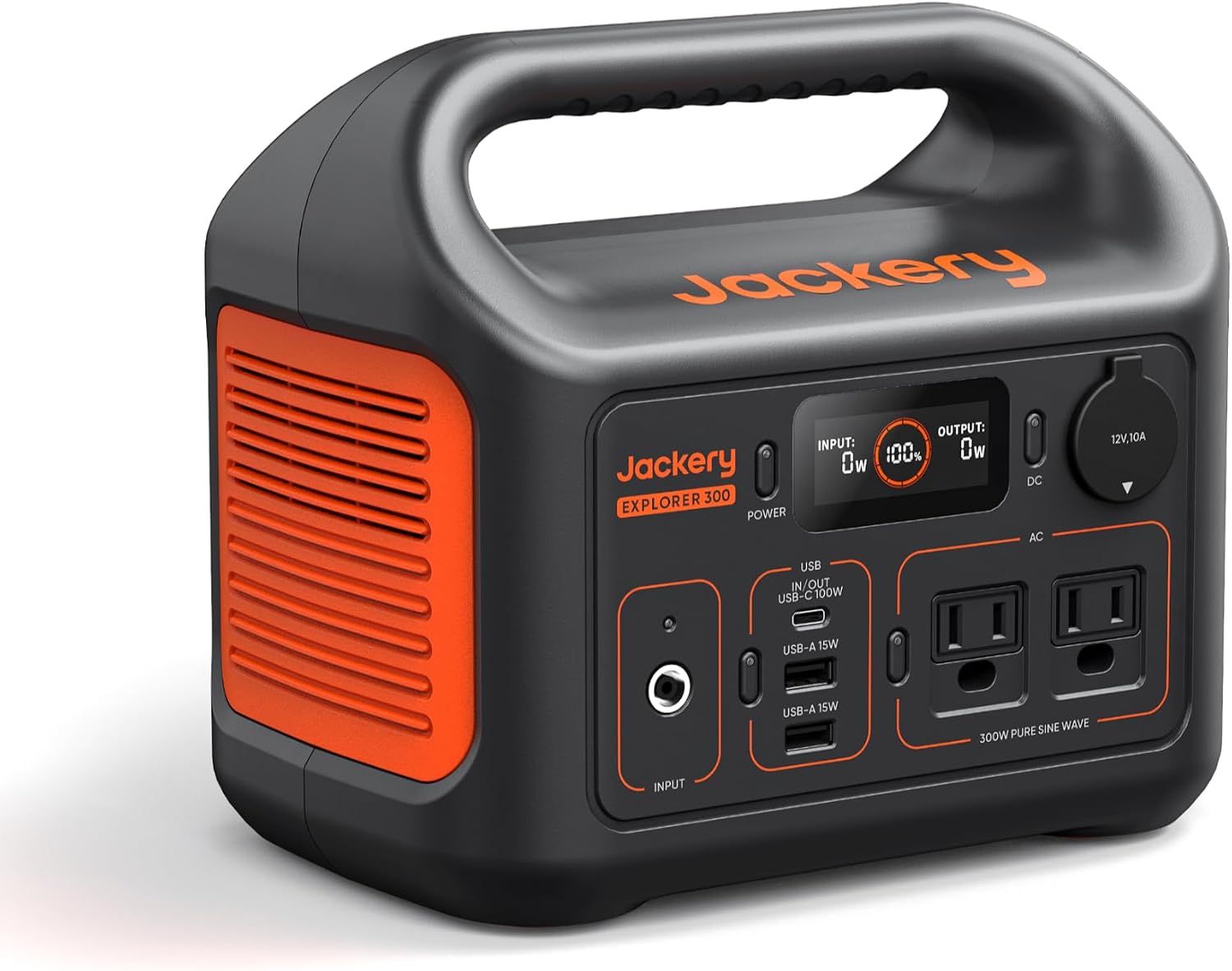
Jackery Explorer 300 Portable Power Station
The familiar all-rounder: two AC outlets, simple layout, LiFePO4 in the current version — for first kits that anyone can run
Prices and availability may vary — tap any product to check the current listing.
The Two C300s: Read the Front Panel, Not Just the Name
Here is the trap. Anker sells a SOLIX C300 and a SOLIX C300 DC. Same capacity class. Similar shell. The difference sits on the front panel, and it decides what you can plug in.
The same line now runs one size smaller again: the Anker SOLIX C200 DC keeps the USB-only idea at 192Wh and about 4.2 lb, with no AC outlets and no car socket at all — the version to pick when even the C300 DC is more station than your kit needs.
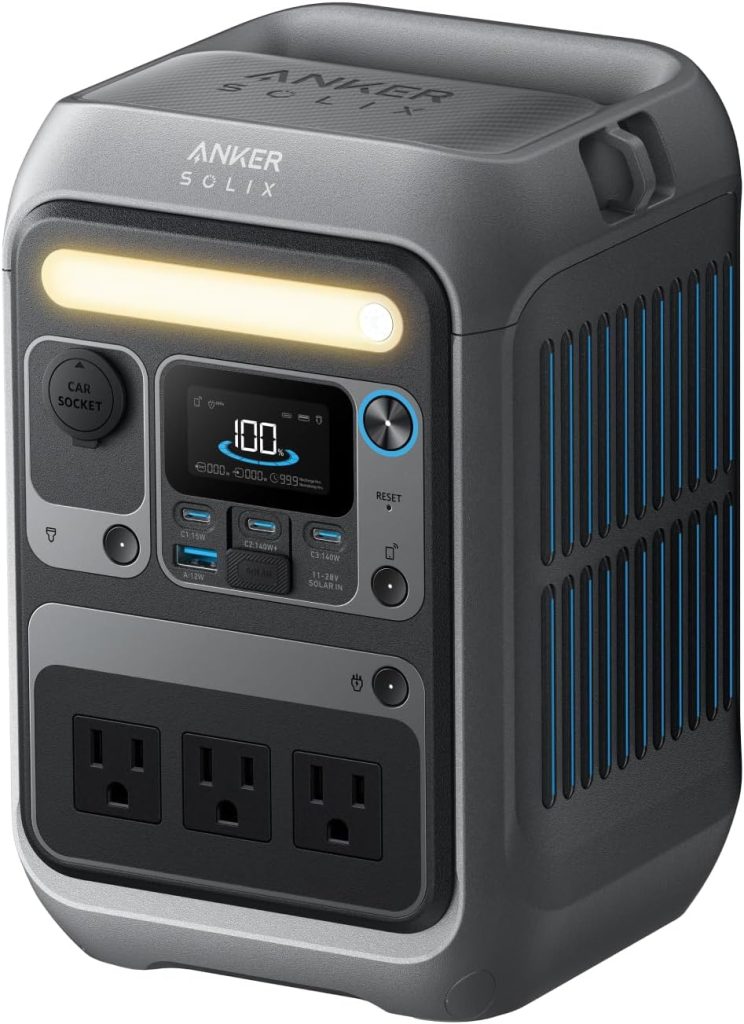
The AC version carries three household-style AC outlets along the bottom, plus USB-C ports, a USB-A port, and a car socket. The DC version drops the AC outlets entirely. In their place you get extra USB-C output and a pop-up light bar. It is a big USB power bank with a handle, essentially — a good one, but it will never run anything that ends in a wall plug.
Why does this matter so much? Because listings, photos, and secondhand ads shorten both names to “C300.” People order the DC, discover the missing outlets at a campsite, and blame the product line. The product was fine. The label reading wasn’t.
Check three things before ordering any unit in this class. One, count the AC outlets in the main photo — zero means DC-only, no exceptions. Two, look for an AC charging cable in the box contents; the AC model plugs into a wall to recharge, the DC model leans on USB-C chargers that may not be included. Three, note the carry design: the AC version uses an integrated handle, the DC version is the one with the pop-out light. Small details. They save a return.
What to Look For in a Small Portable Power Station
AC output decides your appliance list, not capacity. Capacity tells you how long something runs. Output wattage tells you whether it starts at all. In this trio the spread is wide: the C300 sits in the lower 300W-class for AC, the Jackery Explorer 300 matches that class, and the RIVER 3 Plus roughly doubles it, with a boost mode for resistive loads on top. That gap sounds academic until you plug in something with a heating element or a motor. Then it is the whole story.
Now the honest part — what 300Wh cannot do. An electric kettle pulls well over 1,000W. An induction cooktop pulls more. A hair dryer, a space heater, a microwave: all far beyond every station on this page, including the strongest one. No surge rating fixes that. If camp cooking on electric heat is your plan, you need a station several sizes up, or a gas stove, which honestly does the job better anyway. What this class does well is electronics — phones many times over, laptops a few times, camera gear, drones, lights, a small fan through the night, a 12V cooler for a good stretch. Judge it on that list.
Battery chemistry is the quiet long-term win. The C300 and the RIVER 3 Plus both use LiFePO4 cells, the chemistry rated for far more charge cycles than the older lithium-ion packs in budget stations — think years of weekend use before capacity noticeably fades. The current Explorer 300 has also moved to LiFePO4 in its latest version, closing what used to be Jackery’s weak spot in this size. Whichever you pick, confirm the listing says LiFePO4. Older stock with plain lithium-ion still floats around, and the price difference is smaller than the lifespan difference.
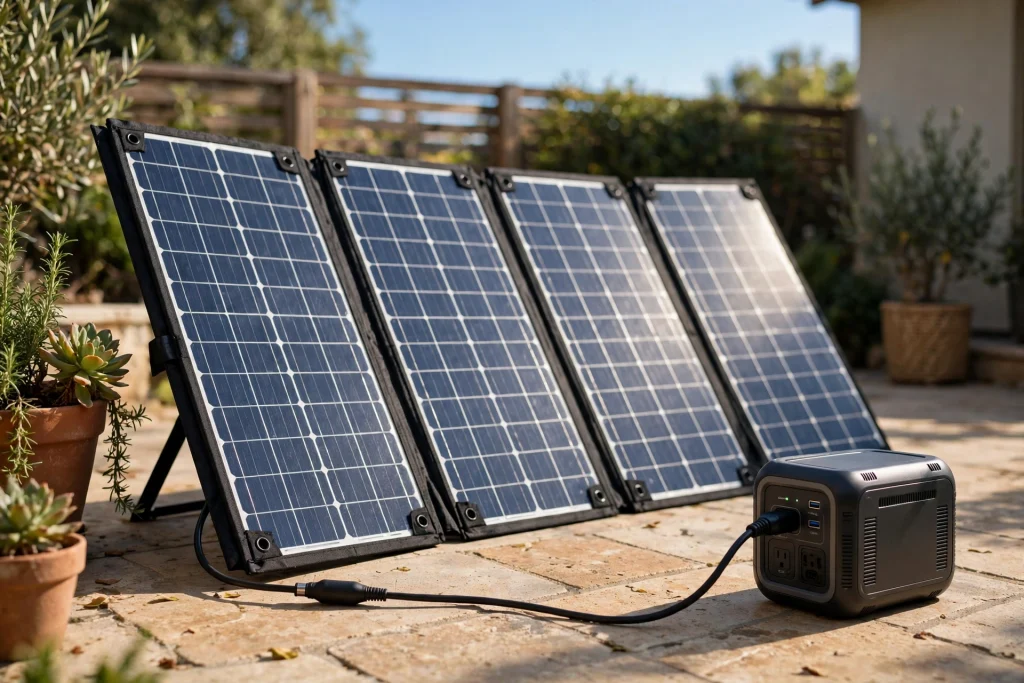
Recharge speed changes how you actually use it. A station that refills in about an hour from a wall outlet gets used constantly — topped up between trips, grabbed without planning. Slower units become garage ornaments. The RIVER 3 Plus is the fast charger of this group. The C300 recharges respectably through its wall cable and also accepts strong USB-C input, which is handy in a car or at a desk. Solar input on all three is modest, sized for a single folding panel; expect a sunny afternoon, not a quick fill. Pairing one with foldable solar panels works, just set expectations at top-up pace.
Weight is a feature, not a footnote. The C300 is noticeably the lightest here, small enough to carry in one hand without thinking about it — that is its whole design brief. The RIVER 3 Plus is heavier and boxier, the price of its bigger inverter and expansion port. The Explorer 300 lands between them with the classic suitcase handle. Backpacking? None of these. They are car-camping and home-backup tools, and pretending otherwise leads to sore shoulders and buyer’s remorse.
Ports beyond AC deserve a look too. Strong USB-C output matters more every year: a 100W-plus USB-C port charges a modern laptop at full speed without touching the AC inverter, which is more efficient anyway. The C300 is strong here, with high-output USB-C on both the AC and DC versions. All three offer a 12V car socket for coolers and pumps. And the RIVER 3 Plus adds one trick the others lack — an expansion battery connection and a very fast UPS switchover, which pulls it toward desk duty.
How to Match a 300Wh Station to Your Situation
The car camper with a pile of electronics. Two phones, a tablet, camera batteries, a drone, string lights, maybe a small fan on a warm night. This is the C300’s home turf. Everything either runs on USB-C or sips AC power, the runtime math works across a weekend with a mid-trip top-up, and its low weight means it actually comes along instead of staying home “just in case.” Add a rechargeable camping lantern and the lighting side is covered without draining the station.
The home-office backup buyer. Short outages, a router and laptop that must not die mid-call, maybe a desk lamp. Here the RIVER 3 Plus pulls ahead. Its UPS switchover is fast enough to keep a computer running through a flicker, its AC output handles a monitor and peripherals with room to spare, and the expansion option means the same box can grow later. The C300 can do this job too, but without the UPS trick it is a manual backup, not an automatic one. Our older portable power station review covers the previous generation if you are comparing against a unit you already own.
The CPAP and medical-device user. Sleep equipment is the use case where this class gets serious, and where honesty matters most. Many CPAP machines sip power in the range these stations can supply for a good part of a night, especially with heated humidity turned off — but draw varies a lot by machine and settings. Treat any single-night claim as a maybe, test at home first, and size up if the test comes up short. The RIVER 3 Plus’s extra AC headroom makes it the safer pick here; the C300 suits lighter setups that have already proven their draw. And compare against the LiFePO4 Jackery Explorer 300 Plus class if you want a touch more capacity in the same carry-on size.
Three Stations, Three Different Bets
| Type/Tier | Best For | Price Tier | Key Feature | Watch-Out |
|---|---|---|---|---|
| Compact LiFePO4 with AC (SOLIX C300) | Light packers, USB-C-heavy kits | Mid-range | Lightest build, strong USB-C, three AC outlets | Modest AC ceiling; easy to confuse with DC version |
| High-output compact (RIVER 3 Plus) | Desk backup, bigger AC loads | Mid-range | Roughly double the AC output, fast UPS, expandable | Heavier; boxier to pack |
| Classic all-rounder (Explorer 300) | Simple camping kits | Mid-range | Familiar layout, two AC outlets, wide accessory support | USB-C weaker than the Anker; check chemistry on older stock |
The C300 bets on portability — it gives up inverter muscle to stay small, and for electronics-only loads that trade is correct.
The RIVER 3 Plus bets on output. Same storage class, much stronger AC delivery, and it is the only one here that can grow with an extra battery.
The Explorer 300 bets on simplicity. Fewer clever features, a layout anyone can figure out in the dark, and a long track record in this size.
A Weekend at the Campsite, Honestly Scored
Friday night: phones at 40%, a laptop with a half-finished film download, lights to hang, a cooler that needs its 12V feed. Any of the three stations handles this evening without drama. The C300 probably does it with the least fuss because everything except the cooler runs straight off USB-C, skipping inverter losses.
Saturday is where separation shows. Someone produces an electric kettle “just to try.” It will not run. Not on the C300, not on the Jackery, and not on the RIVER 3 Plus either, boost modes notwithstanding — kettle elements start high and stay high. Gas stove comes out, water boils, lesson learned cheaply. Meanwhile a small projector for an evening movie? That is within reach of the RIVER 3 Plus comfortably and the other two briefly, which is the kind of load that makes the output gap real instead of theoretical.
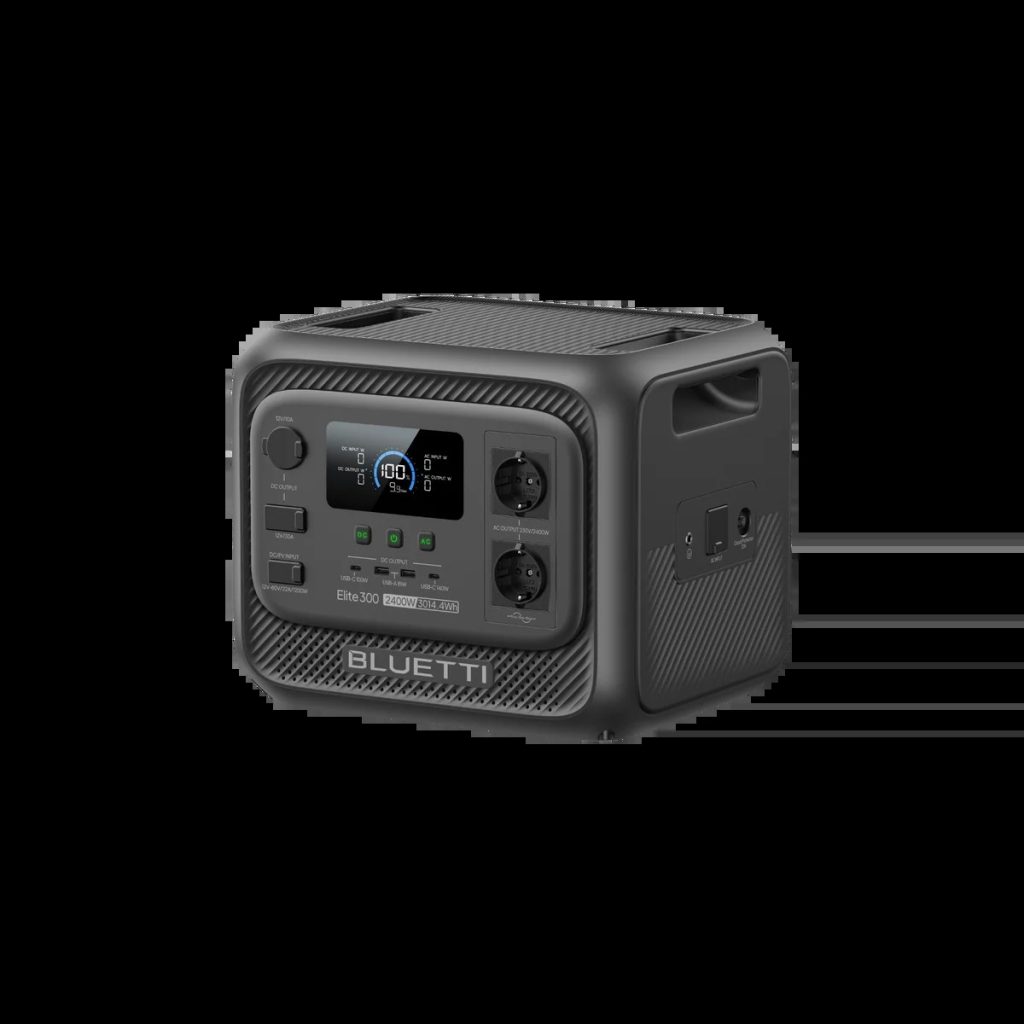
One newer exception to that kettle rule in this size class: the BLUETTI Elite 30 V2 sustains a full 600W of AC output from a 288Wh body, so a small kettle is genuinely on its list.
Common Mistakes People Make in This Class
Ordering the DC version by accident. Covered above because it deserves repeating. Same family name, no AC outlets. Read the front panel photo every time.
Sizing by watt-hours alone. A 300Wh station with a weak inverter cannot start loads a same-capacity rival handles easily. Output first, capacity second, always in that order for plug-in gear.
Planning meals around it. Kettles, hot plates, induction hobs — this class says no. People who accept that upfront enjoy these stations. People who don’t, return them.
Trusting solar to refill it by lunch. A single panel in real sun delivers a fraction of its label rating across a day. Solar here is a range extender. Wall charging before departure is the plan; the panel is the bonus.
Why, How, and What — the Short Version
Why does the same capacity feel different between brands? Because usable output depends on inverter efficiency and how aggressively the maker rates the pack. Two stations with near-identical storage can deliver noticeably different runtimes on the same load, which is why the AC output figure and chemistry tell you more than the headline number.
How do you get the most runtime out of 300Wh? Run everything you can on DC. USB-C charging skips the inverter, and inverter losses are real — often the difference between a laptop charge and a laptop charge plus a phone. Turn the AC section off when nothing is plugged into it; an idle inverter still sips.
What should you check on delivery day? Outlets first — count them against what you ordered. Then charge it fully, run your actual kit for an evening at home, and watch the percentage fall. That one test tells you more than any spec sheet, and it happens while returns are still painless.
Questions People Ask Before Buying
Real buyer questions, straight answers
Is the Anker SOLIX C300 worth it over a big power bank?
Yes, if anything you own ends in a wall plug — the AC outlets and the car socket are what a power bank cannot give you, and that is the entire reason this product exists. If your kit is phones, a tablet, and a light, though, the honest answer flips. A large power bank is smaller, cheaper, and does that job just as well. The C300 earns its size only when AC or 12V enters the picture.
What is the difference between the SOLIX C300 and the C300 DC?
The C300 has AC outlets and recharges from a wall cable; the C300 DC has no AC outlets at all and leans entirely on USB and its car socket, gaining extra USB-C ports and a pop-up light instead. They share a name and a battery class, which is why buyers mix them up constantly. Want to run a plug? You want the AC model, full stop.
Can a 300Wh portable power station run a kettle or a coffee maker?
No — kettles and most coffee makers draw several times the AC output of every station in this class, and they will shut the inverter down or simply refuse to start. This applies to the strongest model here too, boost mode included. Boil water with gas or fire at camp, and save the battery for electronics, lights, and coolers, where it genuinely shines.
C300 or RIVER 3 Plus — which should I pick?
Pick the RIVER 3 Plus if AC output, one-hour wall charging, UPS behavior, or future expansion matter to you, because it wins each of those categories outright. Pick the C300 if you will carry the thing often and your loads are mostly USB-C with occasional light AC use. Weight versus wattage. Most regret comes from buying the light one for heavy loads, not the other way around.
How long will a station this size run a CPAP or a small fridge?
It depends heavily on the device and its settings, but the pattern is consistent: a 12V travel cooler sipping intermittently can go for a good stretch of a day, while a CPAP typically covers a solid part of a night, longer with heated features off. Treat maker charts as best cases. The only number that counts is your own home test with your own machine, done before the trip, not during it.
Frequently Asked Questions
Does the SOLIX C300 charge with solar panels?
Yes, it accepts solar input sized for a single portable panel, and it works best as a daytime top-up rather than a full recharge plan. Expect a few sunny hours to replace what a night of lights and phones used. For a full refill, the wall cable at home is still the reliable route, with solar extending your stay once you are out.
Can I use a small power station while it is charging?
Generally yes for this class, and it is handy in a vehicle where the station tops up while the cooler runs off it. Just remember the math still applies — if the load outdraws the input, the battery drains anyway, only slower. Pass-through use is a convenience, not free energy.
Is LiFePO4 really better than regular lithium-ion here?
For a station you plan to keep for years, yes. LiFePO4 packs tolerate far more charge cycles before fading, and they run cooler under stress. The trade is weight per watt-hour on paper, though this generation has mostly erased that gap. If a listing in this class still uses older lithium-ion cells, that alone is a reason to look at the next option.
Will one of these run a TV or a game console at home?
A modest TV or a console sits within reach of the stronger models for a limited stretch — fine for finishing a match during an outage, not for an all-evening session. The C300 handles smaller screens and charging duty better than sustained entertainment loads. Measure your setup’s draw if this is your main use, because screens vary wildly.
How long do these stations hold a charge in storage?
LiFePO4 holds up well — months of shelf time with modest loss is normal, which makes this class good emergency kit. Store it partly charged rather than brim-full, top it up every few months, and it will be ready when the power actually goes out. A station stored empty for a year is the one that disappoints.
Should I buy the station or the bundle with a solar panel?
Buy the station alone first unless the bundle discount is genuinely large, because panel choice depends on where you camp — shade, latitude, and how long you stay put. A panel bought later, matched to your actual sites, beats a bundled one chosen by a warehouse. The exception is a first kit for sunny, stationary camping, where the bundle’s simplicity has real value.
Key Takeaways
The C300 name covers two different machines → Only the AC version runs plug-in devices; the DC version is USB and 12V only, so verify the outlets in the listing photo before ordering
Output beats capacity in this class → The RIVER 3 Plus delivers roughly double the AC power of the other two, which decides appliance compatibility more than the near-identical storage figures do
Heating appliances are out, full stop → Kettles, hot plates, and heaters exceed every station here; electronics, lights, coolers, and part-night CPAP are the honest workload
LiFePO4 is the chemistry to insist on → It outlasts older lithium-ion packs by years of cycles, and all three current models offer it — just confirm it on the exact listing you buy
Decision Tree: Which Small Station Fits You?
Mostly phones, lights, and camera gear, carried often → Anker SOLIX C300 (AC version) — lightest here, strong USB-C, and the AC outlets cover the occasional plug without bulk
Desk backup, bigger AC loads, or plans to expand later → EcoFlow RIVER 3 Plus — the output, UPS switchover, and expansion port justify its extra weight
Simple kit, first station, no app required → Jackery Explorer 300 — a familiar, durable layout that anyone in the family can operate without instructions
Electric cooking or heating on the plan → None of these — step up several capacity classes, or cook with gas and let a 300Wh station do what it is good at
Final Recommendation
For most people reading a review of this size class, the Anker SOLIX C300 — the AC version, checked twice before ordering — is the right default. It is the one you will actually bring, its USB-C output is strong enough to be the main event rather than a footnote, and the AC outlets rescue the moments a power bank cannot. Just buy it with clear eyes: it is an electronics station, not a kitchen.
If your loads lean heavier, or the station will live beside a desk waiting for an outage, the EcoFlow RIVER 3 Plus is the better machine and it is not particularly close. And the Jackery Explorer 300 remains the sensible, simple pick for a first kit. Three good answers. The only real mistake available here is the wrong C300 in the cart — and now you know how to spot it.
Top 3 Portable Power Stations Around 300Wh
Similar storage, very different strengths — AC output, weight and charging are the differences that matter.
Anker SOLIX C300 Portable Power Station
The lightest LiFePO4 pick here, with three AC outlets and strong USB-C — the default for electronics-heavy car camping
EcoFlow RIVER 3 Plus Portable Power Station
Roughly double the AC output, fast UPS switchover and expansion-battery support — the pick for desk backup and heavier plug-in loads
Jackery Explorer 300 Portable Power Station
The familiar all-rounder: two AC outlets, simple layout, LiFePO4 in the current version — for first kits that anyone can run
Prices and availability may vary — tap any product to check the current listing.
Affiliate Disclosure: This article contains affiliate links. If you buy through one of these links, we may earn a commission at no extra cost to you.