This site contains affiliate links. We may earn a commission on qualifying purchases.
The night the grid went down on our street, the first question at my kitchen table was not how long the food would last. It was smaller and dumber than that. How many watts does this house actually need? I had a station in the garage with 3,600W printed on the side and a fridge humming at me like it wanted an answer. The honest answer, the one I have rebuilt three times since on the back of a grocery receipt, is that the question hides two different numbers, and most people go shopping with the wrong one.
Start with the average, because it is the number that misleads everyone. A typical American home burns through roughly 10,500 kilowatt-hours a year, which works out to an average draw of about 1,200 watts. Twelve hundred watts sounds like a mid-size station and a free weekend. It is also nearly useless for sizing anything, because a house does not sip power evenly. It loiters near a few hundred watts at 3 a.m. — fridge cycling, router, a clock radio nobody admits to owning — and then everybody comes home at six, the cooking starts, the water heater wakes up, and the same house briefly pulls 5,000 to 8,000 watts without the air conditioning doing anything unusual at all. The devices doing that 3 a.m. loitering are exactly the ones a monitoring plug can name and price — see what a smart plug can measure at idle before you guess at your own baseload.
Add a 3-ton central AC on a hot evening and the peak steps past 10,000 watts. Not for hours. For the overlap, maybe twenty minutes where the compressor, the oven, and the dryer all happen to be awake at once, and that overlap is the whole sizing problem. A station does not care what your house averages. It cares what your house asks for in the worst single second.
The nameplate sum is a lie your breaker panel tells
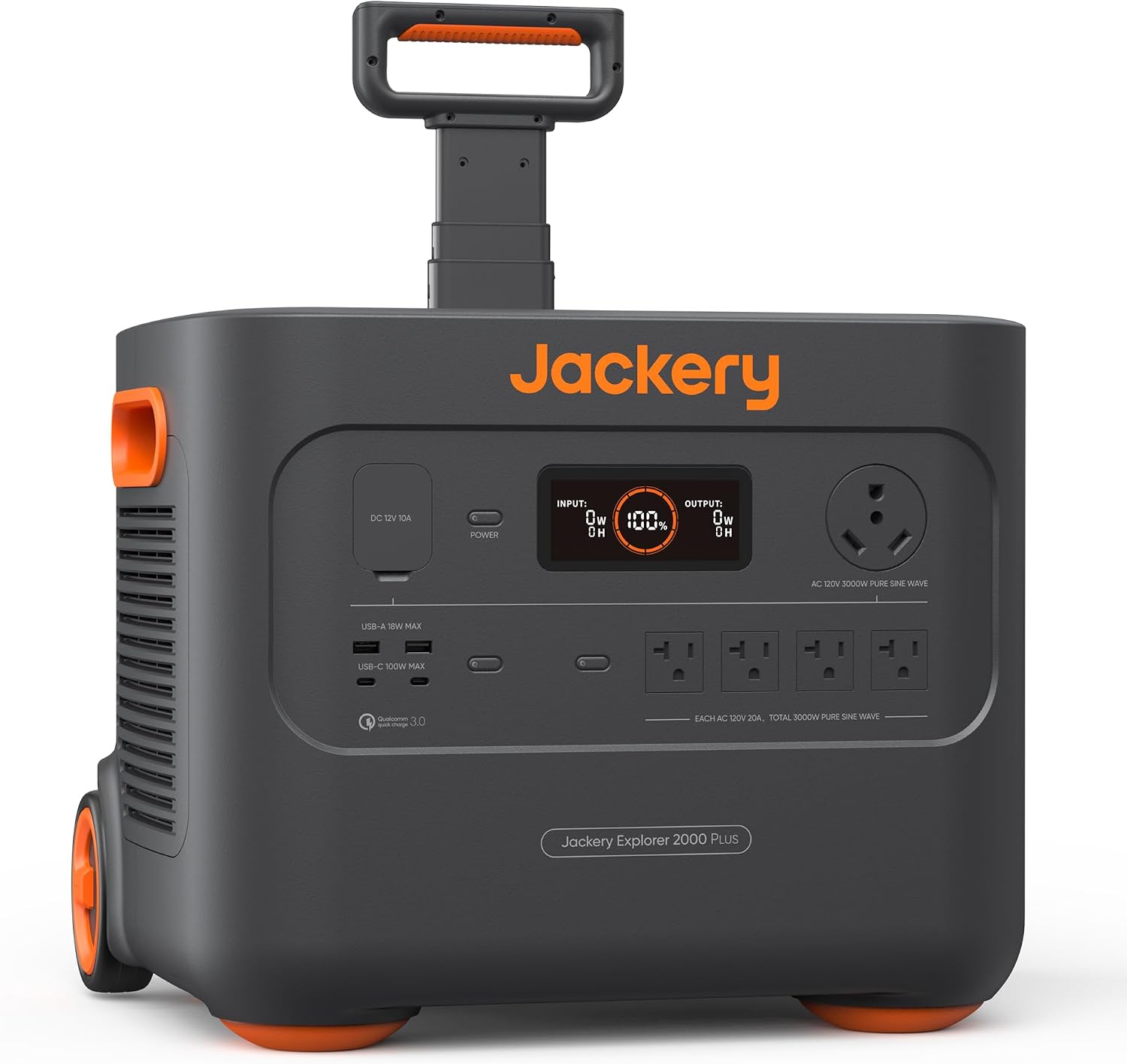
Walk to your panel and add up the breakers and you will get a number north of 200 amps, which at 240 volts works out near 48,000 watts, and if houses actually drew that, the street transformer would file a complaint. Nameplates describe what each circuit is allowed to pull, not what anything pulls at the same time. Electricians have a dull word for the correction — demand factor — and it is why a 200-amp service feeds a house whose stickers sum to three times that. The fridge sticker says something like 150 watts running. It does not mention the 800 to 1,200 watts it grabs for a fraction of a second every time the compressor starts.
Startup surge is where the receipt math goes to die. First pass, I wrote my well pump down at 1,500 watts and called the list done. Actually, no. That is the cruising number. A pump that cruises at 1,500 watts can want 3,000 to 4,500 to get turning. A central AC compressor is worse — the locked-rotor draw on a 3-ton unit can spike into five figures for a blink, which is why a station rated a comfortable margin above the AC’s running watts still trips, and why soft starters exist, trimming that spike by roughly two-thirds so a big inverter can catch the compressor instead of folding. I have not run my own AC off a station, so that corner of the map is secondhand for me. The fridge and the pump I have watched fail in person, and once is enough tuition.
Half the house runs on a voltage your station may not make
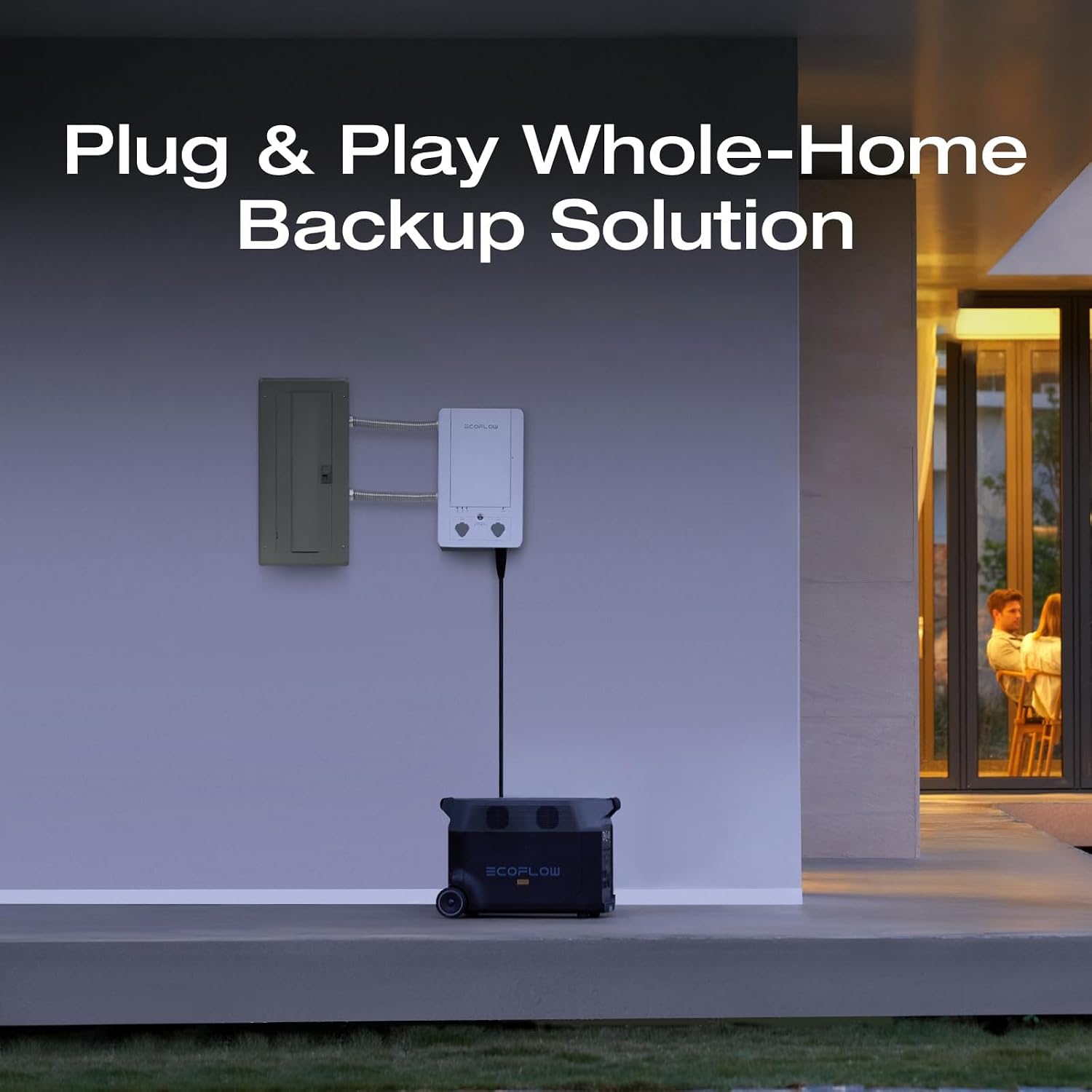
Here is the gate nobody puts in the headline. The dryer wants about 5,400 watts. The range wants more. The well pump, on most installs, wants its share too. And all three are 240-volt loads in a country where a single portable station, even a big one, usually speaks 120 volts only. No watt rating fixes that. A 3,600W station and a 6,000W station are equally useless to a 240V dryer if the voltage is not there — the plug will not even pretend to fit. Getting 240V out of this product class means pairing two units through a double-voltage hub, or stepping up to the handful of single boxes built split-phase from the start, and that decision costs more than the jump between watt classes does.
Which is why the outage version of a house is a smaller house. What most people actually protect is a list, not a building: fridge, some lights, the router and modem, a furnace blower or a couple of fans, phones, maybe the garage freezer. Added honestly, with the surges respected, that list peaks somewhere between 2,000 and 3,600 watts and idles along at a few hundred. That is a station-sized problem. The full house, dryer and range and AC included, is a standby-generator-sized problem. How long any of it lasts is a separate calculation — what size portable power station you need in watt-hours, after the watts are settled.
Watts decide what starts. Watt-hours decide what is still running at breakfast.
The second number hides in the first one’s shadow. A 3,600Wh station delivering its full 3,600W is empty in about an hour on paper, and paper is generous: run the output through the inverter and roughly 15% leaves as heat, so call it 3,000-odd usable watt-hours and under an hour at full tilt. Nobody sane runs a station at full tilt for an hour. The point of the arithmetic is the inversion — the big watt number on the box is a ceiling for starting things, and the watt-hour number, the one in smaller print, is the budget everything gets paid out of. After 30 minutes at a 500W load I put my hand against the side vent of my unit and got a palmful of genuinely hot air, which is the efficiency loss leaving the building. Fifteen percent, give or take, exiting as weather.
Then there is the tax that runs even when nothing is plugged in. An inverter left switched on sips somewhere around 20 to 40 watts just staying awake — reviewers who meter this class of box keep landing in that band, and the smaller units get bitten hardest in percentage terms. Leave the AC side on overnight and you have spent 300 to 500 watt-hours buying nothing. During a one-night outage that is an annoyance. On day three of an ice storm it is the fridge.
One more piece of housekeeping. The AC outlets on most of these boxes are spaced like the designer never met a wall-wart. Two bulky adapters side by side is a negotiation, and the wide furnace plug ends up covering the socket you wanted for the lamp. It changes nothing about the watts. It changes which extension cord you run across the kitchen at midnight, which, in outage terms, is also a specification.
What the ratings file says about buying watts
I pulled the rating distributions for the three stations in the box below from their marketplace listings — the same three units, checked again this week, still sitting at 4.6, 4.7, and 4.5 stars. The shape matters more than the averages. On the last full histogram pull, the Jackery’s file was the cleanest: 90% five-star and 2% one-star, though on a thin 203 ratings. The EcoFlow, the unit most explicitly sold as a whole-house answer, carried 84% five-star and a 6% one-star tail across 669 ratings. The BLUETTI sat at 77% and 4% on 748. Read that pattern slowly. The angrier tail hangs on the machine with the biggest house promise attached to it, and a good share of those one-star stories, when you open them, are not breakdowns. They are arithmetic — somebody bought 3,600 watts, discovered 3,600 watt-hours is a different animal around hour two, and rated the discovery. If you want the head-to-head version of two of these brands, the Jackery vs EcoFlow comparison on this site argues it out, and the fridge question — can a solar generator power a refrigerator — gets asked first for a reason. It is the load that decides whether an outage is a story or a grocery bill.
Three Stations, Judged by the Watts They Can Actually Start
Output first, capacity second — the order the outage will grade them in.
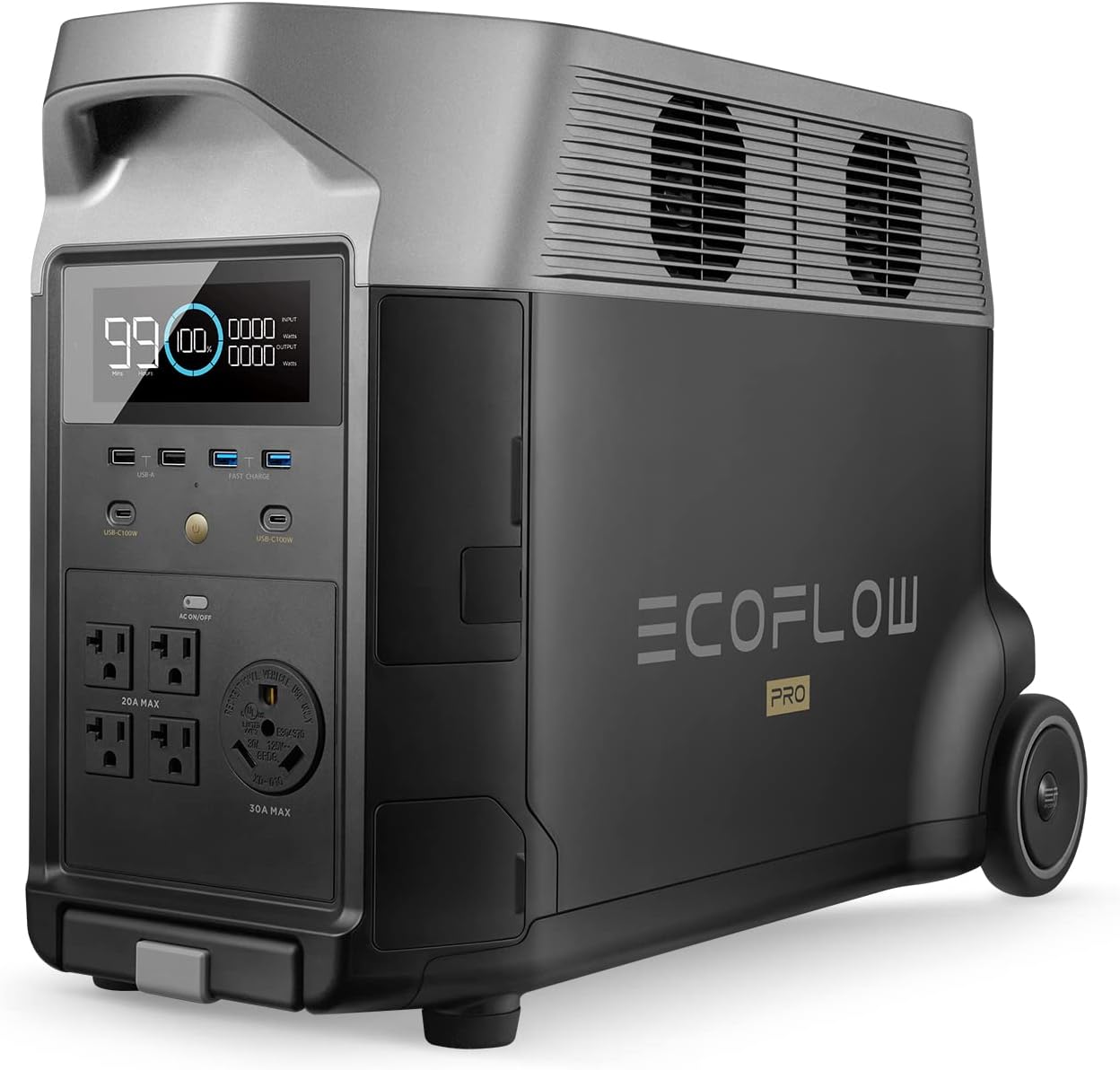
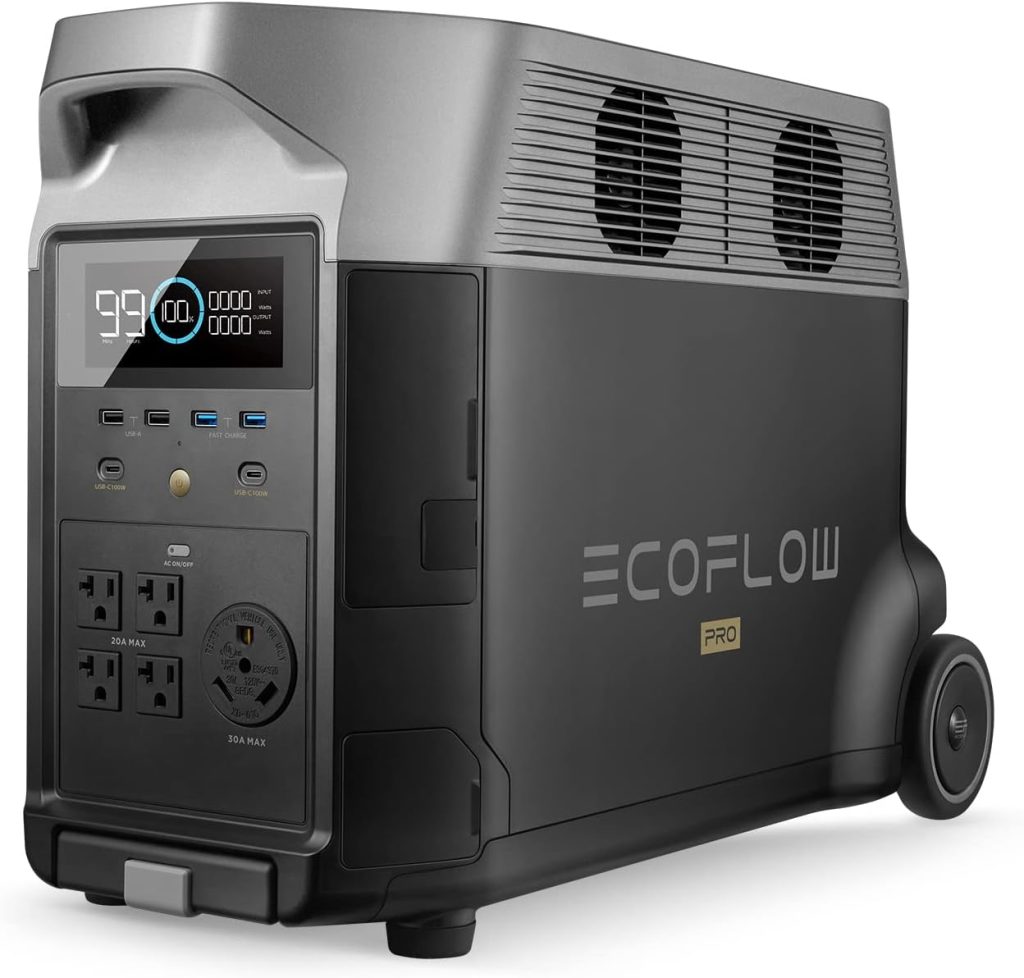
EcoFlow DELTA Pro
3,600W output and 3,600Wh in one box, with a 30-amp outlet for a transfer switch; two units plus a hub reach 240V and 7,200W for the loads a single box cannot touch
Jackery Explorer 2000 Plus
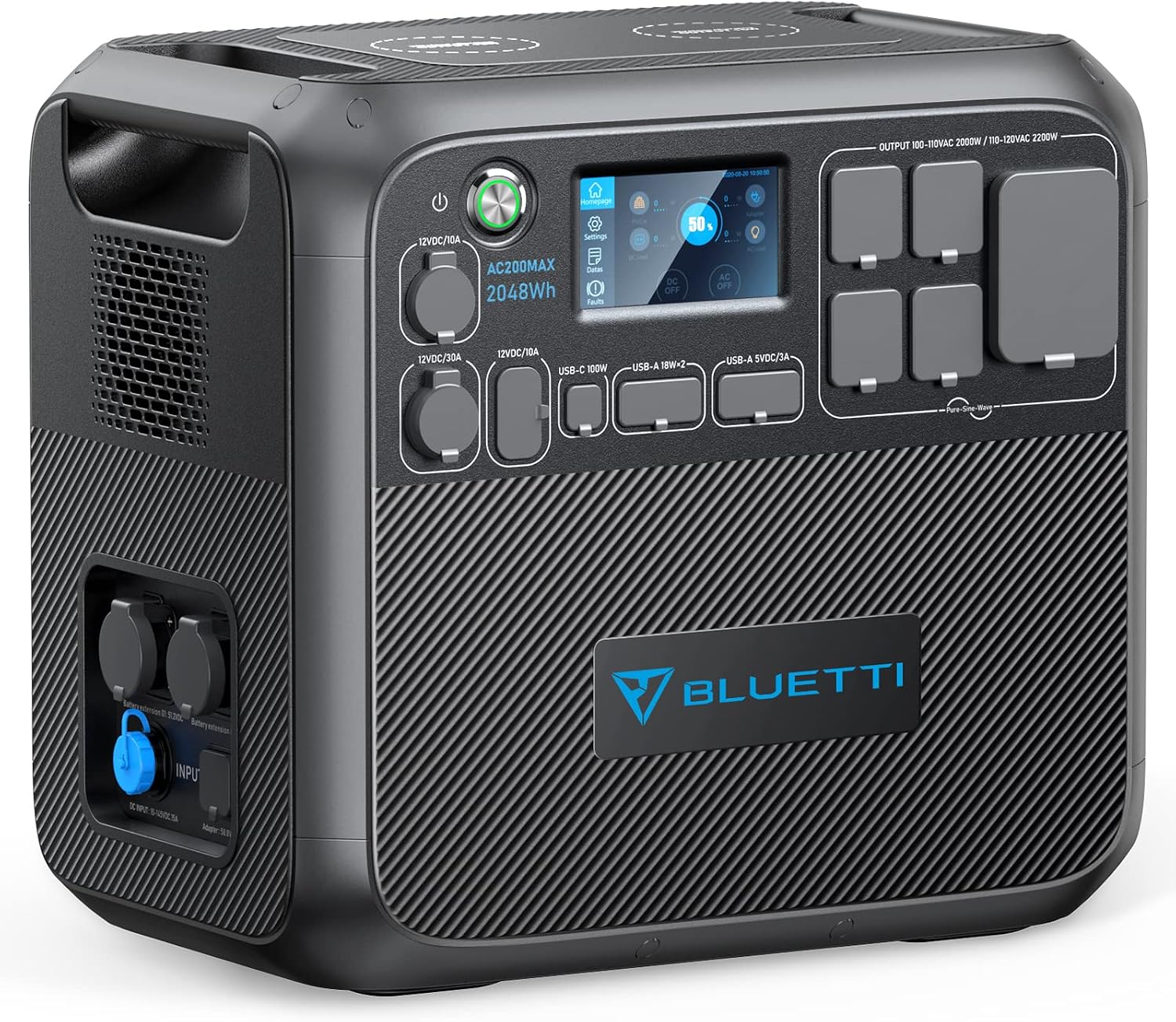
3,000W output over 2,042Wh, expandable with add-on packs; the cleanest ratings file of the three, and 120V only, so the 240V loads stay off the list
BLUETTI AC200MAX
2,200W output and 2,048Wh, expandable toward 8,192Wh with external batteries; enough ceiling for a fridge-plus-lights list, not for pretending the whole house came along
This site contains affiliate links. We may earn a commission on qualifying purchases.
Questions people ask after the first outage, not before
My breaker panel says 200 amps. Does my house need 48,000 watts?
No, and the panel is not lying to you so much as answering a different question. Two hundred amps is the service ceiling, the most the utility connection will hand over at once, and a house at its six o’clock peak uses a fraction of it. The breaker numbers are permissions, one circuit at a time, and they were never meant to be added into a shopping figure. If you want your own peak instead of the national one, the meter outside already knows it — many smart meters show the month’s highest 15-minute demand in the utility app, and one week of glancing at the draw while dinner cooks teaches more than any sizing chart, mine included.
Can a 3,600W station start my central air conditioner?
Starting is the right word, and it is where the honest answer gets slippery. A 3-ton AC runs near 3,500 watts once it is turning, which sits inside the rating, but the startup spike is several times that for a fraction of a second, and that spike is what trips inverters. A soft starter cuts the spike down to something a big station can catch, and plenty of owners do exactly that. Whether it then runs long enough to matter is the watt-hour question again — a 3,600Wh box feeding a 3,500W compressor is a one-hour air conditioner. I have not done this at my own house. The compressor math is sound; the comfort arithmetic is not.
The fridge only draws 150 watts. Why was the station empty by morning?
Because the fridge does not draw 150 watts, it averages something like that across a day of cycling on and off, and the station was paying other bills all night. The inverter’s standby appetite runs whether the compressor is turning or not, the conversion loss takes its cut of every watt that passes through, and the starting surge, while brief, is not free either. Add a router, a phone charger, and the porch light somebody left on the circuit, and a 2,000Wh box arriving at breakfast empty is not a defect. It is the budget, spent the way budgets get spent — quietly, in the background, on things nobody listed.
Should I size for the dryer and the range too?
Most households that live through outages on battery quietly take both off the list, and it is less of a sacrifice than it sounds. Laundry waits a day without spoiling. Cooking moves to a single-burner induction plate at 1,300 watts or out to the grill, and the 240V problem, which was never really a watt problem, leaves the room with the appliances. What stays is the stuff that rots, freezes, or keeps somebody medically comfortable. Size for that list, with the surges counted and a quarter of headroom on top, and the number that comes out — usually 3,000 to 3,600 watts of output for a typical short list — is a number you can actually buy.
The receipt from that first outage is still in my kitchen drawer, under a takeout menu, with the fridge crossed out and written in again at a different number. The list itself has not changed much since. Fridge, lights, router, blower. What changed is that the watts column now has two numbers in it for every line — what it runs at, and what it grabs when it starts — and the second column is the one that decides whether the lights stay on. One of these nights the street will go dark again and I will find out which cell of that spreadsheet I got wrong this time.