This site contains affiliate links. We may earn a commission on qualifying purchases.
The support ticket rarely opens with the real problem. It opens with the app. A production graph that flatlined in March. A login page that spins. A phone number on an old invoice that rings out to a disconnected tone — and then, in the second or third reply, the actual sentence arrives. I think my installer went out of business. What happens to my system now?
Most of it survives. That is the part nobody says out loud while you are still annoyed at a dead phone line. The warranties on the hardware were never the installer’s to give or to take back — they were issued by the manufacturers, and they follow serial numbers, not company logos. What actually died is narrower and more annoying. A workmanship promise. A service desk. The admin account on your monitoring portal. Three different losses that feel like one big one, and each of them has a different fix.
This month a Florida homeowner posted that the company which put his system in, back in the summer of 2023, had already closed by the time he called for service — PES Solar, over in Manatee County — and he was asking strangers online which other local installers had folded. He is not an unusual case. He is the queue.
Three warranties walked into this. Only one of them died.
Start with the panels, because they carry the longest paper. A typical residential panel ships with a 25-year performance warranty, and the fine print at the end of that term is a floor, not a forecast — manufacturers guarantee something in the region of 80 to 87 percent of original output at year 25. That promise belongs to the panel maker. The inverter warranty sits with its maker too, commonly ten or twelve years on a string inverter and often twenty-five on microinverters. Batteries follow the same pattern, which is why how long solar batteries last is really two questions — one about chemistry, one about whose name is on the warranty card. Neither answer changes because a local installer locked its doors.
The workmanship warranty is the casualty. That one was the installer’s own paper — roof leaks around the mounts, wiring faults, the labor side of a warranty swap. When the company closes, that promise closes with it, and I am not going to dress that up. The loss is real. It is also smaller than it first feels, because workmanship paper never covered the expensive parts. It covered the truck roll. A warranty replacement inverter is still a free inverter if the claim is filed properly. You are now the person who files it, and you may pay a few hundred dollars of labor to whoever hangs the new unit. Annoying. Not catastrophic.
I used to tell people the contract was the key document in the folder. Actually, no. The serial list is. A contract proves a system was bought. A serial number identifies the physical box bolted to your wall, and manufacturer support systems are indexed by serial, not by installer. Every smooth claim I have seen began the same way — somebody produced the serial numbers without having to climb anything. They sit on the inverter’s side label, in the portal’s device list, and on the equipment pages of the install paperwork. The serial list, the interconnection letter, two winters of utility bills. That is the folder. Everything else is decoration.
The app going dark is not the system going dark
Here is the confusion that generates half the panic. On a lot of installs, the monitoring account was created under the installer’s admin umbrella, with the homeowner added as a viewer. While the company lives, nobody notices. When it dies, password resets land in a dead inbox, alerts stop, the graph freezes — and the roof keeps making power the whole time, because the panels never needed the portal’s permission to work.
Manufacturers run ownership transfers for exactly this situation. Expect to prove the system is yours: the install paperwork, a utility bill or closing document with your name and that address, the serial numbers again. The transfer takes days, sometimes a couple of weeks, and part of that is deliberate — a portal account controls a piece of electrical infrastructure, and the makers are not casual about handing it over. Whether your specific portal lets a new service company sit alongside you as a second admin, that one I cannot answer from here. It varies by brand and by how the account was structured.
While the paperwork crawls, the hardware will tell you the truth for free. The inverter display at solar noon is the oldest instrument in this business, and in direct sun it is washed out to nothing — the reading only appears once a hand shades the screen, which feels ridiculous and works every time. Cloudy days make the numbers jump in a way that looks broken and is not. Watching the input on a broken-cloud afternoon, I have seen a healthy array swing from a couple of kilowatts to near its ceiling and back inside a minute. A steadier check is the day total. An 8 kW system under a clear sky in a decent sun state should land somewhere in the mid-30s to low-40s of kilowatt-hours — nameplate times roughly five and a half peak sun hours, times about 0.8 for heat and conversion losses, give or take. Near that band, your system is fine and your problem is an account. At zero with a fault code showing, that code is the first thing the manufacturer will ask for. Write it down before it clears — codes clear, and then everyone is guessing.
The loan did not get the news
One more piece of paper survives, in the direction nobody wants. The financing is a separate contract with a separate company. A solar loan keeps its payment schedule whether the installer exists or not, and stopping payments over a dead inverter does not pressure the lender into fixing anything. It damages a credit file. The servicer is still worth a call — servicers keep lists of service partners and warranty contacts, because orphaned systems are a known category on their books too — but the call is for directions, not relief.
Leased systems flip the whole problem over. On a lease, you do not own the equipment on your roof. The financing company does, and the contract obliges that owner to deliver a working system, which includes finding a new operations provider when their installer vanishes. If that is your setup, the first call goes to the name on the lease, and the sentence is simple: your contractor is gone, the system is yours, here is the fault. Get a case number. From there the chasing is contractually their job.
And a hard boundary, because this is where orphaned-system stories turn dangerous. An unfinished system — panels up, inspection never passed, no permission to operate from the utility — is not a DIY finishing project. Neither is anything inside a combiner box or behind an inverter cover. Those belong to a licensed electrician working with the interconnection paperwork, full stop.
What a takeover looks like, and what it should cost you
A reputable service company, handed a stranger’s system, will want to see it before promising anything. Budget a few hundred dollars for that first visit — production checked against what the array should be making, error history read, roof penetrations and wiring given a proper look. Owners grumble at paying for an inspection. The alternative is worse. The ugliest pattern in the ticket queue is the owner quoted a full equipment replacement by the first company that answered the phone, before anyone had been on the roof or read a single fault code. A system that has not been evaluated has not been condemned, whatever the quote says.
Sometimes the evaluation ends in a bucket of water. Field studies in the dusty Southwest put soiling losses at roughly 3 to 7 percent a year on uncleaned arrays, and a film of dust and pollen looks, on a production graph, exactly like a panel quietly failing. The takeover visit that cleans first and measures second is not padding the bill. It is doing the diagnosis in the only honest order. The panels themselves are seldom the dead component here — how long solar panels last on a roof is measured in decades, and the hardware routinely outlives the companies that installed it, which is rather the point of this entire article.
Not the panels. Almost never the panels.
Eyes of your own, for the next twenty years
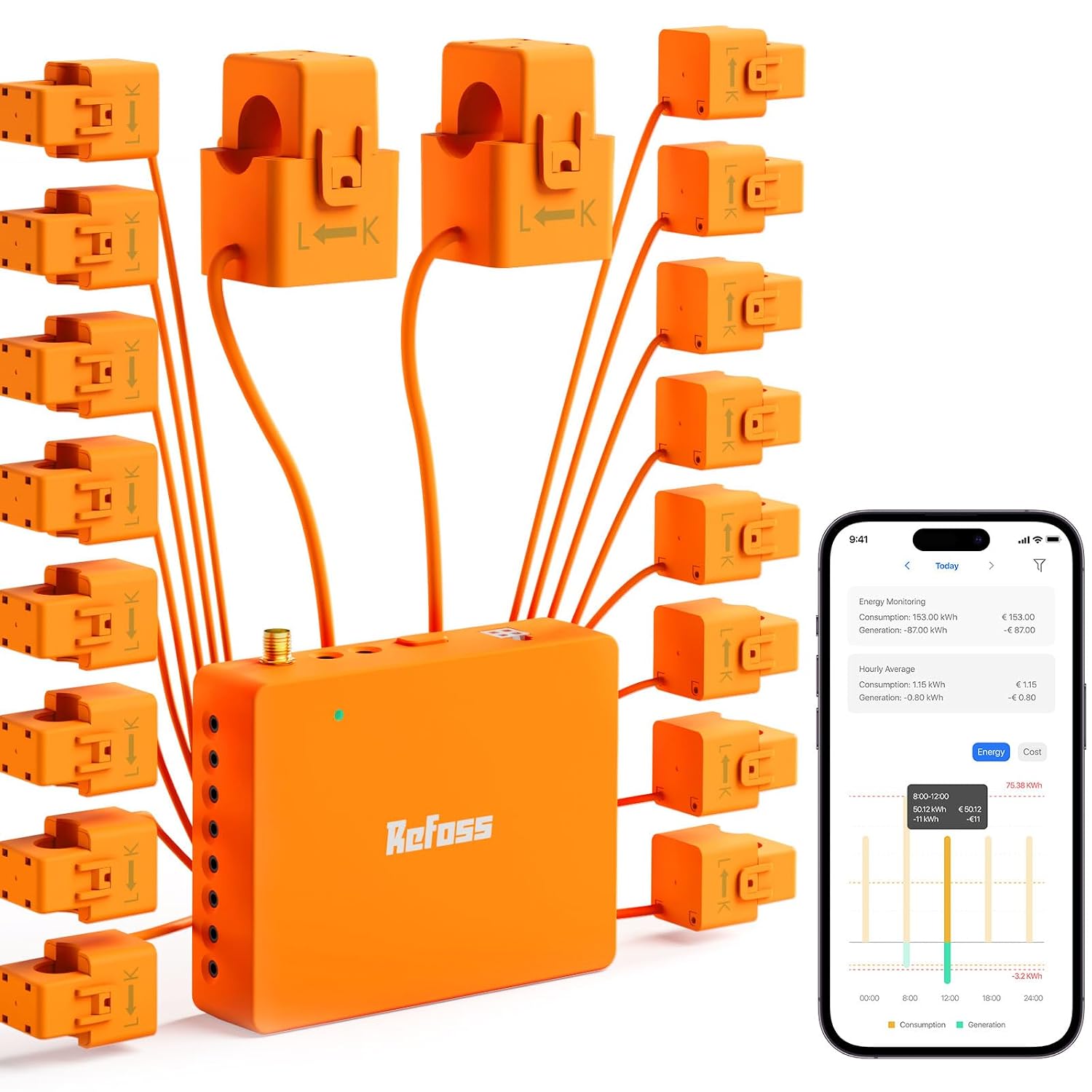
The deeper fix is to stop depending on somebody else’s portal for the truth about your own roof. A circuit-level monitor in your own panel, on your own account, keeps reporting whether or not any solar company survives — and we have already taken one of the current options apart in our Refoss smart energy monitor review. I pulled the ratings files for the three products below this week, 3,481 ratings between them, and the pattern is worth more than the star averages. The Emporia sits at 4.2 stars across 879 ratings with the happiest file of the three — 80 percent five-star, only 2 percent one-star. The Refoss, the one built around keeping data local, carries 4.3 stars across a smaller 315 ratings but the thickest angry tail, 9 percent one-star. Read that twice. The monitor that frees you from the cloud is the one owners fight with most, because the freedom arrives as setup work, and setup work is what gets rated. The cleaning kit tells the same story from the other end: 4.2 stars across 2,287 ratings, 61 percent five-star and 7 percent one-star, with complaints clustering on reach and water pressure expectations rather than on anything breaking. Independence, in this category, is not a feature you buy. It is an afternoon you spend.
Three Tools for Owning a System Nobody Else Watches Anymore
Your own eyes on production, your own data, and the one cleaning job that is safe to do yourself.
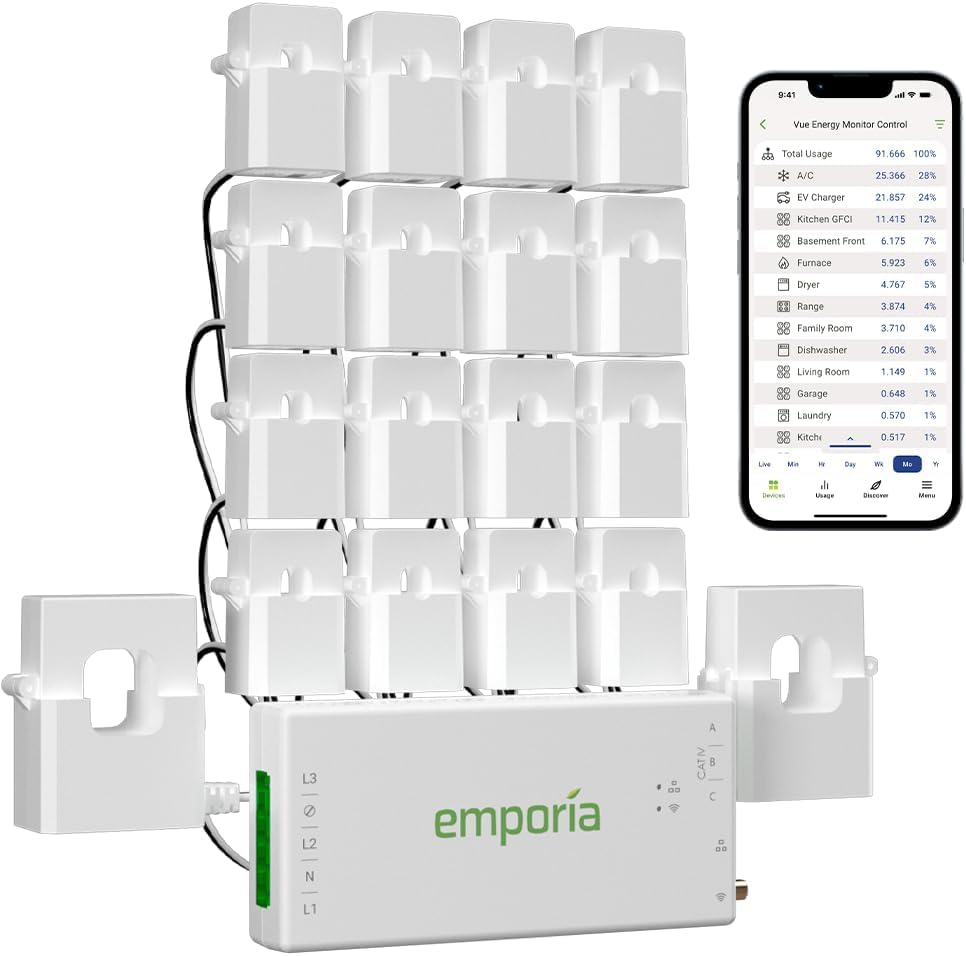
Emporia Vue 3 Energy Monitor
Sixteen 50A circuit sensors with solar and net metering, UL Listed, rated 4.2 stars across 879 ratings; the polished cloud app is also its one dependency, so keep the utility meter as your backup witness
Refoss Smart Energy Monitor EM16P
Local web interface and open API with no cloud account standing between you and your data, 4.3 stars across 315 ratings; expect a fussier setup afternoon in exchange for data no closure can take away
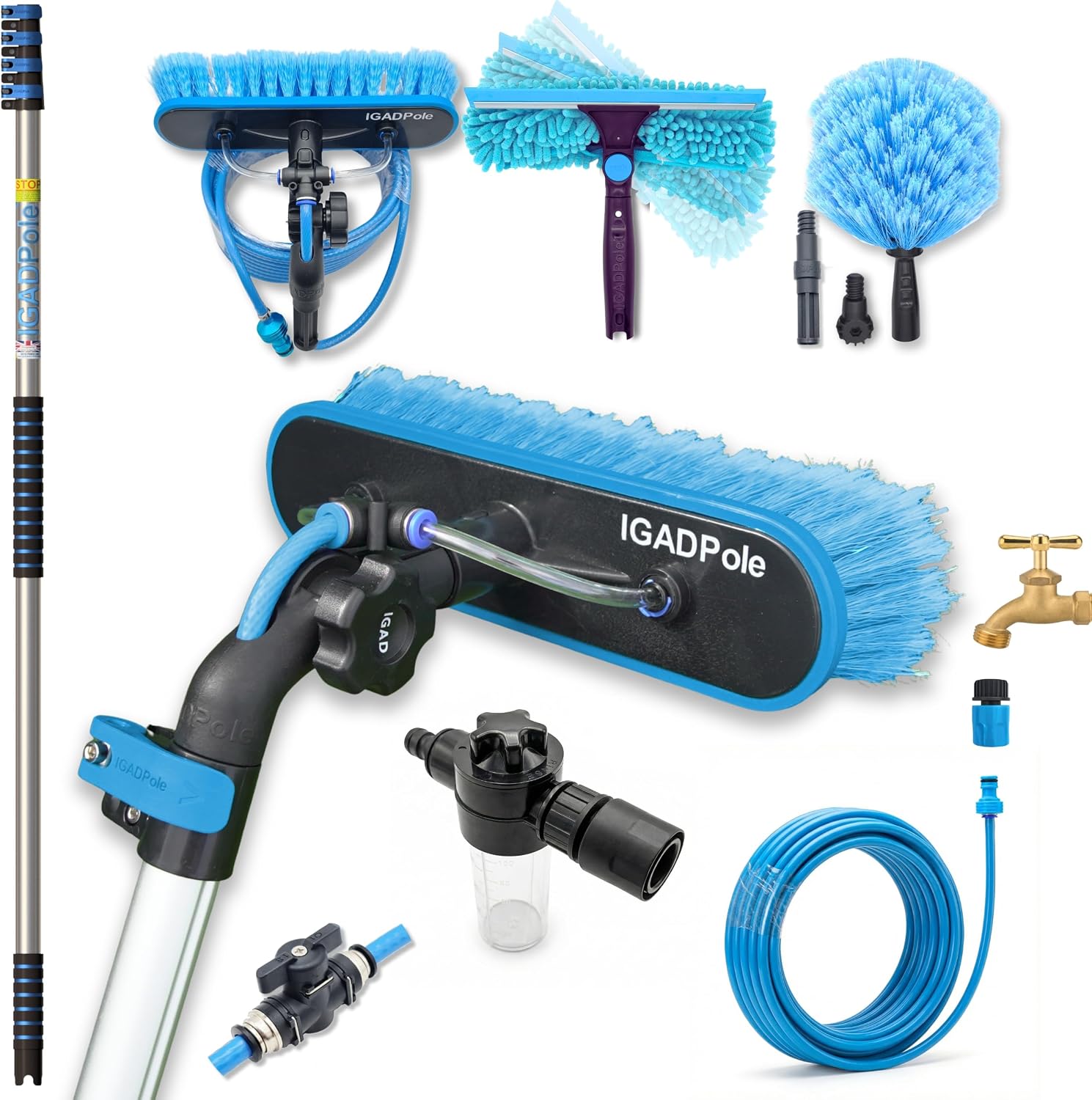
IGADPole 17 FT Water-Fed Cleaning Kit
Telescoping water-fed brush and squeegee rated 4.2 stars across 2,287 ratings, for ground-reachable and low-roof arrays; if reaching the panels means climbing, that job belongs to the service company, not to you
This site contains affiliate links. We may earn a commission on qualifying purchases.
Questions that arrive about a week after the phone stops ringing
My installer closed last year. Is the 25-year panel warranty in my contract still worth anything?
Yes. Panel performance warranties are issued by the panel manufacturer and follow the equipment by serial number, so the closure of the installing company does not cancel them. The 25-year term usually guarantees an output floor somewhere between 80 and 87 percent of original rating at year 25, and the claim goes to the manufacturer’s support line, with your serial list and proof of ownership in hand. What you lost is the installer filing that claim for you and covering the labor — the part is still covered, the truck roll is now yours to arrange.
The monitoring app says my system produced nothing for six weeks. Is the system dead?
Probably not, and the app is the weakest evidence available. The portal reports what the account can see, and when the installer held the admin rights, a closure can freeze the graph while the roof keeps producing. Check the inverter display around solar noon or the day’s export on your utility meter — a healthy 8 kW array on a clear day should land in the mid-30s to low-40s of kilowatt-hours. If the hardware shows production, your problem is an account ownership transfer. If the display shows a fault code instead, write it down exactly, because that code is what the manufacturer’s support line will ask for first.
Can I stop paying the solar loan until somebody fixes my system?
No, and doing it would trade a fixable problem for an ugly one. The loan is a separate contract with a financing company that did not install anything, and missed payments land on your credit file while the system stays exactly as broken as before. Keep the payments current, document the fault with dates and fault codes, and use the loan servicer’s support line for what it is actually good for — servicers deal with orphaned systems constantly and can usually point you at the manufacturer’s warranty path and service partners who take over other companies’ installs.
Mine is a lease. The installing company is gone and the panels are on my roof. Who do I even call?
The company named on the lease or power purchase agreement. On a lease you do not own the equipment — the financing company does, the installer was their contractor, and the agreement obliges the owner to keep the system working. Call the owner first, tell them their installer has closed and the system has a fault or a dead portal, and get a case number before you hang up. Arranging a new service provider is their contractual problem, not yours, and it helps that every idle week is their asset earning nothing.
I have not bought solar yet. What paperwork should I demand on install day so this never strands me?
Four things, and none of them is exotic. A serial number list covering every panel, the inverter, and any battery. A monitoring account created in your own name and email, with you as owner rather than viewer. Copies of the permit and the utility’s interconnection approval. And written confirmation that the equipment warranties were registered with the manufacturers. If those four live in a folder at your house, the installer becomes a replaceable service relationship instead of a single point of failure — which, after the year this industry has had, is the only sensible way to hold it.
My own version of that folder is sitting on the counter by the door, still open, because the second of two manufacturer replies has not arrived yet and I refuse to file it away half-finished out of tidiness. The system on the roof does not know any of this is happening. It came up with the sun this morning and got on with it, the way it has every morning since install day, through one company that no longer exists. The folder stays open until the last transfer confirmation lands in it.