A good portable power station should disappear into a trip, and the DJI Power 1000 V2 makes a strong case for doing exactly that. It pairs a 1024Wh LiFePO4 battery with unusually high AC output for this size class, yet independent reviews keep coming back to the same point — it stays far quieter than most 1kWh rivals while doing it. That mix is rare. Plenty of stations are powerful, or portable, or polite at night. Fewer manage all three without asking you to lug a much heavier box. Coverage of the V2 landed widely in October 2026, partly because DJI fixed the two complaints that dogged the original: not enough AC outlets, and output that felt tight for a premium solar generator. Four outlets and a higher ceiling change how the station gets used day to day. But the quirks matter just as much as the headline numbers.
Quick Answer
The DJI Power 1000 V2 suits campers and creators who want strong AC output without the usual fan roar, especially anyone already flying DJI drones. Skip it if you want a solar panel that plugs straight in with no adapter fuss, or if a smarter app matters more than quiet. For home-backup-first buyers, rivals with deeper ecosystems make more sense.
Top 3 Portable Power Stations Around 1,000Wh
Same 1,024Wh class, very different strengths — AC output, noise and what is in the box are the differences that matter.
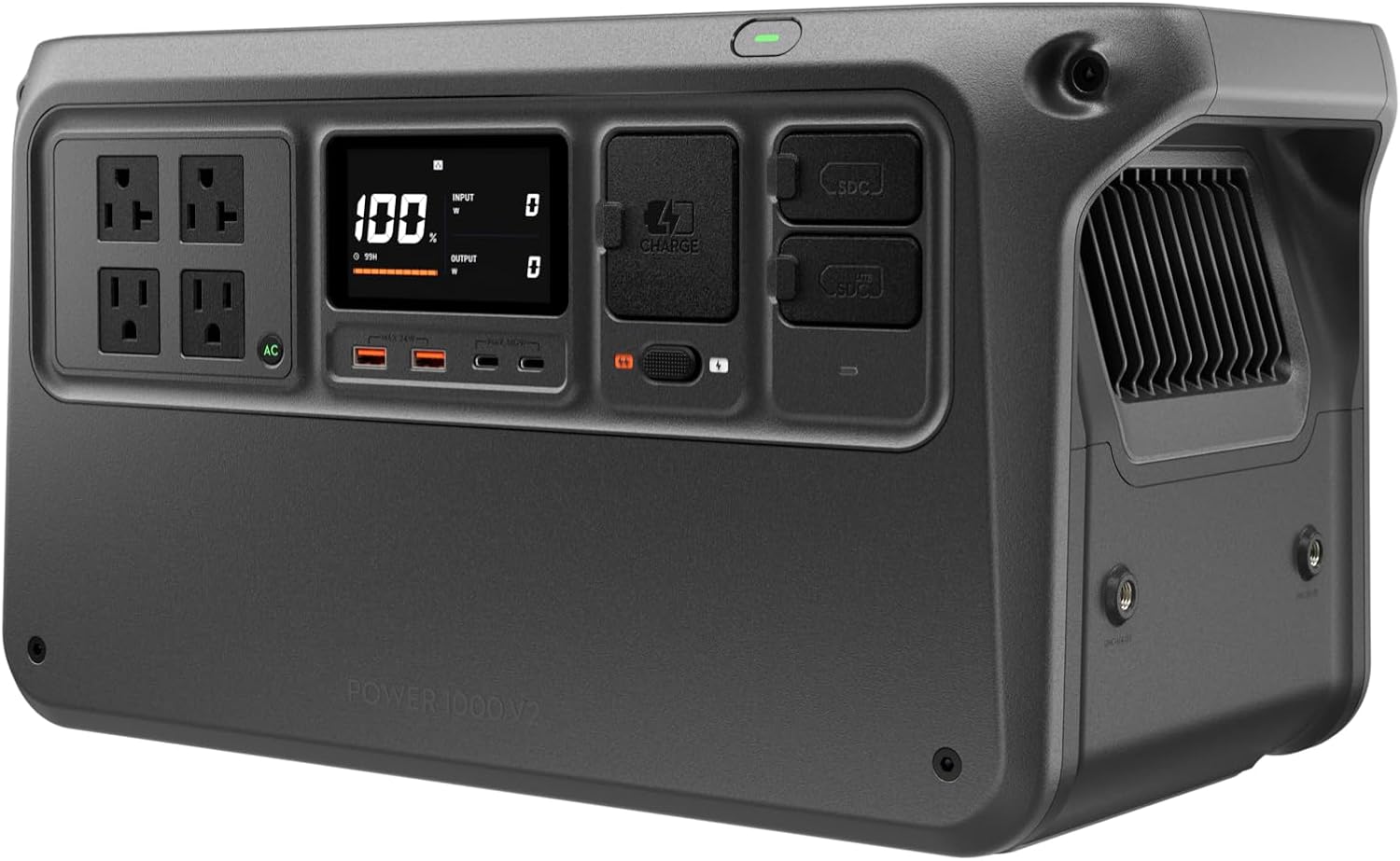
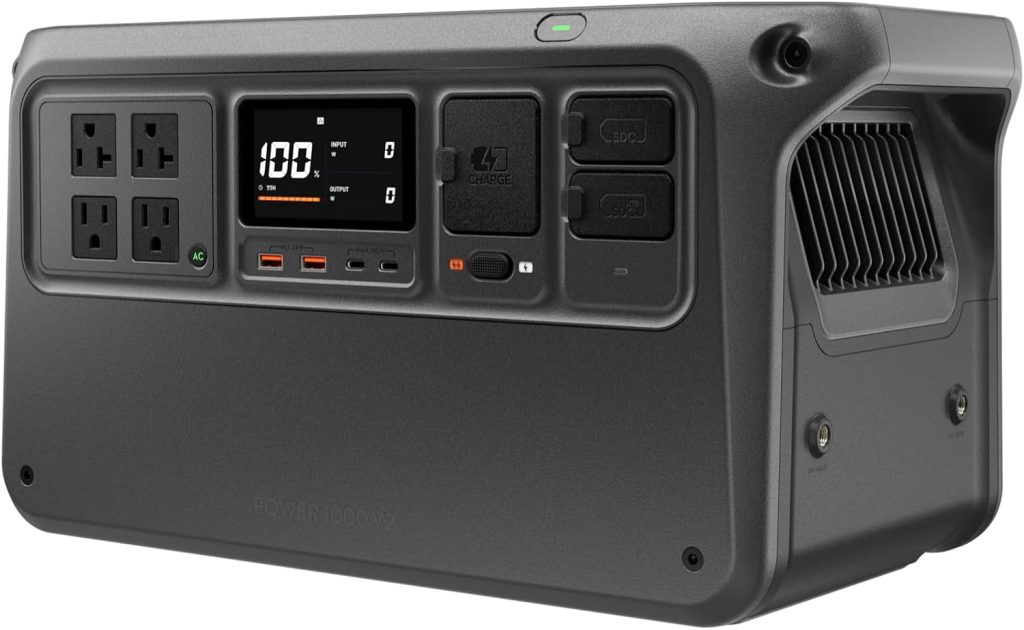
DJI Power 1000 V2 Portable Power Station
Highest AC output here (2,600W) with four outlets, dual 140W USB-C and drone-battery fast charging — the quiet pick for creators and mixed loads
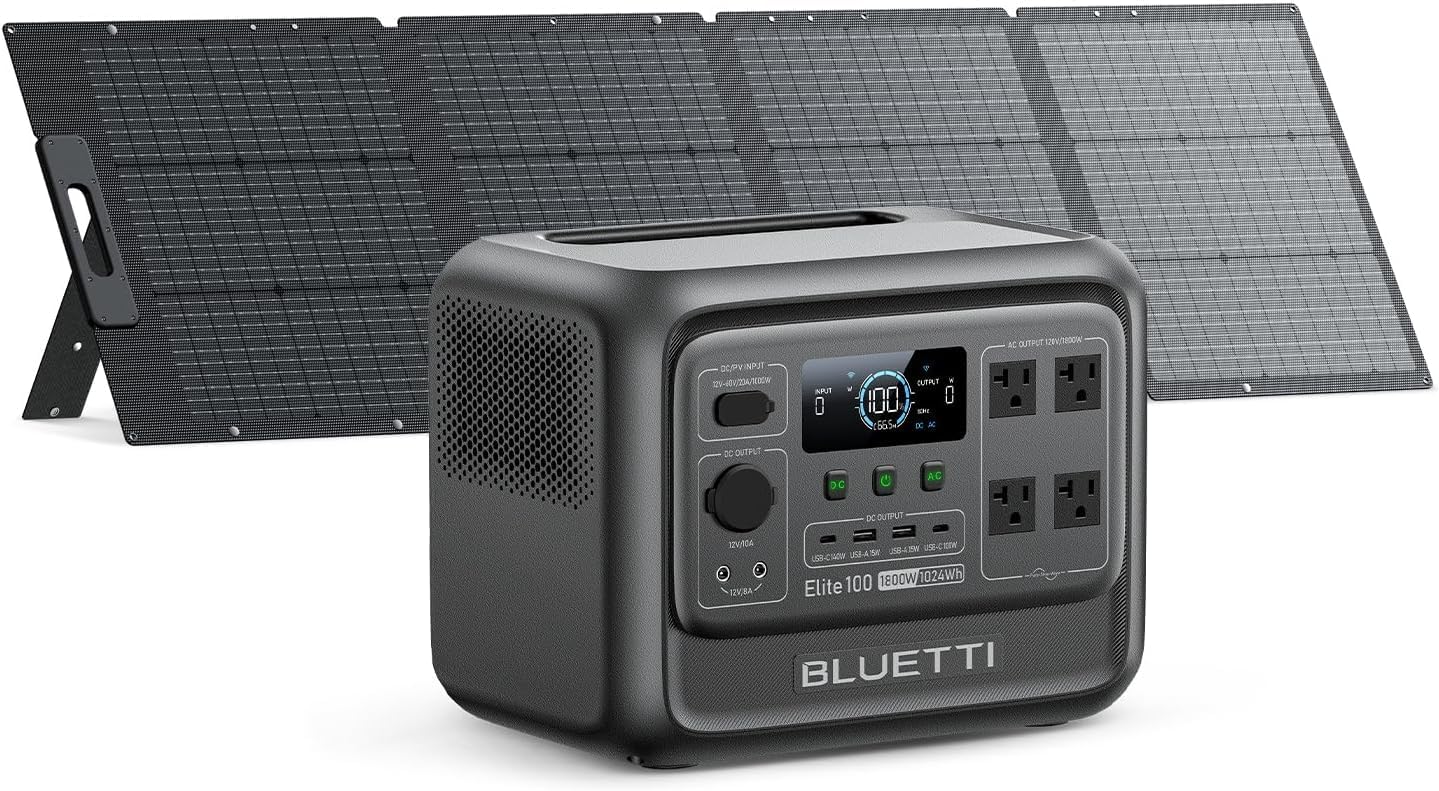
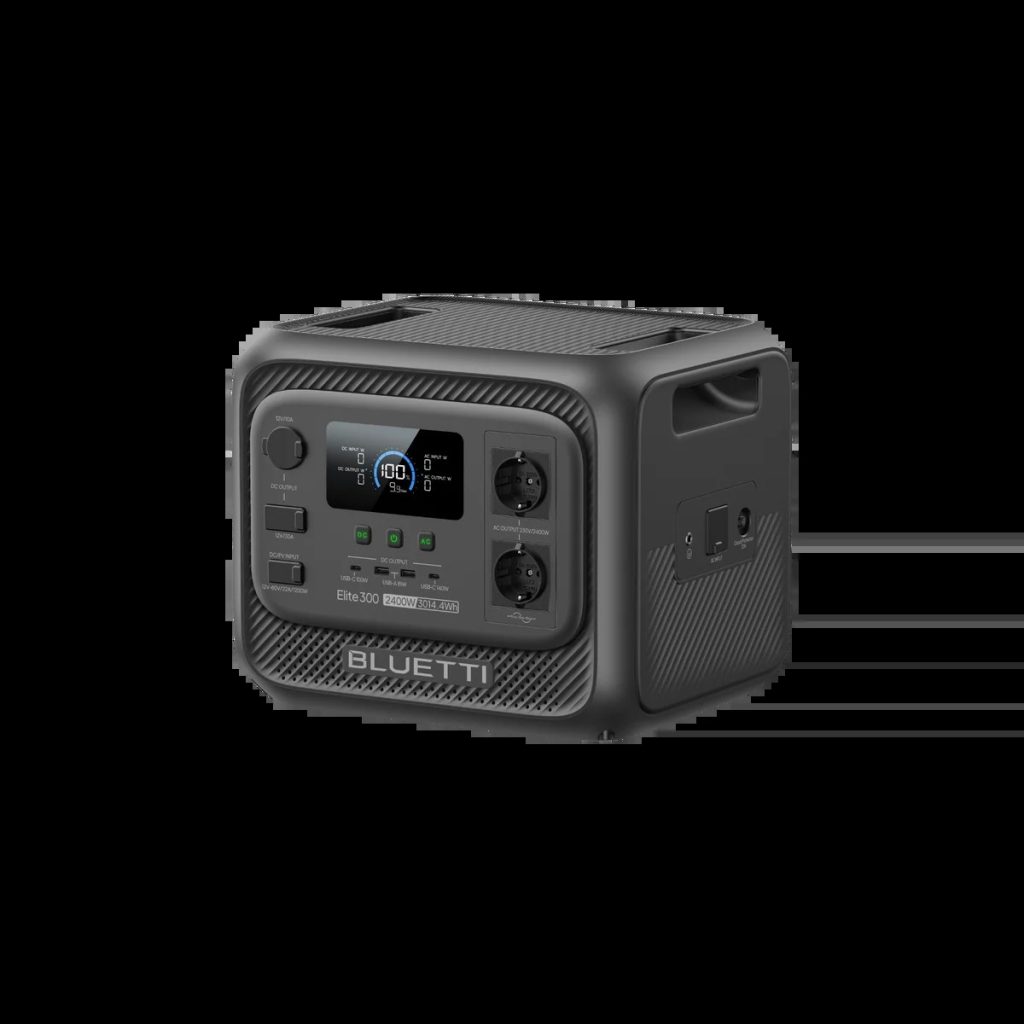
BLUETTI Elite 100 V2 Portable Power Station Kit
Sold as a kit with a 200W panel in the box and very fast recharging — the pick if you want solar working on day one
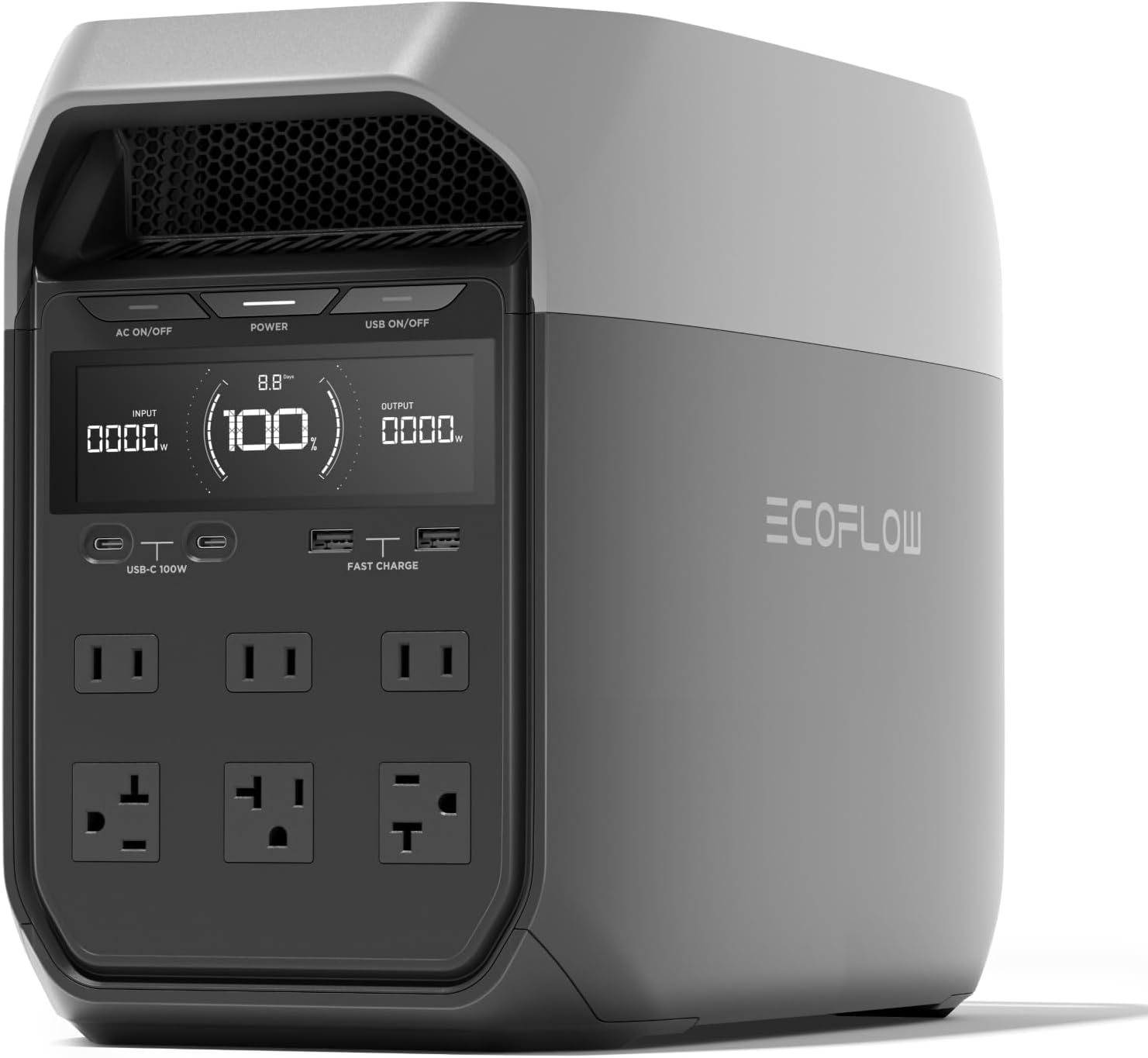
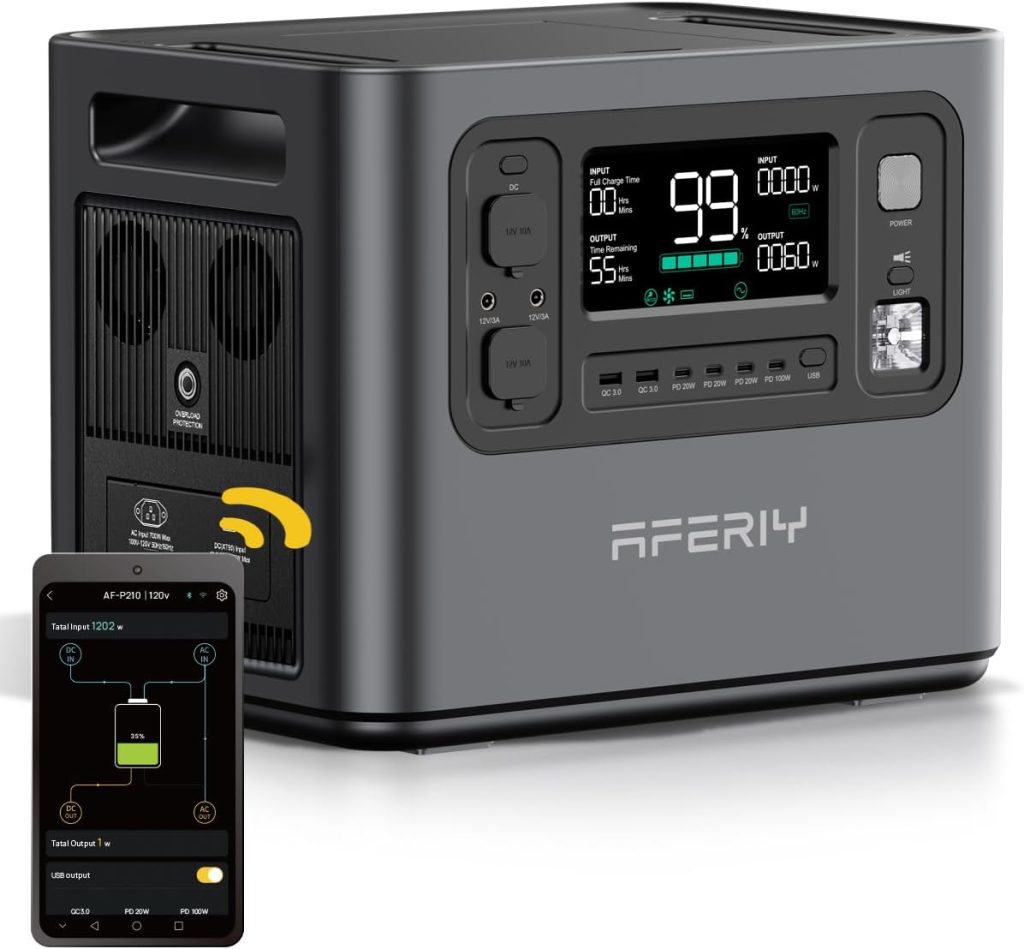
EcoFlow DELTA 3 Portable Power Station
The ecosystem pick: strong app control, under-an-hour full recharge and expansion batteries — for home-backup-first buyers
Prices and availability may vary — tap any product to check the current listing.
What to Look For in a Portable Power Station
Capacity is a budget, not a promise. A 1024Wh rating sounds simple until loads start stacking up. Lights and phones sip power. A fridge cycles on and off, a kettle pulls hard for minutes at a time, and a heated blanket can quietly eat a third of the battery before midnight. Usable capacity also lands below the headline figure, because conversion losses are real. Planning around roughly eight- to nine-tenths of the rated energy gives a saner picture. The trade-off is blunt: more capacity means more weight and a higher price tier, every time.
AC output decides what you can run together. Headroom is where the V2 separates itself from the pack. Its 2600W continuous output sits well above the 1800W ceiling common in this class, so a kettle, a small induction hob, or power tools stop being edge cases. Four AC outlets help too — the original made do with two, which forced splitter gymnastics at camp. Still, high output drains a 1kWh battery fast. Running near the ceiling can empty the unit in well under an hour, so treat that figure as permission for short, heavy jobs rather than an all-evening plan.
Noise rarely makes the spec sheet. It should. Fan volume is the factor campers feel most and shoppers check least. Reviews of the V2 place it in the low-to-mid 20s dB range under light loads, closer to a quiet room than to the whir most stations produce. Who wants a fan droning three feet from their pillow? Rivals tend to spin up audibly once a fridge compressor or a fast charge kicks in. The catch is that quiet claims depend on load and temperature, so a station that whispers over phones may breathe harder at full tilt on a hot afternoon.
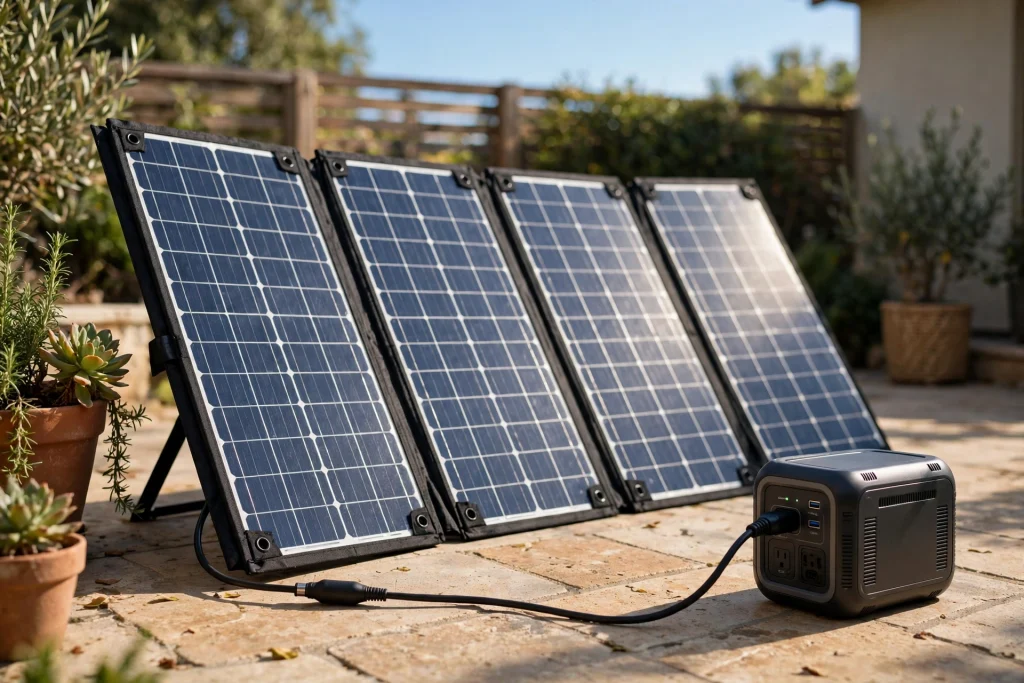
Recharge speed shapes your whole routine. A station that refills quickly forgives bad planning. Wall charging on the V2 is brisk — roughly 80% in well under an hour, according to review coverage — turning a flat battery into a usable one over lunch. Solar input tells a more complicated story. Charging runs through DJI’s own adapter ecosystem rather than a plain standard panel plug, so third-party panels need the right DJI adapter in the chain. Anyone eyeing foldable solar panels from another brand should sort that cable question before the first trip, not at the campsite. A cloudy weekend can still leave you rationing.
Ports reveal who the station was built for. Two 140W USB-C ports cover modern laptops without adapters, and that alone simplifies a creator’s cable bag. Then there are the DJI SDC and SDC Lite ports, which fast-charge DJI drone batteries directly. Drone owners get a genuinely useful shortcut there. Everyone else gets two sockets they will likely never touch, taking up panel space rivals spend on extra USB. Ecosystem ports are a feature or dead weight depending entirely on what you already own.
Weight, expansion, and the app decide the long game. At about 31 lb, the V2 is carryable from car to tent without drama, though nobody will call it light on a long trail. Expansion batteries from DJI can stretch capacity later, softening the risk of outgrowing 1kWh. Software is the weaker flank. DJI’s app covers the basics, yet EcoFlow’s equivalent offers deeper controls and a more mature feel, something owners notice at home more than at camp.
How to Match the Station to Your Situation
The drone or content creator at camp. Flight days burn batteries in batches, and a basecamp station that refills them fast keeps a shoot moving. SDC fast charging plugs straight into that workflow, while the strong AC output handles a laptop, monitor, and lights in the evening. Quiet operation helps on location too, since nobody wants fan noise bleeding into an interview recording. For this buyer, the V2’s quirks barely register. The adapter question matters only if camp solar is part of the plan.
The quiet sleeper in a tent or RV. Overnight loads look modest on paper — a CPAP-style machine, a phone, maybe a small fan — but they run for eight hours straight, inches from your head. Low fan noise becomes the deciding factor, not a bonus. A 1024Wh battery covers that kind of draw with room to spare on a single night, and the 10ms UPS switchover adds reassurance for medical-adjacent gear. Multi-night trips without a recharge source are the limit. Solar or a driving day needs to enter the plan by day two.
The home-backup-first buyer. Storm duty values different things: a polished app, easy expansion, and painless switching when the grid drops. The V2 handles the UPS role and runs essentials capably, but its app and accessory ecosystem trail EcoFlow’s. Shoppers weighing that route should read our EcoFlow DELTA 2 review to see what a more home-centred setup looks like at a similar scale. Backup-first buyers also outgrow 1kWh quickly. A fridge plus lights plus a router adds up fast.
Three Ways to Spend the Same 1kWh Budget
Three stations, same rough battery size, three different bets. The table below sorts them by intent rather than by spec-sheet bragging rights, because the honest differences sit in what each brand prioritised.
| Type/Tier | Best For | Price Tier | Key Feature | Watch-Out |
|---|---|---|---|---|
| High-output quiet tier — DJI Power 1000 V2 | Creators and light sleepers | Premium | 2600W AC output with very low fan noise | Solar charging needs DJI’s adapter ecosystem |
| Solar-kit tier — BLUETTI Elite 100 V2 | Campers wanting panel included | Mid-range to premium | Often sold as a kit with a 200W panel, fast recharge | Lower 1800W AC ceiling than the DJI |
| Ecosystem tier — EcoFlow DELTA 3 | Home-backup-first households | Premium | Strong app, fast full recharge, broad expansion options | Fan noise and extras can outgrow a simple camp kit |
The DJI Power 1000 V2 earns its premium by pairing the highest AC output here with the quietest running, a combination aimed squarely at creators and tent campers.
BLUETTI’s Elite 100 V2 makes the sensible kit play, bundling a 200W panel with a 1024Wh, 1800W station so solar charging works straight out of the box.
EcoFlow’s DELTA 3 counters with a full recharge in under an hour and the deepest app and expansion ecosystem of the three, which suits a house more than a tent.
None of these is a bad battery. The mismatch happens when someone buys the ecosystem play for a quiet tent, or the drone-focused station for a house needing an app the whole family can use. Cross-shopping the wider class? Glance at the Jackery Explorer 1000 v2 too, since its simpler, lighter approach still wins fans.
A Weekend Shoot Basecamp
Picture a two-day shoot an hour from the nearest outlet. Drones rotate through the SDC ports, a laptop ingests footage over USB-C, and the AC outlets run lights once the sun drops. That is the V2 in its natural habitat. Output headroom means the kettle for the crew does not force a choice between coffee and charging, at least not for a short boil.
Pace still matters. Heavy AC loads chew through 1024Wh quickly, so smart crews recharge from a vehicle or wall socket whenever the station sits idle. Solar can top things up during the day, provided the DJI adapter came along. Forget it once, and the panels in the truck become expensive sunshades. Small detail. Big consequence.
If the vehicle is the weak point of your trips rather than the content you shoot, there is a different answer in this size class: VTOMAN’s Jump 1500X station that can jump-start your car gives up output and polish for a rescue port and an included panel.
Quiet Nights: Tents, RVs and Bedrooms
Sleep changes the buying maths. A station that seems civilised in a showroom can feel intrusive at 2 a.m., when a compressor cycles and fans answer. Reviews consistently flag the V2 as far quieter than most 1kWh rivals under light overnight loads, which is exactly the load profile of a CPAP-style machine, a phone, and a low fan.
Placement helps any station. Put a few feet of distance and a soft surface between the box and the bed, and keep vents unobstructed so fans never work harder than necessary. Even then, plan honestly: one quiet night is comfortable, two in a row without recharging gets tight. Quiet does not create capacity. It just makes spending it more pleasant.
Storm Backup at Home
Grid failures ask a narrower question: what must keep running? A fridge, a router, some lights, and phone charging form the usual core, and 1024Wh handles that set for a useful stretch rather than days. The 10ms UPS switchover means a connected computer or router rides through the cut without rebooting, which is the detail people actually remember after an outage.
Expect limits, though. Electric kettles and space heaters punish a battery this size, and an outage past a day demands expansion batteries or a bigger class of station entirely. The V2 works as a capable first layer of backup. Treating it as whole-house insurance would be a stretch during a long storm.
Common Mistakes When Buying a 1kWh Station
Buying on watt-hours alone. Two stations can share a 1024Wh label and behave very differently once output limits, fan noise, and recharge speed enter the picture. Shoppers who fixate on the single biggest number often end up with a battery that cannot run their kettle or that keeps them awake. Look at the whole load plan. Then pick.
Assuming any solar panel plugs straight in. Panel connectors and charging ecosystems are not universal, and the V2 makes that concrete: third-party panels route through DJI’s adapter setup. Ordering panels and a station from different brands without checking compatibility is the classic unforced error in this category. Check the adapter first. Trips have been spoiled by less.
Planning kettle-plus-fridge weekends on hope. A kettle habit and a fridge together can drain 1kWh faster than most first-time buyers believe, especially with lights and phones riding along. The station is not underpowered; the plan is. Either schedule a midday recharge, add solar that actually connects, or step up a size class.
Ignoring where the station will sit. Noise, ventilation, and cable reach all depend on placement, yet buyers rarely think about it until the first night. A unit wedged into a sealed RV cupboard will run hotter and louder than the same unit on an open surface. Small boxes still need breathing room.
Questions People Ask Before Buying
Real buyer questions, straight answers
Is the DJI Power 1000 V2 worth it over cheaper 1kWh stations?
Yes, if quiet running, high AC output, or DJI drone charging matters to you. Cheaper 1kWh stations usually cut fan quality, output headroom, or port selection, and those cuts show up nightly at camp. Buyers who only need phone and light duty can save money elsewhere without missing much.
Can it run a fridge and an electric kettle at the same time?
It can handle both loads electrically, but not for long on a single charge. The 2600W output covers a kettle’s short, heavy draw while a fridge cycles, yet that pairing drains 1024Wh fast. Treat kettle use as an occasional boil, and plan a recharge during any full weekend.
How quiet is it really if I sleep next to it?
It is quiet enough for most sleepers under light overnight loads. Independent reviews put its noise in the low-to-mid 20s dB range, far below typical rivals once fans settle. Heavy charging or a hot tent can raise that, so placement a few feet away still helps sensitive sleepers.
Do I need DJI products to get full use from the solar input and SDC ports?
You need DJI’s adapter route for solar, and DJI batteries to use SDC properly. Third-party panels work through the right DJI adapter rather than a plain plug, while the SDC ports fast-charge DJI drone packs specifically. Without any DJI gear, those ports add little beyond future-proofing you may never use.
What actually changed from the original Power 1000 to the V2?
The V2 mainly fixes outlets and output while keeping the same 1024Wh size. AC sockets doubled from two to four, continuous output climbed to 2600W, and the unit kept its quiet reputation and drone fast-charging. Owners of the original gain convenience and headroom, not a bigger battery.
Frequently Asked Questions
How long does the Power 1000 V2 take to recharge from a wall outlet?
Wall charging is one of its stronger points. Review coverage describes roughly 80% arriving in well under an hour, with a full charge following not long after. That pace makes same-day turnarounds realistic between trips. Solar-only recharging takes considerably longer and depends heavily on weather and panel size.
Can it work as a UPS for a computer or home router?
Yes, within the limits of an occasional-backup device. The 10ms switchover is fast enough that typical desktops and routers ride through a cut without rebooting. It is not a substitute for a dedicated data-centre UPS during daily unstable-grid use. For storm duty and brief outages, the protection is genuinely useful.
Can I expand the capacity later with extra batteries?
DJI sells expansion batteries that connect to the V2 and stretch total capacity beyond the built-in 1024Wh. That path suits buyers who expect their loads to grow, or who want storm cover without replacing the main unit. Expansion adds weight and cost, obviously. Buying a larger station outright sometimes works out simpler.
Will it run a CPAP-style machine through the night?
A single night is a comfortable ask for a battery this size. Machines of that type draw modest, steady power, and the V2’s low fan noise suits bedroom or tent use. Two nights without any recharging is where caution starts. A quick daytime top-up, by vehicle or panel, removes the worry.
Does it charge drone batteries faster than a standard charger?
Through the SDC ports, yes, that is the point of them. DJI drone packs fast-charge directly from the station without a separate hub in the chain. Creators rotating several packs through a shoot day feel the difference most. Buyers with no DJI aircraft gain nothing from the feature, which is worth weighing honestly.
How heavy is it to move between a car and a campsite?
At about 31 lb, it sits in the carry-with-one-hand, briefly category. Short carries across a campsite or from a driveway are unremarkable. Long trails, stairs, or anyone with a bad back will notice it quickly. This class of station rewards car-based camping far more than hike-in trips.
Key Takeaways
The V2 pairs 1024Wh of LiFePO4 capacity with 2600W of AC output, the highest ceiling in this comparison, across four outlets.
Quiet operation is its defining trait — independent reviews place it far below rival fan noise under light loads.
Solar charging runs through DJI’s adapter ecosystem, so third-party panels need the correct adapter before they work.
SDC and SDC Lite ports fast-charge DJI drone batteries, and add little value for anyone outside that ecosystem.
A 1024Wh battery still cannot support a kettle habit plus a fridge all weekend without recharging.
EcoFlow’s DELTA 3 suits app-driven home backup better, while BLUETTI’s kit suits buyers wanting a panel included.
Decision Tree: Which 1kWh Station Fits You?
If you fly DJI drones and charge packs at camp → pick the DJI Power 1000 V2.
If you sleep within a few feet of the station and hate fan noise → pick the DJI Power 1000 V2.
If you want a solar panel working straight out of the box → pick the BLUETTI Elite 100 V2 kit.
If you care most about app control and future expansion at home → pick the EcoFlow DELTA 3.
If you only charge phones, lights, and a laptop → pick a smaller, cheaper station and save the weight.
If you need a fridge covered for several off-grid days → pick a larger capacity class instead of any 1kWh model.
Final Recommendation
Buy the DJI Power 1000 V2 if your weekends mix camping, shooting, and sleeping near the battery. Its output headroom, four outlets, and low fan noise solve real annoyances rather than spec-sheet ones, and drone owners get fast charging that rivals simply do not offer. Just go in clear-eyed about the solar adapter route and the basic app.
Choose the BLUETTI kit if a working panel on day one matters more, or the EcoFlow DELTA 3 if the station will live at home under app control. And if the plan involves days of fridge duty or regular heater use, skip this size class entirely. A bigger battery bought once beats a small one apologised for every trip.
Top 3 Portable Power Stations Around 1,000Wh
Same 1,024Wh class, very different strengths — AC output, noise and what is in the box are the differences that matter.
DJI Power 1000 V2 Portable Power Station
Highest AC output here (2,600W) with four outlets, dual 140W USB-C and drone-battery fast charging — the quiet pick for creators and mixed loads
BLUETTI Elite 100 V2 Portable Power Station Kit
Sold as a kit with a 200W panel in the box and very fast recharging — the pick if you want solar working on day one
EcoFlow DELTA 3 Portable Power Station
The ecosystem pick: strong app control, under-an-hour full recharge and expansion batteries — for home-backup-first buyers
Prices and availability may vary — tap any product to check the current listing.
Affiliate Disclosure: This article contains affiliate links. If you buy through one of these links, we may earn a commission at no extra cost to you.