A good 12V portable fridge for camping keeps food cold for days without ice, soggy labels, or a mercy run to the nearest store. Pick the wrong 12V portable fridge for camping, though, and you trade the ice problem for a battery problem or a lid that never quite seals in a packed trunk. This review is for campers facing the same fork in the road. Pay premium money for the Dometic CFX5 45 electric cooler, step down to the mid-range ICECO VL45 with its SECOP compressor, or save serious money with the dual-zone Alpicool T50 and accept a few compromises. All three sit in the 45-liter class and will chill your food. The difference is how much stress they put on your battery, vehicle, and patience over three seasons — not three weekends.
Quick Answer
The Dometic CFX5 45 is worth the premium if you camp off-grid for a week at a time, travel far from resupply, or want one fridge to last years of rough roads. It’s overkill for weekend-only campers, who will get nearly the same cold food from the ICECO VL45 for less, or from the Alpicool T50 for far less.
Top 3 12V Portable Fridges Around 45 Liters
Same rough capacity class, three very different price tiers — insulation, compressor pedigree and zone layout are the differences that matter.
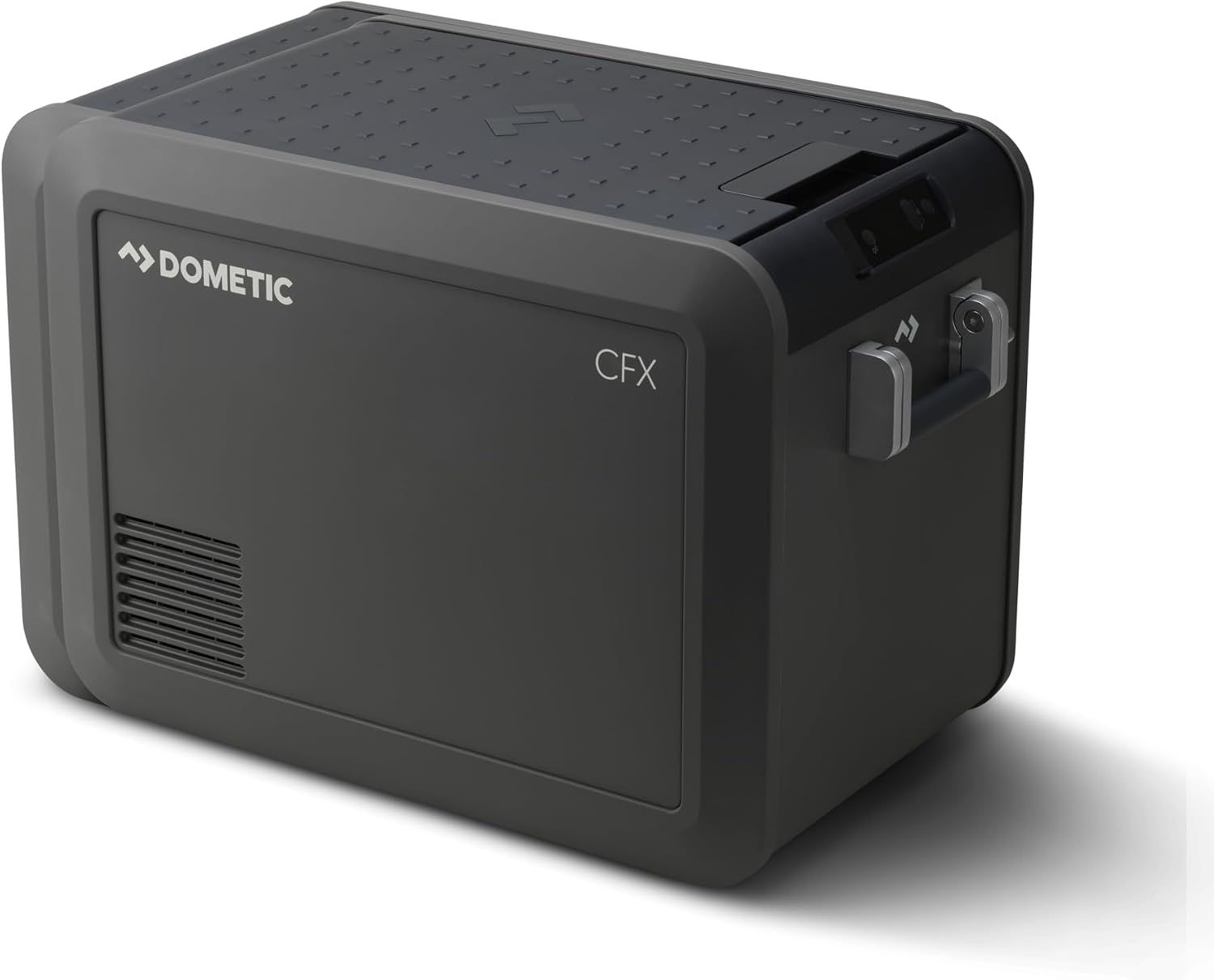
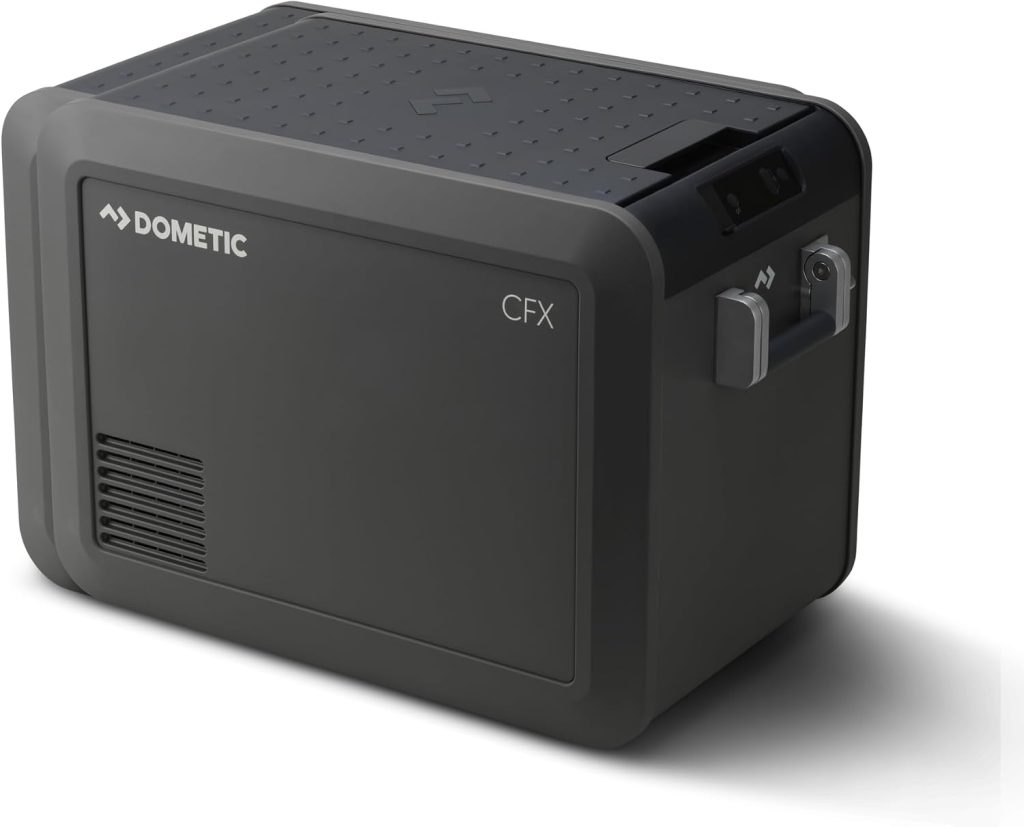
Dometic CFX5 45 Portable Fridge Freezer
Premium pick: vacuum insulated panels mean the compressor cycles less, app control and the toughest build here — for long off-grid runs
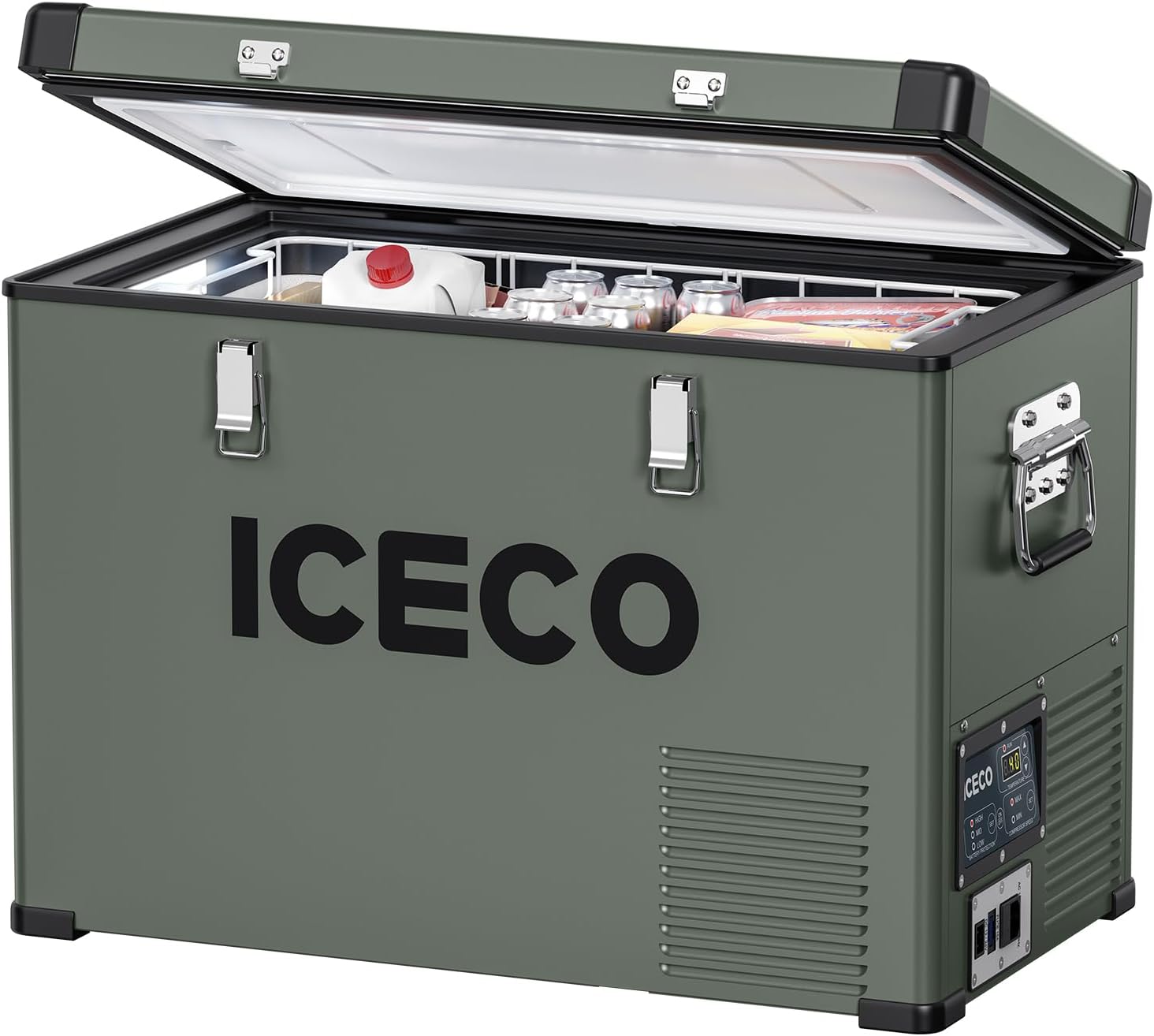
ICECO VL45 Portable Refrigerator
SECOP compressor and a metal shell at a mid-range tier, with a long compressor warranty — the value-engineered pick
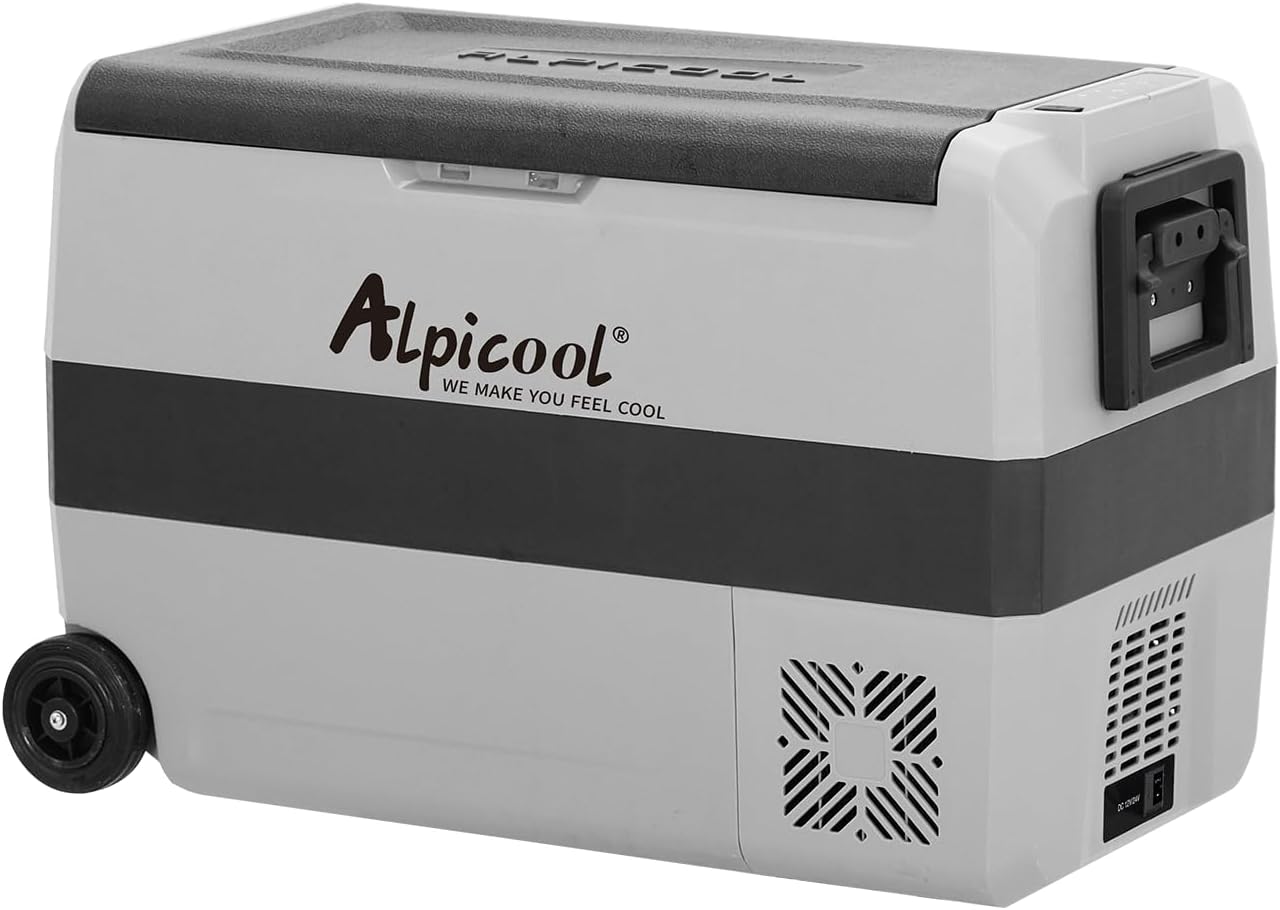
Alpicool T50 Dual Zone Car Fridge
Bigger dual-zone space for a budget tier and far lighter to move — for weekend trips where premium money buys little
Prices and availability may vary — tap any product to check the current listing.
What to Look For in a 12V Portable Fridge for Camping
Six factors explain almost the entire gap between premium and budget.
Compressor cooling, not thermoelectric. A real compressor fridge works like your kitchen fridge, just smaller and built for vehicle power. It holds freezer temperatures in a hot car and recovers quickly after the lid opens. Thermoelectric coolers cost less, but they only cool a set amount below the surrounding air — on a 95-degree day, that math stops working. The trade-off is cost and weight: compressor units are heavier, and you pay for that capability even on mild weekends when a cheap cooler would have done. All three here use compressors, so the argument is how good the compressor and insulation around it are.
Single zone versus dual zone. A single-zone fridge like the CFX5 45 or the VL45 holds one temperature throughout. Simple. Efficient. A dual-zone model like the Alpicool T50 uses a removable divider so one side can freeze while the other chills. That sounds like a pure win until you check usable space: the divider eats into the spec-sheet figure, and a dual-zone box run as one space rarely matches a purpose-built single-zone box for even temperatures. Dual zone earns its keep for frozen meat alongside fresh produce. For drinks, dairy, and leftovers, single zone is calmer and roomier.
Power draw and battery protection. This is where fridges succeed or quietly ruin a morning. Daily draw depends on ambient heat, how full the box is, and how often someone stands there with the lid open choosing a snack. The CFX5 45’s Vacuum Insulated Panels (VIP) are the clearest example: better insulation means the compressor runs less often, which is the real off-grid benefit — less draw on the power station overnight, far more valuable than any headline watt figure. It’s solar compatible too, so daytime charging can refill what the night took. Battery protection is the safety net: a 3-stage system on the CFX5 45, 3 levels on the VL45. Set it too cautious and the fridge cuts out with charge to spare. Set it too relaxed and you’re asking strangers for a jump. The right setting matches whether it runs off your starter battery, a portable power station, or an aux setup.
Capacity versus vehicle space. Forty-five liters is a sweet spot — roughly a week’s food for two, or a long weekend for a family. External size matters as much, though. A fridge holding about 47 quarts — roughly 67 cans — still has to fit between wheel wells, with air space around the vents. Measure your space, lid arc included. People forget the lid. A smaller fridge you can open fully beats a larger one you drag halfway out for cheese. Oversized for solo trips? Smaller budget options covered in the Alpicool C30 review are worth a look first.
Build quality, lid, and baskets. The least glamorous factor, and the one you feel daily. The CFX5 45 leans into rugged, reinforced-frame construction for truck-bed knocks. The VL45 counters with a plain, sturdy metal shell. The T50’s lighter plastic build keeps weight and price down but won’t shrug off the same abuse. Lids matter: one that flexes leaks cold all night. Removable wire baskets, as on the Dometic, sound minor until you’re lifting a basket out instead of digging past raw chicken for the mustard — though their walls steal a little width.
App control and everyday controls. Bluetooth and WiFi control on the CFX5 45 lets you check temperature from the driver’s seat, and some versions of the T50 offer app control too. Nice on a cold night. Still, an app is a convenience layered over the basics. A clear display and glove-friendly buttons affect you more often, and apps add a failure mode — dropped connections, another update. Plenty of campers set the temperature once and never open the app again. Don’t let it decide the purchase.
How to Match the Fridge to Your Situation
Specs don’t camp.
The weekend car camper. You drive out Friday, come home Sunday, and the fridge lives in the trunk for two nights. Your power source is the car itself, your food list forgiving — drinks, sandwich fixings, eggs, sausages. Efficiency and bombproof construction matter least here because the window is short. A budget dual-zone like the T50 handles this well. The Dometic would work beautifully. It would also be the priciest way imaginable to keep Saturday’s potato salad cold.
The overlander or multi-week off-grid traveler. Your fridge is not an accessory. It’s your food supply, running 24 hours a day for weeks over washboard roads, paired with solar batteries or a dedicated aux battery. Efficiency compounds — a small daily saving becomes a real buffer by day nine — and a failure is a trip-ending resupply scramble. This is the buyer the CFX5 45 was built for, with the VL45 as a credible step down. Cheap latches and thin insulation stop being charming around day four above 90 degrees.
The family road-tripper feeding four. Your problem is volume and organization, not survival. Drinks, snacks, and leftovers cycle through constantly, the lid opens twenty times a day, and warm items keep going in. You need quick recovery and a layout that keeps kids’ drinks separate from tonight’s raw chicken — plus a box that survives being used as a seat (it will happen). The CFX5 45’s baskets help, and the T50’s split separates frozen treats from fresh food. The honest limitation: five days for four still needs a dry-goods plan and a restock. No 45-liter fridge fixes arithmetic.
Three Ways to Spend a Portable Fridge Budget
| Type/Tier | Best For | Price Tier | Key Feature | Watch-Out |
|---|---|---|---|---|
| Premium compressor | Long off-grid trips, rough roads, buy-it-for-years owners | Premium | Rugged frame, strong battery protection, app control, removable baskets | You pay heavily for durability weekend trips never test |
| Mid-range SECOP compressor | Regular campers who want proven cooling without the top price | Mid-range | SECOP compressor, metal shell, MAX/ECO modes, long compressor warranty | Fewer refinements, plainer controls and finish |
| Budget dual-zone | Weekend campers, second-fridge buyers, families wanting a freezer split | Budget | Dual-zone flexibility, light weight, app control on some versions | Plastic build and insulation show their limits on long, hot trips |
The premium route buys margin — insulation, toughness, calmer power use — and margin is what you don’t notice until you run out of it.
The mid-range route is the rational middle: the VL45’s SECOP compressor is the same family premium brands rely on, so you’re giving up polish more than cooling.
The budget route buys flexibility per dollar, and the T50’s dual-zone trick is real, but expect a shorter service life.
A Week Off-Grid Without Ice Runs
Picture day five. No store for forty miles, the ice you would have bought on day two is a bag of cold water in a cooler-based life, and dinner depends on what the fridge kept safe on day one. This is the strongest case for the premium end, and it’s not about getting colder. All three can hit freezer temperatures on paper — the CFX5 45 down to about -7°F, the VL45 across its 0°F to 50°F range, the T50 from about -4°F upward. Holding temperature efficiently, for a week, in heat, on finite power is the actual test.
Insulation decides it. A well-insulated box cycles less, draws less overnight, and leaves a buffer for a cloudy day when solar input disappoints. Battery protection stops being a footnote and becomes insurance. A lid seal that’s merely okay leaks a little more cold every one of the hundred times you open it, while baskets keep frozen meat separate from vegetables in the dark, mosquitoes fully engaged.
Does the budget option fail this trip? Not automatically. A T50 with a generous power station and shade discipline can finish a week off-grid in mild weather. The margin is just thinner. One hot day — fridge in direct sun, warm drinks loaded at noon — costs a budget setup more. Premium money, spent here, buys forgiveness.
Weekend Trips: Where Premium Money Gets Wasted
Now flip the calendar. Two nights, a shaded campsite, a Sunday drive home where the fridge runs off the alternator anyway. Most of what makes the CFX5 45 special never gets a chance to matter. Rugged construction rated for corrugated roads is guarding a fridge that rides on pavement. Top-tier efficiency saves power you were never short of. App control from the tent is fun the first time. The fifth time, you just walk to the car.
This is where the VL45 and T50 make their case. The VL45 gives you a serious compressor and metal shell at a mid-range tier — a lot of fridge for six or eight weekends a year. The T50 goes further: dual-zone flexibility for frozen patties and drinks, at a weight that’s easier to carry. A fridge you dread lifting starts getting left behind.
Is there any weekend argument for the Dometic? A thin one. If a longer expedition is planned for next year, or the fridge will double as a home backup during outages, buying once makes sense. Buy it for a planned future, though. Not an imaginary one.
Common Mistakes When Buying a 12V Fridge
Buying capacity from the spec sheet instead of your vehicle. Interior liters tell you nothing about whether the box fits under your cargo cover or whether the lid opens past your tailgate angle. Measure the space, ventilation room included, first.
Ignoring the power plan. A fridge is only half a system. The other half is what feeds it overnight, and buyers routinely spend everything on the box, then discover the math doesn’t close at 3 a.m. when the low-voltage cutoff kicks in. Size the power first, or at least at the same time.
Paying for dual zone you’ll never use. Frozen storage sounds essential in the showroom and turns out to mean a divider stored in the garage while the box runs as a single zone. If nothing on your food list needs to stay frozen beyond a day, that feature is decoration.
Treating all compressor fridges as equal. Compressor track record matters — it’s why the VL45’s SECOP unit and its maker’s 5-year compressor warranty carry weight here. A no-name compressor with weak parts support can turn a small fault into a full replacement. Cheap is fine. Unrepairable is not.
Questions People Ask Before Buying
Real buyer questions, straight answers
Is the Dometic CFX5 45 worth the money?
For long, hot, off-grid trips, yes — for short weekend use, no. The premium buys insulation, rugged construction, baskets, app control, and 3-stage battery protection that reduce risk over many days away from resupply. None of that fully shows up on a two-night trip.
Dometic CFX5 45 vs ICECO VL45: which should I buy?
Buy the VL45 if cooling performance per dollar matters most, and the Dometic if build, efficiency, and convenience matter most. The VL45’s SECOP compressor, metal shell, MAX/ECO modes, and 3-level battery protection cover the core job at a mid-range tier. The CFX5 45 pulls ahead on insulation, ruggedness, baskets, and remote control — proven cooling plus polish and margin.
How long will a 45L fridge run on a portable power station?
Expect roughly one to three days from a mid-sized station, depending far more on heat and lid discipline than on the fridge’s badge. A full fridge of already-cold food sips power, because cold contents hold temperature. The same fridge in a hot vehicle, half empty and opened constantly, can draw several times more. Pre-chill at home, keep the box full, park in shade.
Do I need dual zone, or is single zone enough?
Single zone is enough for most campers, most of the time. One temperature handles drinks, dairy, produce, and leftovers, and gives you the full box as one flexible space. Dual zone, like the T50’s removable-divider setup, earns its complexity only when frozen food must travel alongside fresh food for several days. Families freezing treats and overlanders carrying a week of meat are the exceptions.
Can a 12V fridge drain my car battery overnight?
Yes, it can — which is exactly why battery protection settings exist and why you should use them. Set protection conservatively on a starter battery, accepting that it may cut out early on a weak battery. That early cutoff is the system working, not failing. If you would rather skip the separate power source altogether, the Anker SOLIX EverFrost 2 with its own built-in battery takes the opposite approach — less insulation pedigree, but nothing else to buy or wire up.
Frequently Asked Questions
How cold does the Dometic CFX5 45 actually get?
It is rated to cool down to about -7°F — proper freezer territory, not drinks-cooler cold. Most campers run it in the mid-30s Fahrenheit and only drop lower for specific frozen loads.
What size fridge do two people need for a week?
A 45-liter box fits two people carrying a week of perishables, provided drinks don’t consume half the space. Pack dense and pre-chill everything. Solo campers can usually step down a size without pain.
Can these fridges run on both vehicle and household power?
Yes, this class runs on 12/24V DC in a vehicle and on AC power at home or a powered campsite. That helps with pre-chilling indoors, which reduces the load on your battery once you leave.
Is a metal shell better than a plastic body?
A metal shell, like the VL45’s, shrugs off dents and feels more durable. A plastic body, like the T50’s, is lighter and cheaper, and holds up fine for campground use. The dividing line is how it travels — a truck bed favors metal, while careful trunk use doesn’t punish plastic much.
What does MAX and ECO mode actually change?
On the VL45, MAX mode prioritizes getting to temperature quickly after loading warm food, while ECO prioritizes lower power use once things are cold. Run MAX to pull temperature down, then ECO to hold it.
How do I stop a portable fridge from sliding around in my vehicle?
Use tie-down straps through the handles or a dedicated slide. A sliding fridge can block its own vents and strain its cable on a rough descent. Check cable slack after securing it.
Key Takeaways
Cold is easy, margin is expensive → all three chill and freeze; the premium buys insulation, toughness, and power buffer
Match the fridge to your calendar → weekend campers overspend on the Dometic and lose nothing with the Alpicool T50
The VL45 is the rational middle → a SECOP compressor and metal shell deliver the core job
Power planning decides success → battery protection and your overnight source matter more than small spec differences
Dual zone is a niche win → it helps families and long frozen-food trips, and complicates life for others
Decision Tree: Which 45L-Class Fridge Fits You?
Camping mostly Friday to Sunday, budget first → Alpicool T50, and enjoy the dual-zone split for frozen treats
Camping monthly, week-long trips, value still matters → ICECO VL45, for its SECOP compressor and metal shell
Living off-grid for a week or more, rough roads, no resupply nearby → Dometic CFX5 45, no real substitute in this trio
Feeding a family of four, organization is the headache → Dometic CFX5 45 for its baskets, or the T50 for its freezer split
Running off the starter battery only → any of the three, with battery protection set conservatively
Final Recommendation
If your trips stretch past four or five days, far from stores, on power you carried in, the Dometic CFX5 45 earns its premium honestly — I’d point the overlander straight at it. Everyone else should pause. The ICECO VL45 covers the core job — real compressor cooling, battery protection, a shell built to be knocked around — for meaningfully less, and it’s the pick I’d give most regular campers.
Weekend campers, keep your money. The Alpicool T50 will keep your food cold, give you a freezer section the others don’t, and leave budget over for the power station that determines whether any fridge works well at camp. The best fridge here is the one matched to the trips you actually take.
Top 3 12V Portable Fridges Around 45 Liters
Same rough capacity class, three very different price tiers — insulation, compressor pedigree and zone layout are the differences that matter.
Dometic CFX5 45 Portable Fridge Freezer
Premium pick: vacuum insulated panels mean the compressor cycles less, app control and the toughest build here — for long off-grid runs
ICECO VL45 Portable Refrigerator
SECOP compressor and a metal shell at a mid-range tier, with a long compressor warranty — the value-engineered pick
Alpicool T50 Dual Zone Car Fridge
Bigger dual-zone space for a budget tier and far lighter to move — for weekend trips where premium money buys little
Prices and availability may vary — tap any product to check the current listing.
Affiliate Disclosure: This article contains affiliate links. If you buy through one of these links, we may earn a commission at no extra cost to you.