Choosing a portable power station for camping usually forces an awkward choice on day one. Go small and light, and you may outgrow it by your second season. Go big right away, and you’re hauling capacity you don’t need on half your trips. The EcoFlow RIVER 3 Plus tries to dodge that choice entirely: it’s a compact, roughly 286Wh portable power station that can grow later by stacking extra batteries on top, no cable involved, and that single idea changes how it should be judged against other picks in lists of the best portable power stations.
Quick Answer
The RIVER 3 Plus is worth it if you camp now with modest loads but suspect your trips will get longer, because you can expand it to about 572Wh or 858Wh later instead of replacing it. If you’ll never expand, rivals beat it on single traits — one recharges faster, one weighs less — so buy it for the growth path and the home UPS backup, not as a default pick.
Compare Top Portable Power Stations for Camping
Three roughly 286Wh stations side by side — one grows with extra batteries, one recharges fastest, one weighs least. The right pick depends on where your trips are heading.
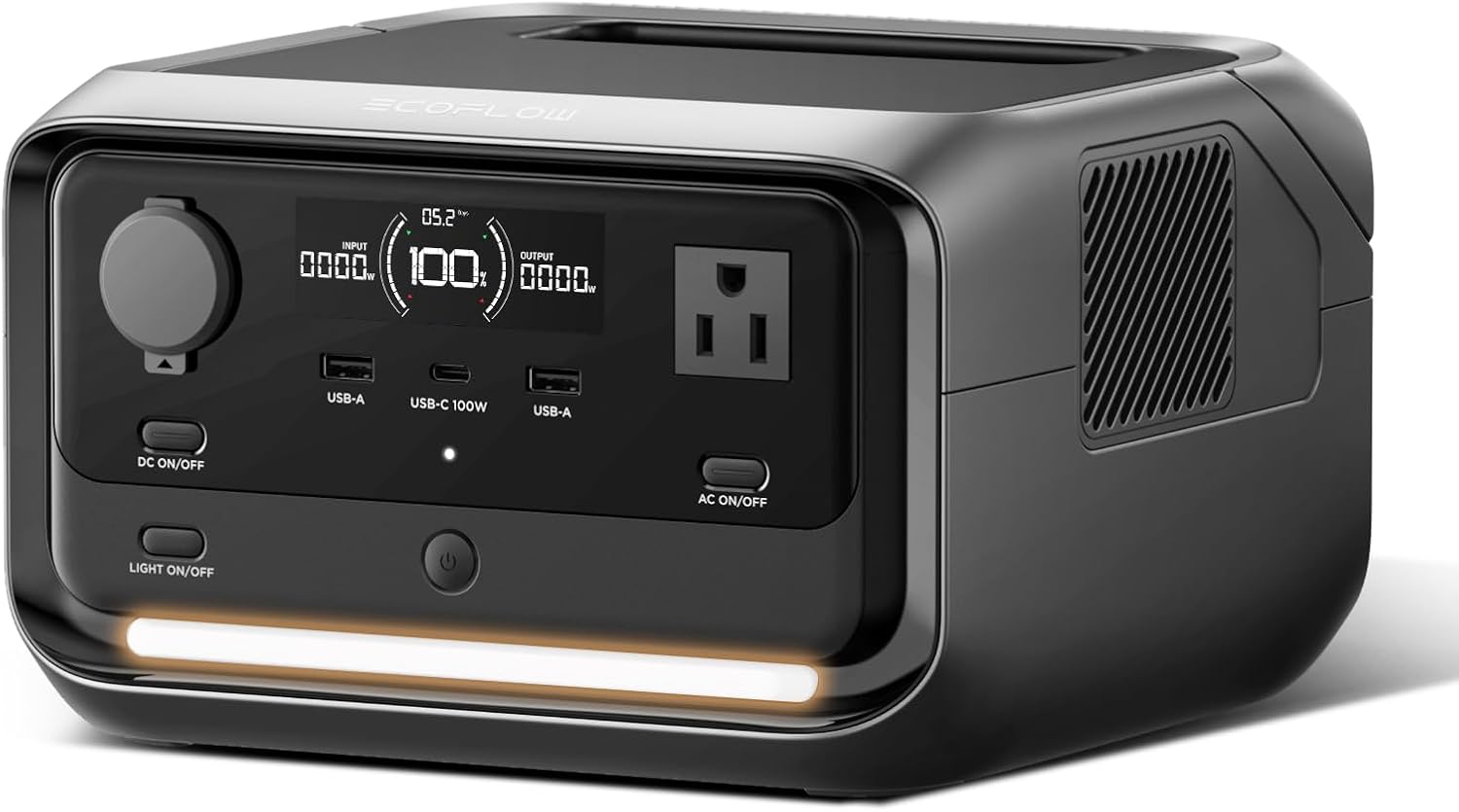
EcoFlow RIVER 3 Plus
286Wh and 600W, expandable to 858Wh with stacked extra batteries, under 30 dB with a sub-10 ms UPS — the only one here that grows with you
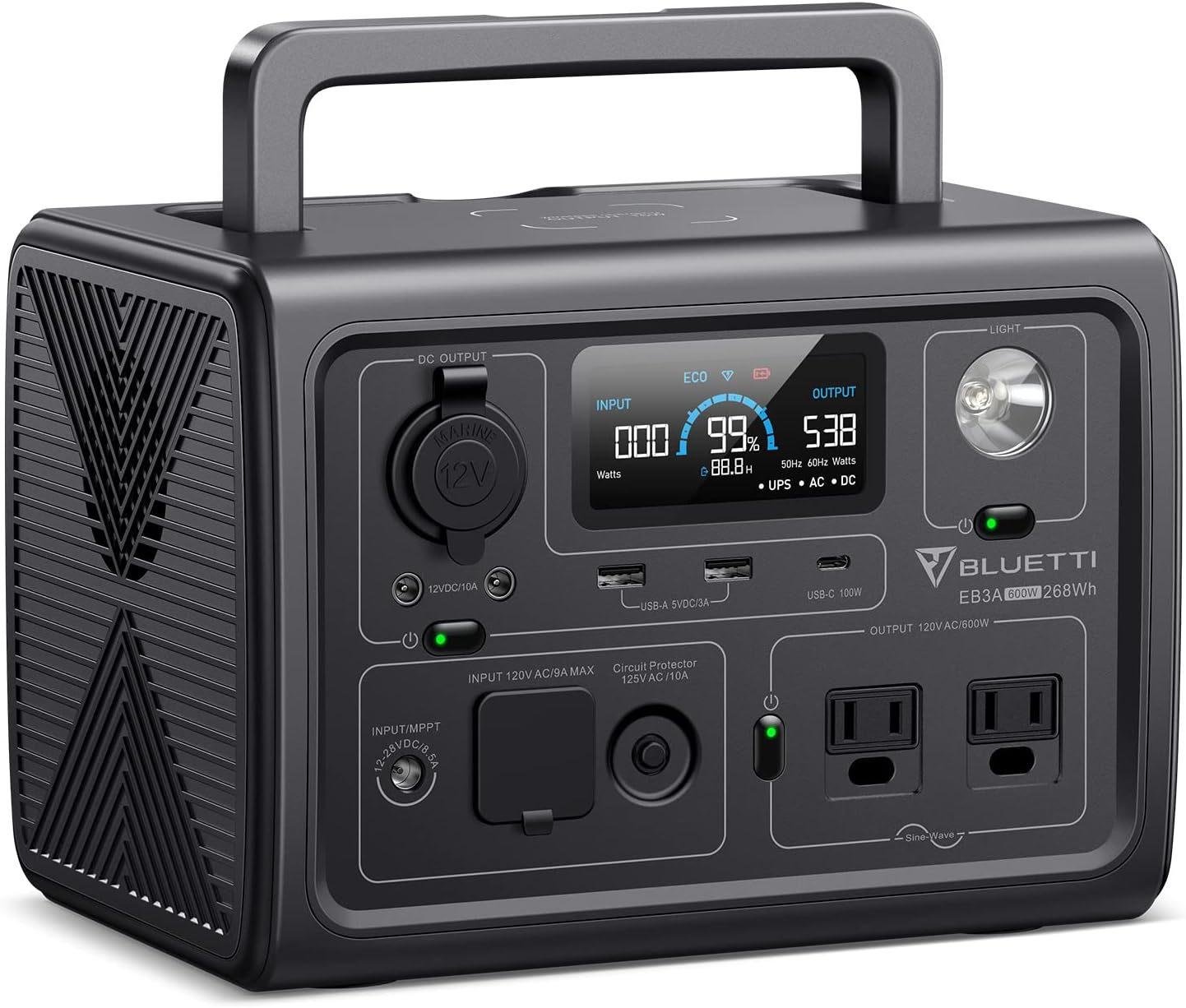
BLUETTI EB3A
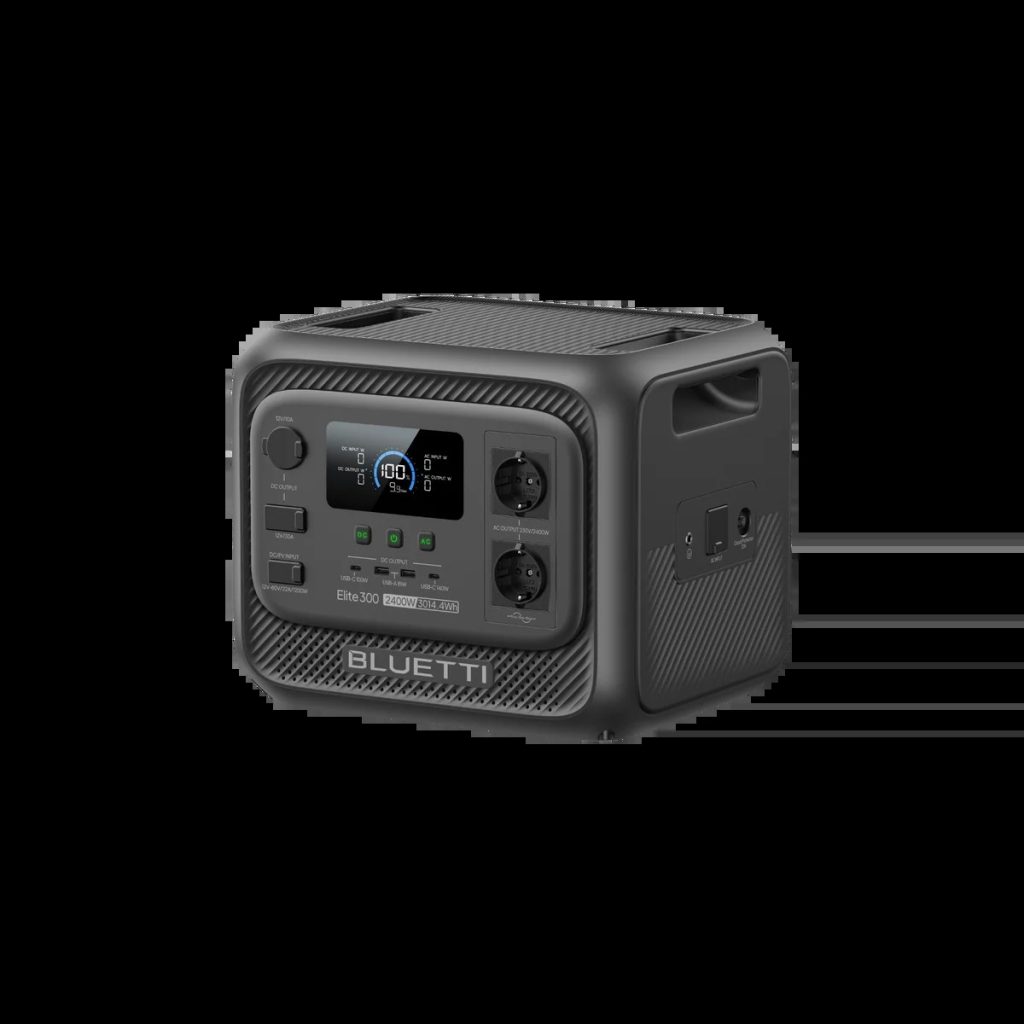
268Wh with the same 600W output and the fastest recharge of the three — simpler and often cheaper, but the capacity you buy is the capacity you keep
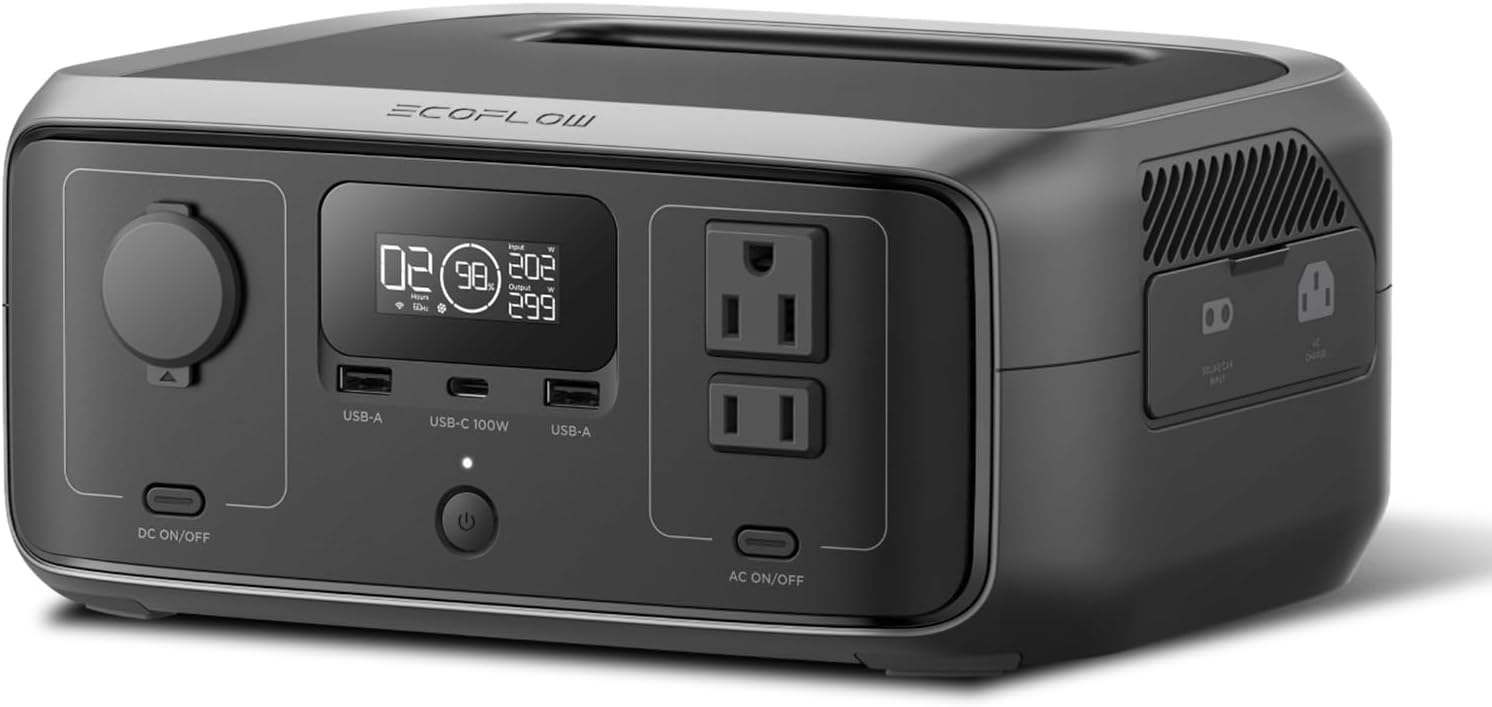
EcoFlow RIVER 3
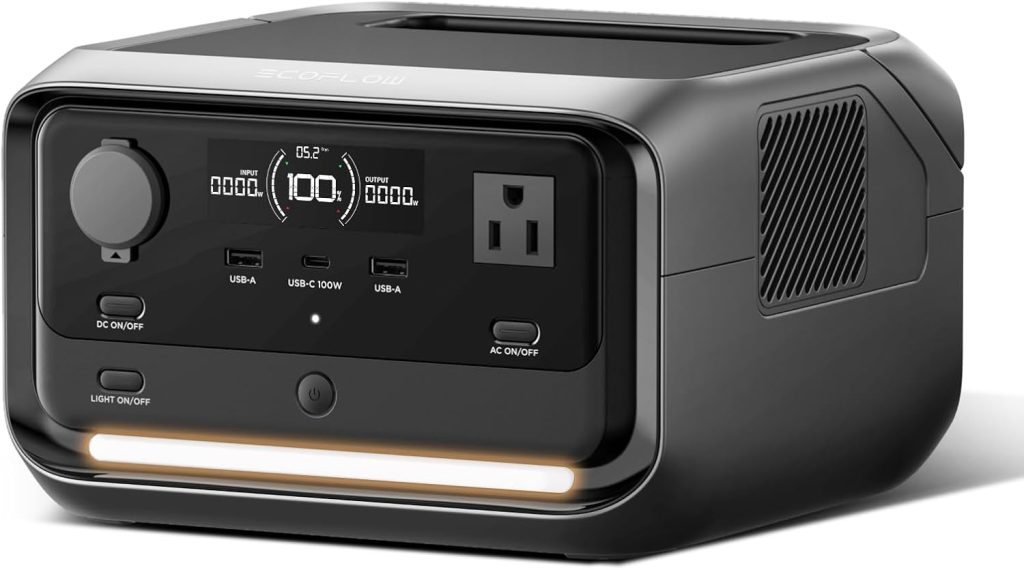
245Wh LiFePO4 at under 8 lb with a 100W USB-C output — the lightest carry here, but the smallest battery and 300W output cap what it can run
Prices and availability may vary — tap any product to check the current listing.
[[COMPARE]]
What to Check Before You Buy a Portable Power Station
Capacity numbers sell these units. Usable, honest planning matters more. A station in this class will happily run phones, lights, a camera charger, and a small fan for a weekend, and it will just as happily disappoint you if you bought it hoping to cook with electricity. The trade-off at this size is always the same: every watt-hour you add makes the box heavier, pricier, and slower to carry from the car.
Capacity: plan in watt-hours, not in hope
Start by adding up what you’ll actually run. A phone takes a small bite. A CPAP machine, a laptop, or a powered cooler takes a much bigger one, hour after hour. At around 286Wh, the RIVER 3 Plus sits in weekend territory for light loads, which is exactly why its expansion path matters — stacked with an EB300 extra battery it reaches roughly 572Wh, and with an EB600 it reaches roughly 858Wh. The trade-off is blunt: extra batteries cost real money, and your total spend can end up higher than if you’d simply bought a larger fixed station in the first place.
Output: 600W opens doors that 300W keeps shut
Output decides what you can plug in at all. The RIVER 3 Plus is rated at about 600W AC, with X-Boost handling certain loads up to around 1200W, and it spreads that across three AC outlets and seven outlets in total. The BLUETTI EB3A matches that 600W figure. The EcoFlow RIVER 3 doesn’t — it tops out near 300W AC, half the output, which is fine for electronics and limiting for almost anything with a motor or a heating element. Even 600W has hard limits, though. None of these three will run an induction cooktop, a kettle, or a space heater for long in any useful sense, and X-Boost doesn’t change that math for sustained cooking loads.
Charging speed and solar input
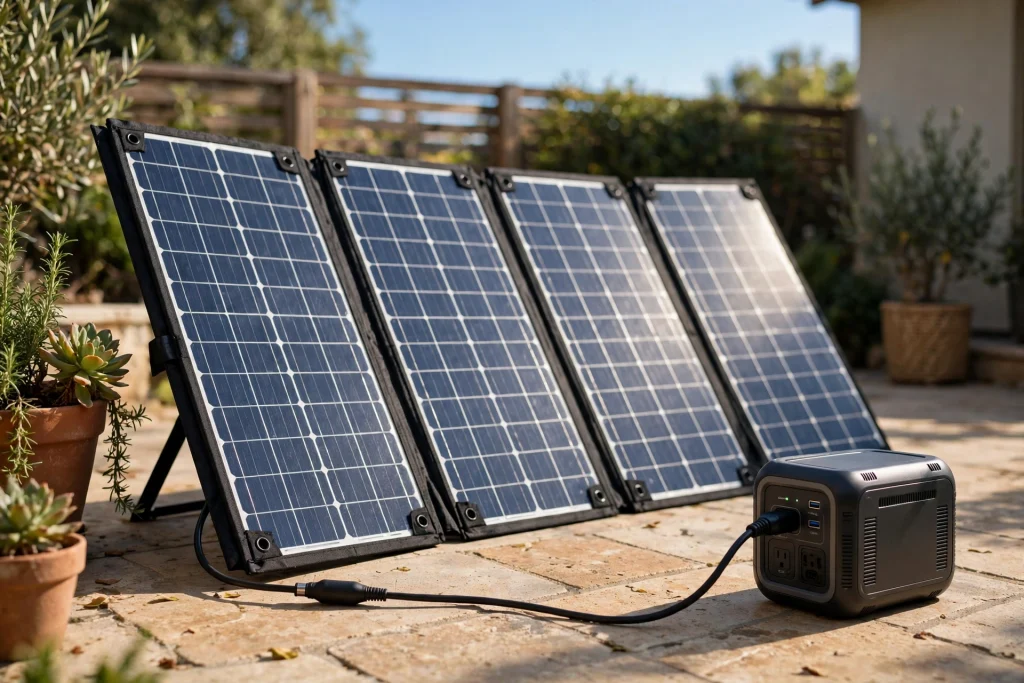
The RIVER 3 Plus charges from AC in roughly an hour, which is quick enough to top up before you leave without planning your morning around it. The EB3A is the speed specialist of this trio, getting to about 80% in roughly 40 minutes, so if you regularly refill between stops, it has a genuine edge. Solar changes the picture again — pairing any of these with foldable solar panels stretches a weekend noticeably, but solar input is weather-dependent in a way wall charging isn’t. The trade-off is dependence: fast AC charging helps only if you’ll be near an outlet, and solar helps only if the sky cooperates.
Battery chemistry and noise
All three stations here use LiFePO4 cells, which is the right call for something you’ll cycle for years. LiFePO4 trades a little energy density for a much longer cycle life and calmer thermal behavior than older lithium chemistries. The RIVER 3 Plus also runs quietly, rated under 30 dB, which matters more than spec sheets suggest. A fan you can hear across a quiet campsite at midnight gets old fast. The trade-off is that quiet, durable designs rarely win on raw weight — chemistry and cooling both add grams.
Weight, lights, and the small stuff
The RIVER 3 Plus weighs about 10.4 lb. That’s easy to carry one-handed from a trunk to a picnic table, and annoying to carry for a mile. The EcoFlow RIVER 3 undercuts it at under 8 lb, making it the lightest of the three, while the EB3A sits in the same light class as the EcoFlow. Small features pull their weight here too: the RIVER 3 Plus has a built-in light, which sounds minor until you’re setting up after dark without draining a separate lantern — though a dedicated rechargeable camping lantern still gives better light where you cook and read. The trade-off is portability against capability, every single time. Lighter is nicer at the trailhead and smaller everywhere else.
Matching the Station to Your Kind of Camping
Specs don’t camp. People do. The right pick in this class depends less on which unit wins a spec sheet and more on how your trips are likely to change over the next two or three years. The trade-off running through every profile below is money now against flexibility later.
If you’re a weekend camper whose gear list keeps growing — this year it’s phones and lights, next year maybe a powered cooler or a drone kit — the RIVER 3 Plus is the sensible buy. You start light, and if your loads grow, you stack on capacity instead of selling a nearly new station at a loss. That growth path is its whole argument.
If you’re a road-tripper who hops between sites and refills whenever you stop, the EB3A deserves a hard look. Its very fast charging suits a move-every-day rhythm, and if your loads are stable and small, expandability you’d never use is just a feature you’d be paying for.
If you walk any real distance with your power — walk-in sites, festival camping, a long carry from the parking area — the EcoFlow RIVER 3 makes the strongest case. It’s the lightest here, and its 100W USB-C output suits a phone-and-laptop kit well. The trade-off is its 300W ceiling: the moment you want to run something hungrier, you’ve hit a wall that no accessory fixes.
And if your plan involves electric cooking, hot drinks from a kettle several times a day, or heating of any kind? Skip this entire class. Buy a fixed station in the 1kWh-and-up range and accept the weight. What I keep coming back to with these small units is that buyer’s remorse almost never comes from the brand — it comes from asking a 300Wh box to do a 1,000Wh job.
Side-by-Side: RIVER 3 Plus vs EB3A vs RIVER 3
Numbers only help if they end in a decision. Read the table, then the notes under it for the part numbers hide. The trade-off is never free: you pay for speed, weight, or flexibility, and you pick which one.
| Type/Tier | Best For | Price Tier | Key Feature | Watch-Out |
|---|---|---|---|---|
| EcoFlow RIVER 3 Plus, expandable compact tier | Campers who may grow into longer trips | Mid | Wireless battery stacking to ~572Wh or ~858Wh, plus <10 ms UPS | Total cost with an extra battery can beat a bigger fixed station |
| BLUETTI EB3A, fast-charge compact tier | Drivers refilling quickly between stops | Mid | Very fast charging, about 40 minutes to 80% | Not expandable, so the capacity you buy is the capacity you keep |
| EcoFlow RIVER 3, ultralight tier | Walk-in and weight-sensitive campers | Mid | Lightest of the three at under 8 lb, 100W USB-C output | Only 245Wh and about 300W AC output, half the RIVER 3 Plus and BLUETTI figure |
The RIVER 3 Plus is the only one of the three that can change size after you buy it, which is either its best feature or an expensive temptation, depending on whether your trips actually grow. The EB3A wins the refill race outright, and for a driver who tops up daily, that speed can matter more than any stacking trick. The RIVER 3 wins every carry, every time, and loses every argument that involves a load over 300W.
Three Trips, Three Different Answers
A two-night weekend, two people, light loads
Phones, a couple of lights, a small fan, maybe a camera battery. All three stations handle this without drama, and the RIVER 3 Plus does it with outlets to spare for a partner’s gear too. Here the trade-off barely bites: pick on weight or price, because capacity isn’t your constraint yet.
A four-night base camp that might become a habit
This is where the class splits. A fixed 245Wh or 268Wh unit starts demanding discipline — rationing the cooler, watching every charge. The RIVER 3 Plus, stacked to roughly 572Wh or beyond, stops being a rationing exercise, especially with solar topping it up by day. The trade-off is that comfort costs extra, so a one-off long trip may not justify it. A recurring habit does.
A storm knocks out power at home
Small stations earn their keep indoors, too. The RIVER 3 Plus switches over in under 10 ms in UPS mode, fast enough to keep a router or laptop running through a flicker without a reboot. Neither rival offers that switchover as a headline feature. The trade-off is scale: it’ll keep connectivity and small essentials alive for hours, not a fridge for days. Know which job you’re hiring it for.
Common Mistakes Buyers Make in This Size Class
The most common mistake is buying for the trip you wish you took. People picture electric cooking and a heated tent, then buy a station sized for phones and string lights. Work backwards from your actual plug list, with honest hours attached, and the right size usually picks itself. The trade-off people refuse to face is that comfort loads cost ten times the energy of convenience loads.
The second mistake is treating expansion as free. Stacking can save you replacing a working unit, but price the whole system before you commit. If you already know you’ll need 800Wh on day one, a single larger station is often the cleaner, cheaper buy, and it gives you one box to carry instead of two.
The third mistake is ignoring the refill plan. A station with no realistic way to recharge on your trip is just a countdown timer. Decide before you buy whether you’re refilling from the car, from solar, or from a site hookup, and check that your portable power station choice and charging cables actually support that plan. It sounds basic. It gets skipped constantly.
Why Expandability Matters, How It Works, and What It Really Costs
Why does this feature deserve its own section? Because it’s the only meaningful structural difference in a crowded class where everyone offers similar capacity, chemistry, and outlets. Most small stations are sealed decisions. This one isn’t.
How it works is refreshingly undramatic: the extra battery stacks directly with the main unit, connecting wirelessly with no cable to snag, lose, or trip over in the dark. An EB300 takes you to roughly 572Wh total. An EB600 takes you to roughly 858Wh. You carry only the base unit on short trips and add the block when the trip demands it.
What it really costs is the honest part. The base station is priced against fixed rivals, but the system isn’t. Add an expansion battery and your total can pass what a larger single station would have cost, while giving you a two-piece setup instead of one tidy box. The trade-off is flexibility against simplicity, and it only pays off if your usage genuinely varies — light most weekends, heavy a few times a year. If your usage is constant, flexibility is a feature you’ll admire and never use.
Questions People Ask Before Buying
Real buyer questions, straight answers
Can the RIVER 3 Plus run a CPAP machine overnight?
Yes, for most typical CPAP setups it can handle a night, especially with the humidifier turned off or set low. Runtime depends heavily on pressure settings and whether the heated humidifier and tube are running, since heat is what drains small batteries fastest. If CPAP use is nightly and non-negotiable, the expansion battery turns a maybe into a comfortable margin — the trade-off is carrying the extra block for the sake of one device.
Is expandable capacity actually cheaper than buying a bigger station?
Not always, and anyone who tells you otherwise is selling you something. Stacking wins when you would otherwise replace a working station entirely, or when you only need the extra capacity on a few trips a year. If you need the larger capacity on every trip from the start, a single bigger station is usually the better-value and simpler choice. The trade-off is paying for flexibility you may never cash in.
Will any of these run a kettle, cooktop, or space heater?
No — not in any way you’d call useful. Heating appliances draw so much power that a station in this size class empties itself in minutes even when the inverter can technically start the load. Treat these units as power for electronics, lights, fans, and small cooled storage. If electric cooking or heating is central to your plan, the trade-off is unavoidable: move up to 1kWh or more and accept the weight and cost that come with it.
How fast do these stations really recharge?
Fast enough that charging speed should rarely be your only deciding factor, with one exception. The RIVER 3 Plus refills from AC in roughly an hour, which suits a quick top-up before departure. The EB3A is quicker still, reaching about 80% in roughly 40 minutes, so drivers who refill in short stops get a real advantage. The trade-off is that the fastest charger here is a fixed-capacity unit — you gain minutes at the outlet and give up the option to grow later.
Does the UPS feature matter if I mainly camp?
Yes, because it gives the station a second job for the other fifty weeks of the year. A switchover under 10 ms keeps routers, laptops, and similar electronics running through brief outages without restarting. It won’t carry a whole home, and it isn’t a substitute for a large home backup system. The trade-off is scope: excellent for keeping you online and working, limited for everything with a compressor or a heating element.
Key Takeaways
Capacity around 286Wh suits light weekend loads; expansion to roughly 572Wh or 858Wh is what makes longer trips realistic.
600W AC output covers far more than 300W, but no station in this class cooks, boils, or heats for long.
The EB3A recharges fastest. The RIVER 3 carries easiest. The RIVER 3 Plus is the only one that can grow.
LiFePO4 in all three means years of regular cycling without much fuss. Decision tree, in plain arrows:
Loads under 300W and weight is your top priority → EcoFlow RIVER 3
Loads stay small forever and refill speed matters most → BLUETTI EB3A
Trips may get longer, or you want home UPS backup too → EcoFlow RIVER 3 Plus
Electric cooking, kettles, or heating are on your list → skip all three, buy 1kWh or more
Frequently Asked Questions
How long does the RIVER 3 Plus battery last before it wears out?
It uses LiFePO4 cells, a chemistry known for a long cycle life measured in thousands of charge cycles rather than hundreds. In practical terms, regular weekend use shouldn’t wear it out quickly, and it should outlast older lithium-ion designs by a wide margin. The trade-off for that durability is a slightly heavier pack than the lightest chemistries could offer.
Can I charge the RIVER 3 Plus with solar panels?
Yes, it accepts solar input, so you can top it up during the day at camp instead of watching the percentage only fall. How much you actually harvest depends on panel size, sun angle, shade, and weather, so treat solar as a range extender rather than a guarantee. The trade-off is patience: solar is free and quiet, but rarely as fast as a wall outlet.
Is the RIVER 3 Plus loud in a tent or a small room?
No, it’s rated under 30 dB, which is quiet enough that it shouldn’t bother light sleepers in normal use. Fan noise can rise briefly under heavy loads or fast charging, as it does on most stations in this class. The trade-off is that very quiet operation under load is hard to combine with the smallest possible body, and this unit leans toward quiet.
How much does the RIVER 3 Plus weigh with an expansion battery?
The base unit is about 10.4 lb, which is easy to move around camp or a home. Adding a stacked battery raises the total noticeably, so the two-piece setup suits car camping and home use better than long carries. The trade-off is the familiar one: extra capacity always arrives as extra weight, just in a detachable form here.
Can the RIVER 3 Plus power a mini fridge or powered cooler?
It can run many efficient powered coolers for a useful stretch, since their compressors cycle on and off rather than drawing constantly. Runtime varies a lot with ambient temperature, how full the cooler is, and how cold you set it. For multi-day cooler use, the expansion battery makes a real difference. The trade-off is that refrigeration is a continuous load, so it competes with everything else you want to run.
What’s the difference between the EB300 and EB600 expansion options?
The EB300 roughly doubles the base capacity, taking the system to about 572Wh, while the EB600 roughly triples it to about 858Wh. The smaller block suits an extra night or a CPAP margin; the larger one suits longer base camps and heavier daily loads. The trade-off is straightforward: the EB600 gives you the most range and adds the most cost and weight.
Final Recommendation
Buy the EcoFlow RIVER 3 Plus if your camping is likely to evolve — or if you’d value a quiet, fast-switching UPS on your desk between trips. It’s a well-judged small station on its own merits, with 600W output, quick charging, and LiFePO4 longevity, and it’s the only pick here that doesn’t force you to predict your future perfectly on the day you buy it. Just go in clear-eyed about the trade-off: priced as a complete expanded system, it can cost more than a bigger fixed station, so the flexibility has to be something you’ll actually use. If it isn’t, the EB3A’s speed or the RIVER 3’s lighter carry will serve you better, and there’s no wrong answer in admitting that.
[[COMPARE]]
Compare Top Portable Power Stations for Camping
Three roughly 286Wh stations side by side — one grows with extra batteries, one recharges fastest, one weighs least. The right pick depends on where your trips are heading.
EcoFlow RIVER 3 Plus
286Wh and 600W, expandable to 858Wh with stacked extra batteries, under 30 dB with a sub-10 ms UPS — the only one here that grows with you
BLUETTI EB3A
268Wh with the same 600W output and the fastest recharge of the three — simpler and often cheaper, but the capacity you buy is the capacity you keep
EcoFlow RIVER 3
245Wh LiFePO4 at under 8 lb with a 100W USB-C output — the lightest carry here, but the smallest battery and 300W output cap what it can run
Prices and availability may vary — tap any product to check the current listing.
Affiliate Disclosure: This article contains affiliate links. If you buy through one of these links, we may earn a commission at no extra cost to you.