A portable power station in the 1.5 to 2kWh class is big enough to tempt you into running almost anything, and pricey enough that a wrong pick stings. This guide uses the Pecron E1500LFP to test a wider question: how much of what premium brands charge for is polish, and how much is power you’ll actually use at camp? It’s for car campers, van users, and RV owners who run real loads daily.
Quick Answer
The Pecron E1500LFP is worth it for value-focused car campers and RV users who run a fridge, lights, and devices every day, because its 1536Wh of LiFePO4 capacity gives the most watt-hours per dollar in this class. Skip it if you need a polished app, quiet charging, or big-brand support.
Compare Top Portable Power Stations for Camping
Three big-battery LiFePO4 stations side by side — one built for value per watt-hour, one built for fast refills and low idle draw, one built to expand.
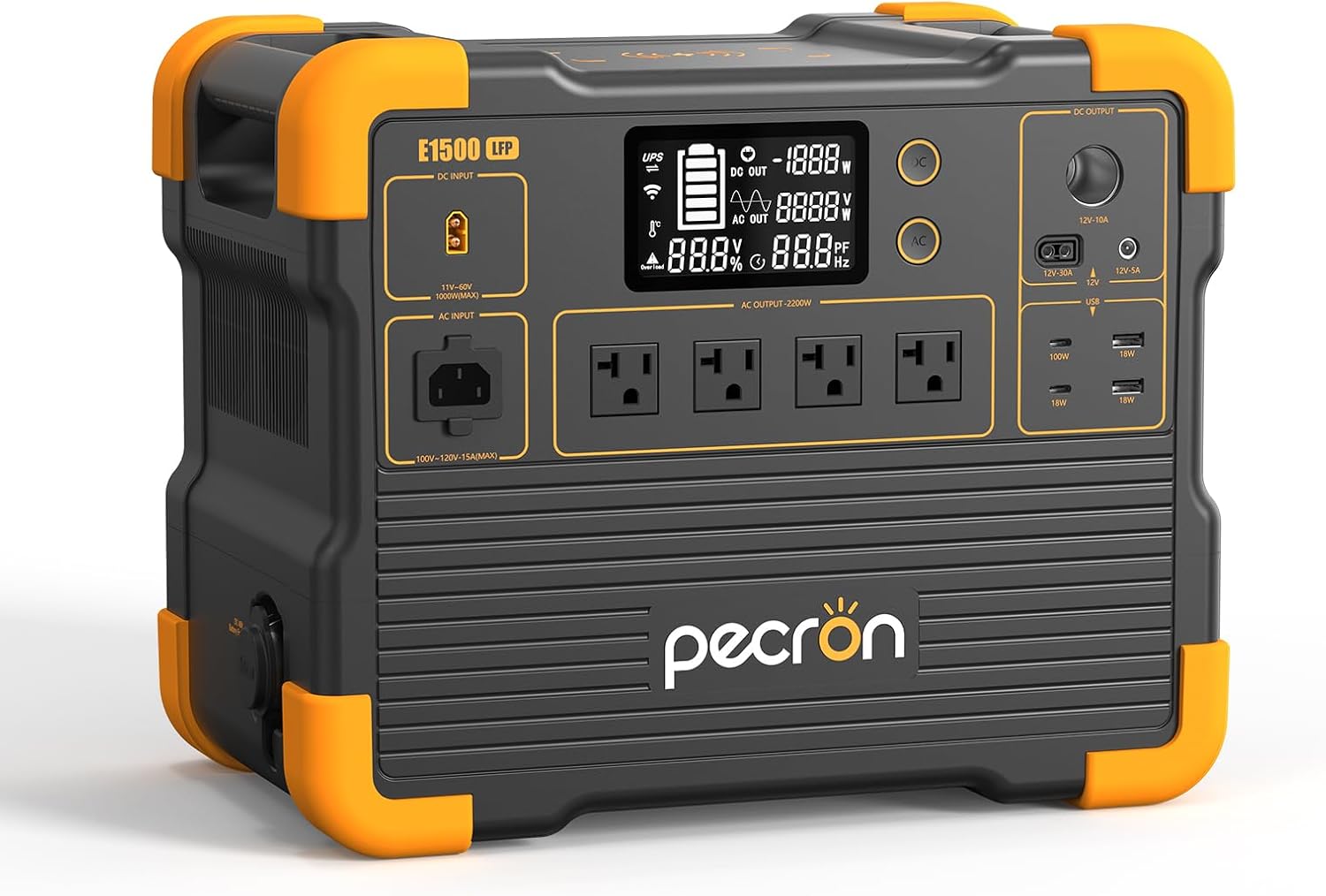
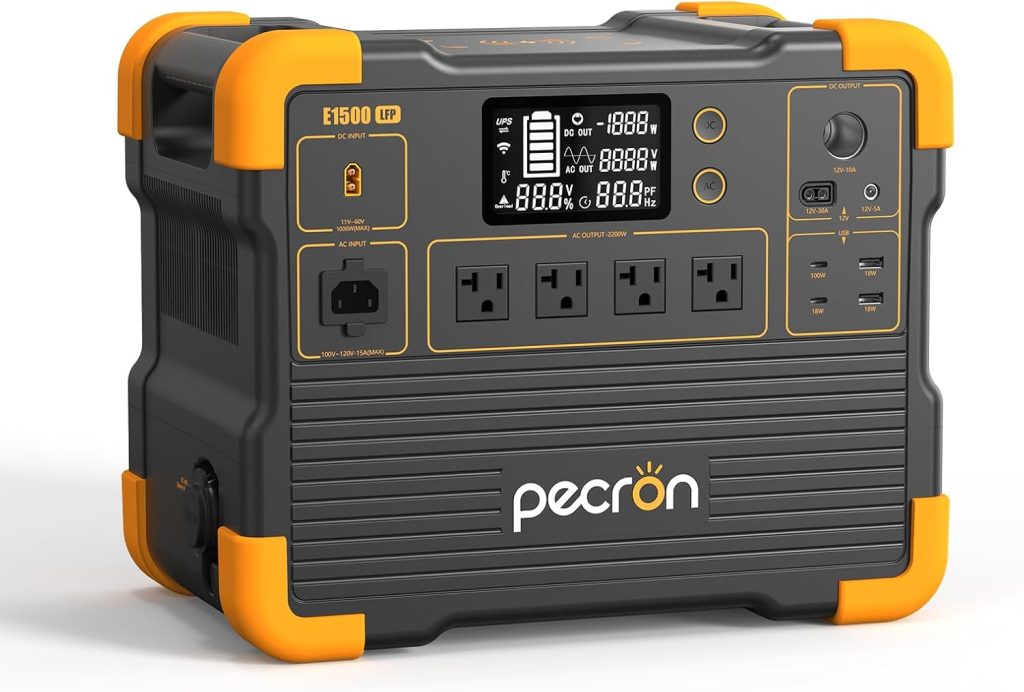
Pecron E1500LFP
1536Wh and a 2200W-class inverter at a budget-tier price, with a wireless charging pad on top — the most watt-hours per dollar here, with a noisier fan and a rougher app as the trade
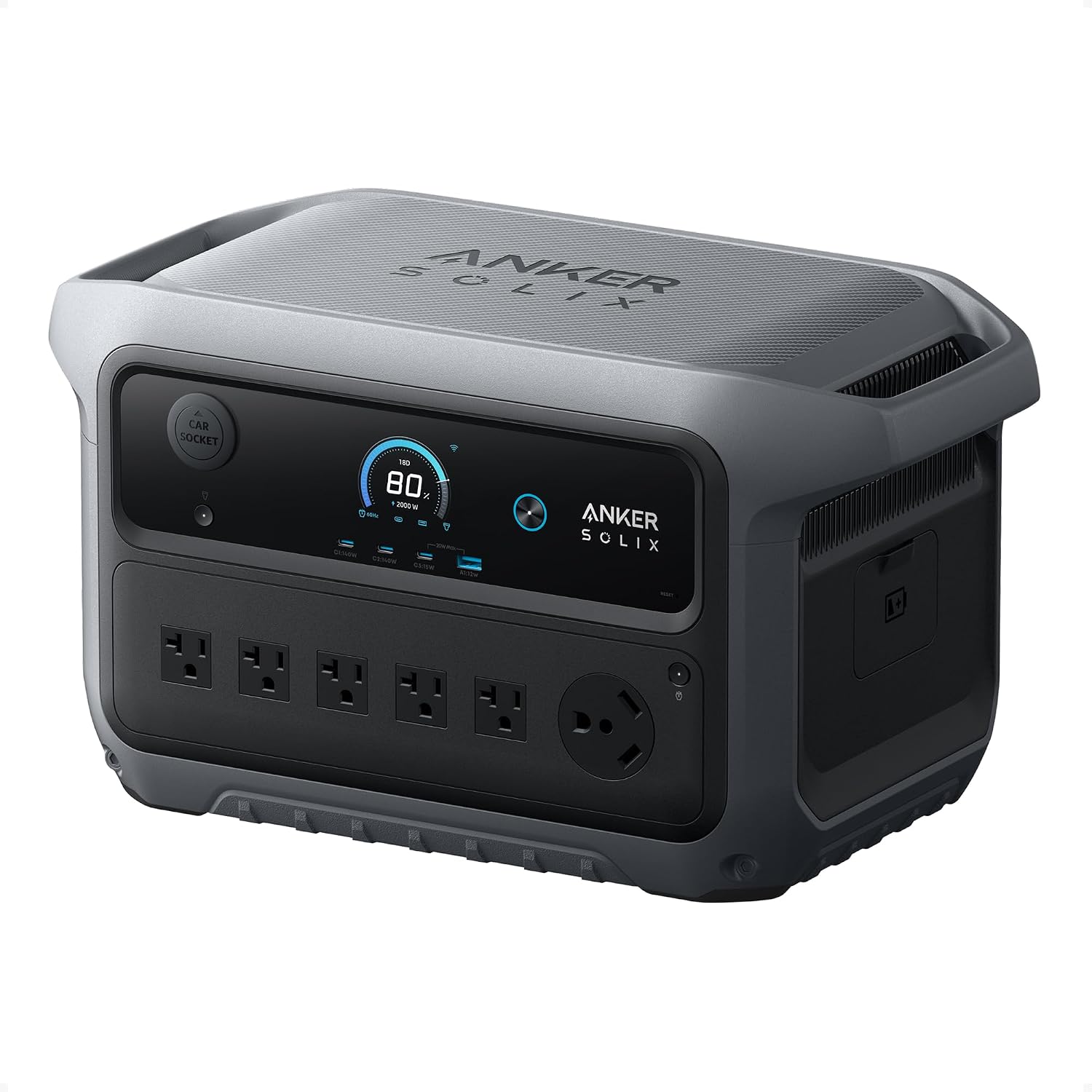
Anker SOLIX C2000 Gen 2
Bigger 2048Wh battery, the fastest refill here and a very low idle draw that stretches fridge runtime — at a clear premium over the Pecron
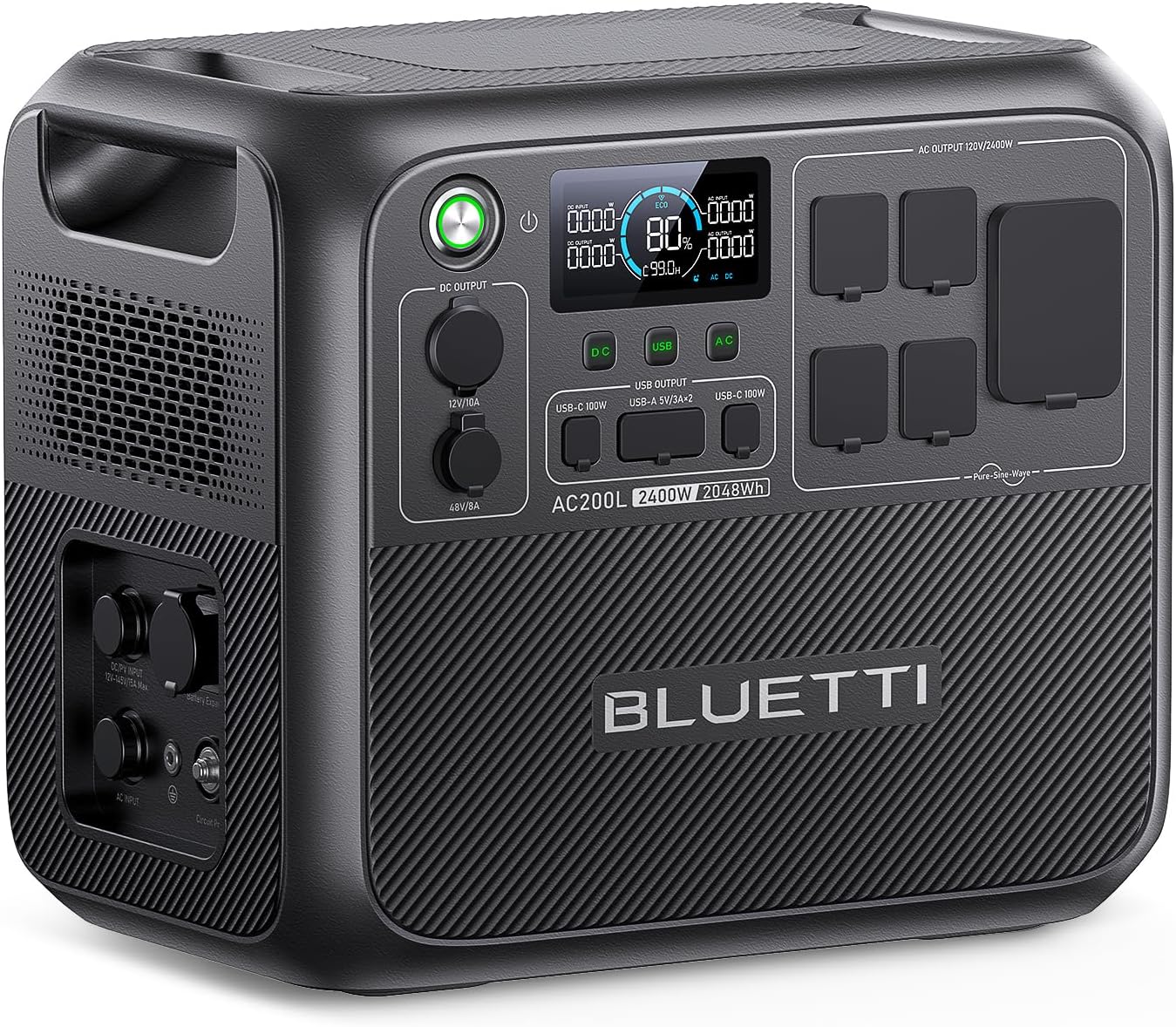
BLUETTI AC200L
2048Wh with deep expansion headroom and an established support network — the largest and heaviest box of the three
Prices and availability may vary — tap any product to check the current listing.
What to Look For in a Portable Power Station for Camping
Spec sheets read like they end arguments. They don’t. Two stations can share a headline capacity and behave very differently once a fridge cycles through a hot night and clouds cut your solar harvest. Independent long-term coverage made the same point: a major outdoor magazine named this model its value pick in a camping power station test, then, after six months of van use, reported fan noise and a glitchy app. Both things can be true.
Usable Capacity Beats the Headline Number
Batteries don’t give you everything printed on the box. Inverter and conversion losses take a cut, so 1536Wh might deliver closer to 1,250–1,350Wh through AC outlets. DC outputs waste less, which is why a 12V fridge sipping power directly stretches the same battery further.
Trade-off: Pecron’s capacity is honest for its tier, and LiFePO4 holds up well over years of cycling, but the Anker SOLIX C2000 Gen 2 and BLUETTI AC200L both carry 2048Wh. On a two-night trip with no recharge, that third more isn’t marketing. It’s the extra evening of fridge runtime. A smaller portable power station can also look cheap until you price the expansion battery needed to match a bigger unit.
AC Output Decides Which Heating Loads You Can Run
Wattage is where optimism dies. A 2200W output class, like the Pecron’s, handles a kettle, a coffee maker, or a hair dryer one at a time. Try two heating appliances together and the math turns — a 2200W class still loses to a kettle plus a heater at once, because heating loads stack fast and the station trips.
Premium rivals at 2400W buy headroom, not a different lifestyle. Even if the inverter allowed a hob, a heater, and a kettle together, the battery would drain in well under an hour. Judge output by your single largest load, with margin for its startup surge.
Idle Draw Quietly Eats Fridge Runtime
Few buyers ask about idle draw. They should. A switched-on station consumes power just being awake — inverter, display, fans — and that overhead ticks away all night whether the fridge compressor runs or rests. Across a week, it adds up to a real slice of the battery doing nothing.
This is where Anker pulls ahead. Its idle draw sits around 9W, unusually low for this size, which is why it suits fridge duty: the compressor cycles, the station sips, the weekend stretches. Pecron doesn’t publish a figure that competes, so light overnight users should assume a larger haircut. For heavy daytime users the difference shrinks. For a fridge in a warm van for three days, it’s the argument.
Recharge Speed Is Two Different Questions
Wall and solar charging reward different habits. Pecron refills from a wall outlet in roughly 1.8 hours — quick enough that a lunch stop with hookups changes what you carry. Anker goes further, under an hour when AC and solar combine, and BLUETTI also leans into fast intake. Speed suits people who move daily and recharge in windows, not days.
Solar is slower and less obedient. Pecron accepts up to about 700W, but angle, heat, and cloud shave the real figure; an array often delivers two-thirds of its badge number in good sun. One quirk matters: Pecron uses a GX16 solar connector, uncommon though adapters are included. Lose that adapter at camp and your panels become expensive sunshades.
Expansion Batteries Change the Whole Calculation
A station that can’t grow forces a guess: predict your future needs today, pay today. Pecron supports extra batteries, as do the Anker (to about 4kWh total) and the BLUETTI, so all three escape that trap. The differences live in cost per added watt-hour and how clumsy the expanded setup gets in a vehicle.
Expansion suits van and RV users whose loads creep upward. It suits weekend campers less; a modest panel and some restraint usually solve their problem cheaper. Weight is the other reality — the base Pecron is about 40 lb, the Anker about 42 lb, the BLUETTI heavier and larger still. Add a pack and “portable” becomes a planned, two-handed lift. Portable for whom, exactly? Standalone solar batteries follow different economics, and comparing cost per watt-hour stops you paying a portability premium for a battery that never leaves the garage.
App Polish, Fan Noise, and Support Are the Real Price Gap
Here’s where Pecron’s savings come from. Its app exists and is widely reported as glitchy — fine until you’re checking charge levels from the tent and it won’t connect. Long-term testers living with the unit in a van flagged the same thing, plus fans that get noticeable under load or during fast charging. Neither flaw stops the station working. Both annoy weekly if you live with it daily.
Physical controls cover the essentials, so a bad app is an irritation, not a dead end — unless you build your routine around remote monitoring. Support is the third leg: Anker and BLUETTI run larger service networks, while Pecron’s is smaller. If a unit fails in year three, that stops being abstract. You’re buying the odds that someone answers.
Matching a 1.5–2kWh Station to Your Situation
The Weekend Car Camper With a 12V Fridge
Your load list is short: a 12V fridge running constantly, evening lights, phones, maybe a camera battery. Fridge consumption dominates, and on DC a 1536Wh station covers a long weekend in mild weather without heroics. Heat shortens that — compressors work harder at 35°C than at 20°C — but a modest panel usually closes the gap. For this persona the Pecron fits almost suspiciously well. You won’t live in its app or fast-charge at midnight. You’ll plug in the fridge, glance at the display twice a day, and go hiking.
The Van or RV Dweller Living Off It Daily
Daily cycling changes the verdict’s texture, not its direction. You’ll recharge constantly, so solar ceiling and wall speed shape your life more than raw capacity. Pecron’s roughly 700W solar input and sub-two-hour wall refill keep a routine workable, and expansion lets the system grow.
But flaws compound with exposure. A glitchy app checked six times a day is six small irritations, and fans audible at every fast charge become part of the van’s soundscape. I’ve seen people shrug off both for months because the value was real… and the same people upgrade within a year for the quiet alone. Know which person you are before saving the money.
The Home-Backup Buyer Who Camps Twice a Year
Your priorities run backwards. The station sits in a cupboard for months, then must run a fridge, lights, a router, and phones through an outage. Storage behaviour and reliability matter more than solar ceilings, and capacity matters most — there’s no hookup to bail you out — which pushes this buyer toward the 2048Wh rivals, or a Pecron plus expansion. Honestly? Buy for the outage.
Three Tiers in the Big-Battery Class
| Type/Tier | Best For | Price Tier | Key Feature | Watch-Out |
|---|---|---|---|---|
| Value LiFePO4 (Pecron class) | Daily-load campers watching cost per watt-hour | Budget | 1536Wh LiFePO4, 2200W-class output, expansion options | Glitchy app and fan noise wear on daily users |
| Premium fast-charge (Anker class) | Fridge-heavy van and RV setups | Premium | Idle draw near 9W, sub-hour combined recharge | Higher cost buys polish some users never touch |
| Established expandable (BLUETTI class) | Buyers planning to grow capacity over time | Premium | 2048Wh base, strong solar intake, expansion path | Heavier, larger body is awkward in small vehicles |
Value LiFePO4, represented by the Pecron, wins when the spreadsheet matters most, because capacity and output stay competitive while corners cut are software and support, not the battery.
Premium fast-charge models like the Anker earn their markup through idle efficiency and recharge speed, advantages that compound every day a fridge runs.
Established expandable systems like the BLUETTI suit buyers who expect their setup to grow and want a larger support network behind it, accepting bulk as the trade.
Running a 12V Fridge for a Long Weekend
Picture Thursday evening to Sunday lunch: fridge on DC the whole time, lights a few hours nightly, two phones. In mild weather the Pecron handles this with room to spare, and the room matters — it absorbs the hotter afternoon or a projector evening. Heat is the variable nobody budgets for, since a fridge in a sun-baked car works far harder than one in shade. Pre-chill food, park smart, keep the lid shut. A pair of foldable solar panels by day typically replace what the fridge ate overnight, the only number deciding whether Monday becomes possible.
Solar-Only Recharge at a Basecamp
Basecamp removes the wall outlet from your life. Now Pecron’s roughly 700W input ceiling and your panel discipline run the show: face panels properly, re-angle them once or twice a day, and keep them out of the shade your vehicle throws by mid-afternoon. Sloppy placement costs more energy than a smaller cap ever will. Cloud changes everything, obviously — two overcast days can halve your harvest while the fridge keeps eating at full price. Solar-only here works for fridges, lights, and devices, not carefree heating or cooking. Plan the menu around that truth.
Using It as Home Backup During an Outage
At home, forget solar ceilings — in a winter outage you may get little from panels anyway. What counts is capacity, enough output for a fridge and essentials, and a unit that’s actually charged when the lights go out. Keep it stored part-charged per the maker’s guidance, top it up every few months, and decide in advance which appliances you’ll run; deciding by torchlight is a poor strategy. The Pecron covers the essentials — fridge, lights, phones, router, laptop — but no station here runs a whole house. Premium models pull ahead on camp logic again: 2048Wh plus low idle draw lasts longer, which matters if outages run to days.
Common Mistakes Buyers Make With This Size Class
Buying capacity for heating appliances. A heater or electric cooking setup can drain this class in an hour or two, because resistive heating converts watt-hours into warmth at a ruthless one-to-one rate. People size the battery for the fridge, improvise a heater, then blame the battery.
Ignoring idle draw. Shoppers compare capacity and output, buy the cheaper unit, and lose the difference overnight to standby consumption they never checked. On fridge duty across a week, high idle draw can cost the equivalent of a small expansion battery — paid for, never received.
Oversizing solar past the input cap. Panels beyond what the station accepts don’t charge it faster once the ceiling is hit; extra watts are clipped away. Some over-paneling helps in weak sun, but doubling the rated input buys far less than the seller implies.
Trusting the app as the only control. Software fails, phones die, connections drop. On a unit whose app is already glitchy, building your routine around remote control invites a midnight walk to the battery in the rain. Learn the physical controls. Use the app as a bonus, never the plan.
Why, How and What
Why does cost per watt-hour favour Pecron so heavily here?
Because Pecron spends less on everything surrounding the battery — software, retail presence, support, design polish. Cells and inverters in this class are broadly comparable across brands, so the savings came from the ecosystem. That’s a rational trade for many buyers. It only looks like a trick if you expected the polish to be free.
How should you size solar for a 1536Wh station?
Start from daily consumption, not the input ceiling. Add up what your fridge, lights, and devices eat in a day, then choose an array that replaces that in four to five decent sun hours, remembering panels deliver well under their rated figure. For most fridge setups that lands in the few-hundred-watt range. Buying up to the 700W cap suits basecamps and daily movers, not casual weekends.
What actually separates the Pecron from the Anker and BLUETTI?
Capacity, idle behaviour, and everything wrapped around the hardware. The rivals carry 2048Wh against 1536Wh, the Anker sips standby power at roughly 9W and recharges faster, and both brands offer smoother apps and deeper support. Pecron counters with the strongest watt-hours per dollar in the group and output close enough for most camp loads. It’s a clean, legible trade — rarer than it should be.
Questions People Ask Before Buying
Real buyer questions, straight answers
Is the Pecron E1500LFP actually worth it over a big brand?
Yes — for daily loads on a real budget, the Pecron is worth it. You give up app polish, some quiet, and a large support network, none of which run your fridge, while keeping competitive capacity and output. Buyers who monitor everything remotely or hate fan noise feel the savings differently — for them the premium looks like a feature.
Is 1536Wh enough for a whole camping weekend?
Yes — for a fridge, lights, and devices, 1536Wh covers a typical weekend. Run the fridge on DC, pre-chill food at home, and expect roughly 1,250Wh of usable energy through AC. Add one hot day, a projector night, or a daily kettle habit and the margin thins fast. A modest panel restores it.
Should I pick the Pecron E1500LFP or the Anker SOLIX C2000 Gen 2?
Pick the Pecron for value and the Anker for fridge runtime and polish. Anker gives you 2048Wh, an idle draw near 9W that stretches overnight loads, a sub-hour combined recharge, and software that behaves. Pecron gives you most of the practical power at a budget-tier cost, with a glitchier app and more fan noise. If it sleeps beside you, Anker’s advantages stop being luxuries.
Does the solar input cap actually matter at camp?
Only if solar is your main way of recharging. A cap around 700W is generous for this class, and most campers running a few hundred watts of panel never brush against it. It matters at basecamps and for daily movers refilling a large battery inside a short sunny window. Even there, angle and shade waste more than the ceiling rejects.
Is a value brand risky to own long-term?
The battery risk is low; the support risk is the real one. LiFePO4 chemistry is well understood and long-lived, and the core hardware follows pricier rivals. What you accept is a smaller service network, slower software fixes, and less certainty about parts in five years. For a camper happy with that uncertainty the trade is coherent; a decade-long van build deserves a second thought.
Frequently Asked Questions
Can I charge it from my car while driving?
Yes, stations in this class accept vehicle charging through a 12V outlet or a dedicated car cable, though it’s slow compared with wall charging. Car output is limited, so a drive tops the battery up rather than refilling it from empty. Treat it as a trickle between campsites, and check your vehicle’s outlet rating first.
Can it run a CPAP overnight?
Generally, yes, and this class is popular for exactly that job. Runtime depends heavily on settings, with heated humidifiers and tubes drawing far more than the base machine. Many users disable heating features to stretch one charge across several nights. Check your device’s draw and test it at home first.
Can I add expansion batteries later?
Yes — Pecron, Anker, and BLUETTI here all support extra packs, so you can start with the base unit and grow. Expansion adds capacity without replacing the inverter or controls you know. It also adds weight, and its cost can approach a larger station’s, so expand because your loads grew. Packs are brand-specific, not interchangeable.
How loud are the fans, really?
Noticeable under load is the honest summary from long-term Pecron users. Fans work hardest during fast charging and heavy AC output, and in a quiet van or tent that hum carries. At a daytime campsite it’s rarely an issue. If noise bothers you at night, charge before bed.
Is the wireless charging pad actually useful?
More than you’d expect, less than the marketing suggests. Dropping a phone on top of the Pecron overnight is handy at camp and frees a port. Wireless charging is slower and less efficient than a cable, though, so it’s a poor way to spend scarce watt-hours on a tight solar budget. Use it for phones. Cable the big stuff.
How long will the battery last before it wears out?
LiFePO4 batteries in this class are rated for thousands of cycles before capacity fades noticeably, which means years of regular camping rather than months. Heat, constant fast charging, and sitting fully charged age any battery faster. Stored sensibly and cycled normally, the battery should outlast the app and the fans. Calendar age eventually wins.
Key Takeaways
Pecron’s E1500LFP offers 1536Wh of LiFePO4 capacity and 2200W-class output at a budget-tier position, because savings came from software, noise, and support, not the battery.
Usable energy decides weekend runtime — expect AC losses, and run a fridge on DC whenever you can.
Idle draw near 9W makes the Anker SOLIX C2000 Gen 2 the stronger fridge machine over multi-day stretches, before its larger 2048Wh capacity even enters the argument.
A 2200W output class still loses to a kettle plus a heater at once, because heating loads stack fast and drain this class within hours.
Solar input around 700W is ample for most campers, but placement and weather waste more energy than the cap does.
Expansion on all three models lets you start smaller, if you accept that extra packs turn a 40 lb carry into a planned lift.
The glitchy app and audible fans reported by long-term testers are irritations for weekend users, deciding factors for people sleeping next to the unit.
Decision Tree: Which Station Fits You?
You run a fridge, lights, and phones on weekend trips and want the lowest cost per watt-hour → Pecron E1500LFP
You sleep in a van with the station nearby and fast-charge it most days → Anker SOLIX C2000 Gen 2, for the smoother daily experience
Your fridge runs untouched for three or more days and every overnight watt counts → Anker SOLIX C2000 Gen 2, for low idle draw and 2048Wh
You expect your system to grow over several seasons and want a larger support network → BLUETTI AC200L
Outages worry you more than camping, and the unit will sit stored for months → BLUETTI AC200L or Anker SOLIX C2000 Gen 2, sized for the outage first
You plan to control everything from your phone → skip the Pecron and start with the Anker
Final Recommendation
For value-focused car campers and RV users who run loads daily, the Pecron E1500LFP is the pick — not because it’s flawless, but because its flaws sit in the app, the fans, and the support queue rather than the battery or inverter, and its watt-hours per dollar lead this class. If your life revolves around a fridge stretching across long, unattended stretches, the Anker SOLIX C2000 Gen 2 justifies its premium with idle efficiency and recharge speed you’ll notice weekly.
Choose the BLUETTI AC200L when expansion plans and an established support network matter most, accepting the extra bulk as the cost. Three stations, three honest answers. The mistake isn’t picking the cheap or pricey one — it’s picking without knowing which trade you made.
Compare Top Portable Power Stations for Camping
Three big-battery LiFePO4 stations side by side — one built for value per watt-hour, one built for fast refills and low idle draw, one built to expand.
Pecron E1500LFP
1536Wh and a 2200W-class inverter at a budget-tier price, with a wireless charging pad on top — the most watt-hours per dollar here, with a noisier fan and a rougher app as the trade
Anker SOLIX C2000 Gen 2
Bigger 2048Wh battery, the fastest refill here and a very low idle draw that stretches fridge runtime — at a clear premium over the Pecron
BLUETTI AC200L
2048Wh with deep expansion headroom and an established support network — the largest and heaviest box of the three
Prices and availability may vary — tap any product to check the current listing.
Affiliate Disclosure: This article contains affiliate links. If you buy through one of these links, we may earn a commission at no extra cost to you.