A portable power station usually sells you an inverter first and a battery second. The EcoFlow TRAIL 300 DC flips that pitch: it deletes the AC outlets entirely, keeps 288Wh of LiFePO4 storage, and lands at roughly half the weight of a comparable plug-in station. This guide is for tent campers, hikers who still camp from a car sometimes, and anyone whose kit already runs on USB-C and 12V. If that describes your load list, the missing outlets might be the smartest deletion in the category. If it doesn’t, this box will frustrate you in one very specific way.
Quick Answer
The TRAIL 300 DC is worth it if every load you own runs on USB or 12V, because skipping the inverter cuts weight, idle draw, and conversion waste in one move. Skip it the moment one essential item needs a wall plug — no adapter fixes a missing AC outlet, and the AC version of this size class costs you weight, not capability.
Compare Top Small Portable Power Stations for Camping
Three 288Wh stations side by side — two drop the AC outlet to save weight, one keeps it. The right pick depends on whether anything you own still needs a wall plug.
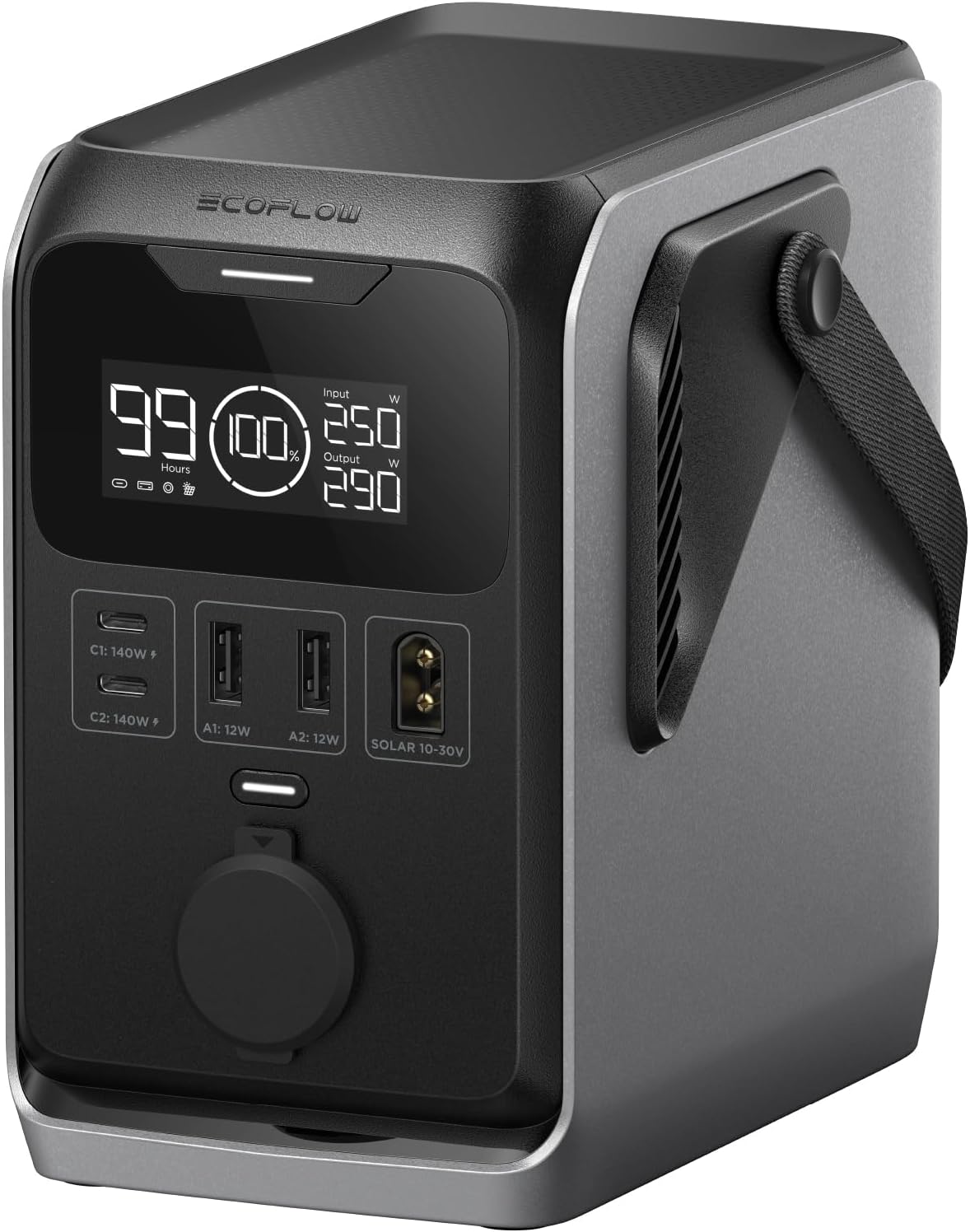
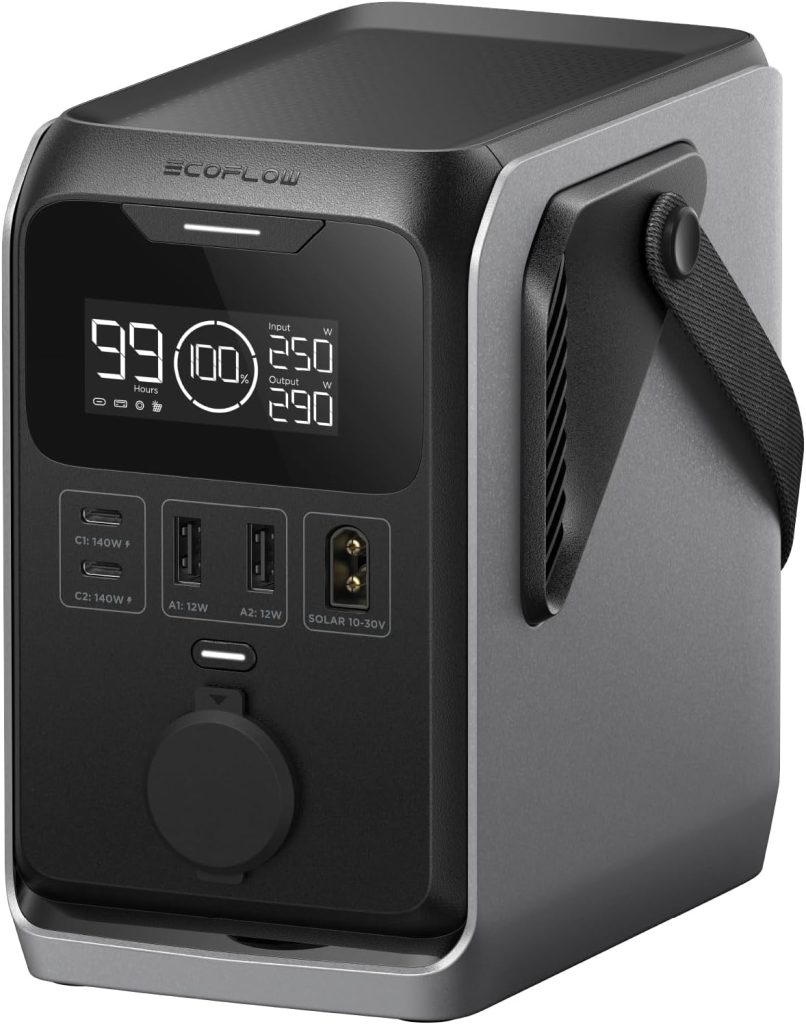
EcoFlow TRAIL 300 DC
288Wh, DC-only and about 5.7 lb — the lightest real power station here, with two 140W USB-C ports and a 12V car socket, and no AC outlet at all
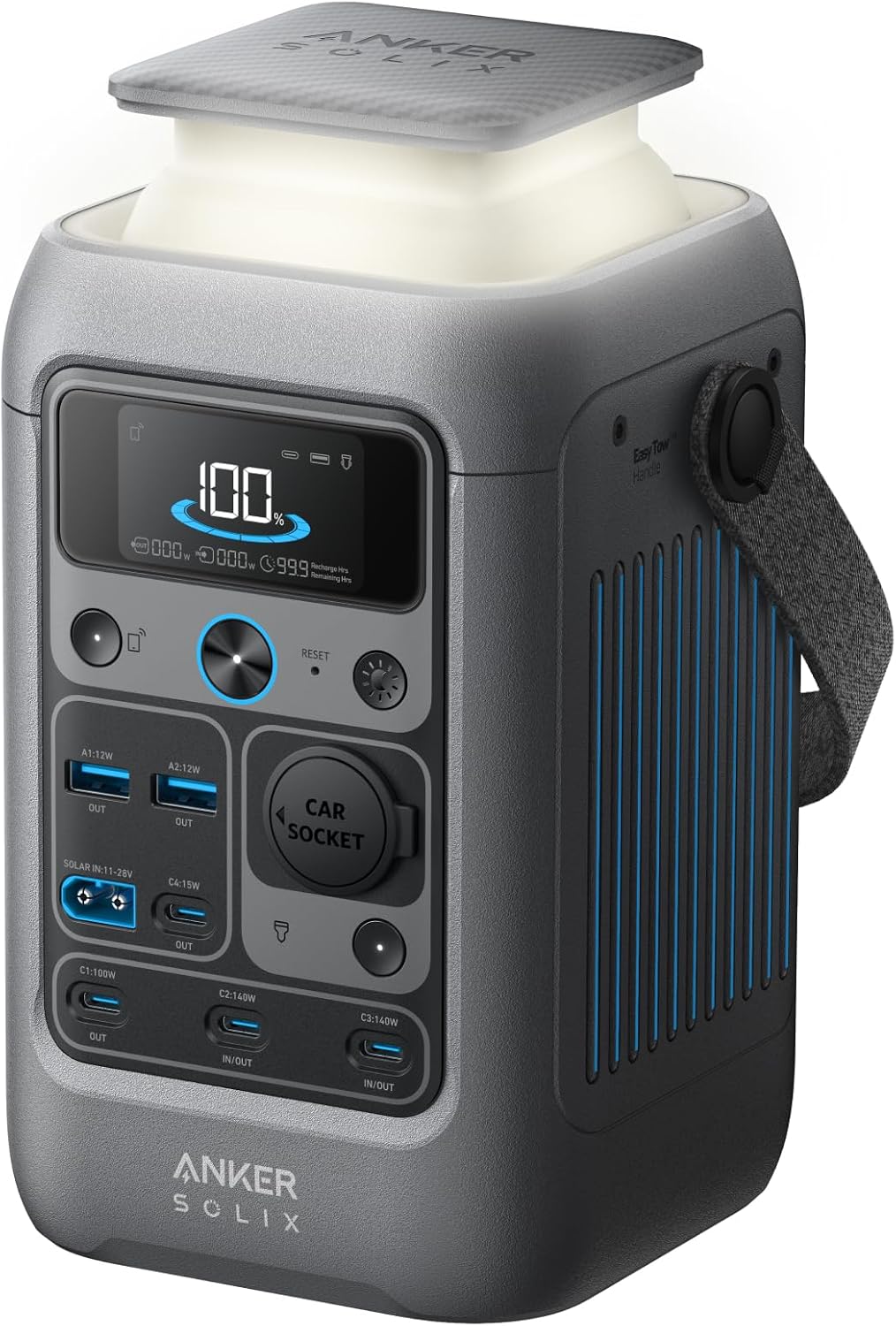
Anker SOLIX C300 DC
The same 288Wh DC-only idea with seven ports and a pop-up camp light — easier group charging, a little more weight, and no wall charger in the box
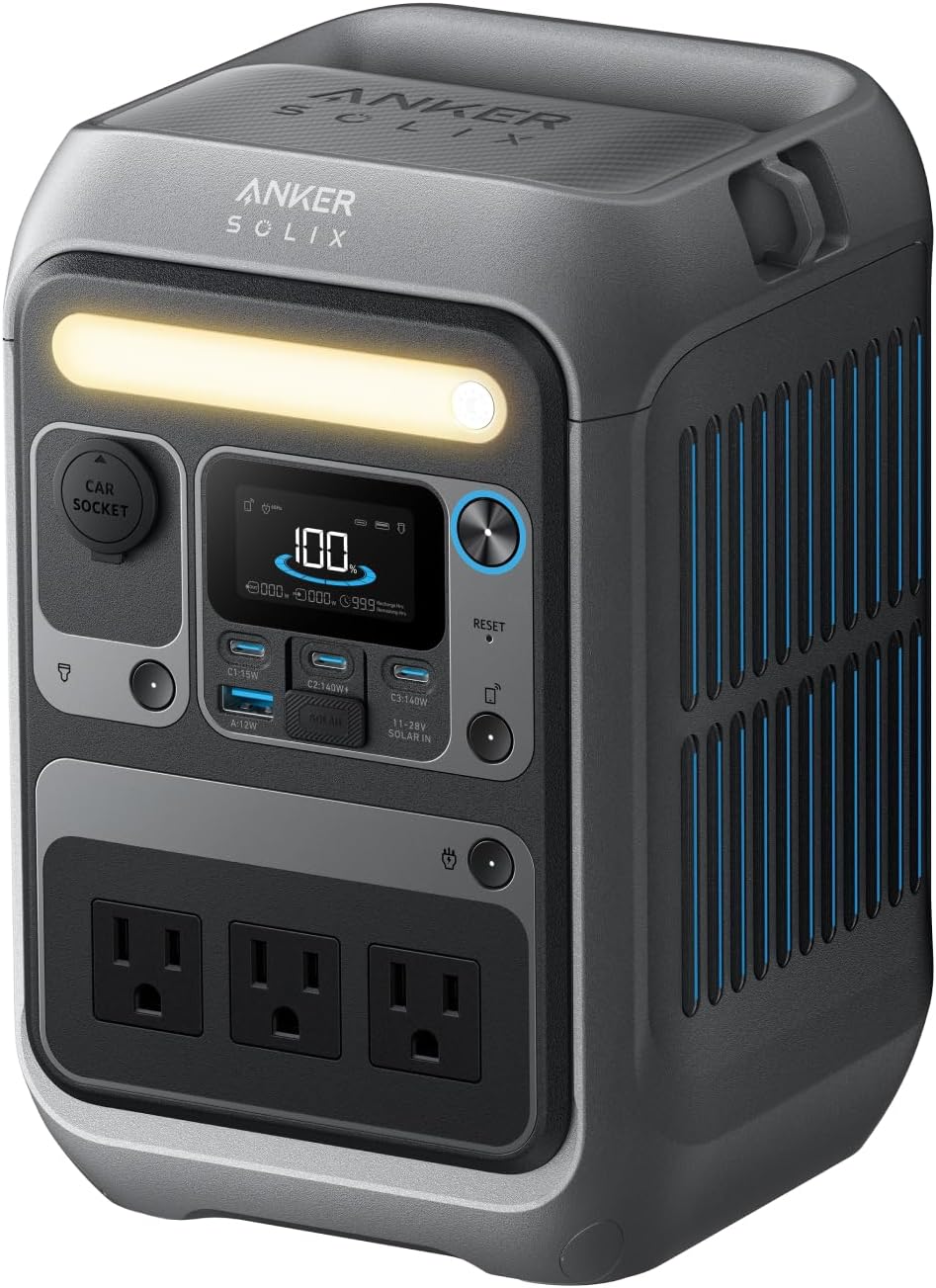
Anker SOLIX C300
The AC twin: the same battery class with three AC outlets and a light bar, so plug-in gear still works — at roughly 9 lb, the heaviest here
Prices and availability may vary — tap any product to check the current listing.
What to Look For in a Portable Power Station for Camping
Most small stations compete on a spec sheet. This one competes on an omission. Judging it means judging whether the omission helps your actual trips, so the criteria below start with the trade itself and work down to the details that decide a weekend.
The Missing Inverter Is the Whole Decision
An AC outlet needs an inverter, and an inverter is heavy, hungry electronics. It converts battery DC into wall-style AC, loses a slice of energy as heat while doing it, and keeps sipping power whenever it sits switched on. Remove it and three things happen at once: the box gets lighter, standby drain drops, and every watt-hour you spend on a DC load arrives undiminished.
That is the honest case for the TRAIL 300 DC. Nothing about it is magic. EcoFlow simply refused to pay the inverter tax on behalf of campers whose phones, laptops, lights, and fridge never asked for AC in the first place.
The counter-case is just as plain. One load that only accepts a wall plug — an older CPAP brick, a mains-only projector, an electric blanket without a 12V version — turns a DC-only station into a spectator for that load. Adapters cannot invent an outlet. Shoppers weighing a conventional portable power station against this design should list their loads before they compare a single number.
Usable Capacity, Not the Printed 288Wh
Battery labels describe storage, not delivery. Electronics, cabling, and the device at the other end all take small cuts, so plan on noticeably less than 288Wh reaching your gear across a trip. DC delivery keeps those cuts small, which is the quiet advantage here: a USB-C laptop charge or a 12V fridge run skips the double conversion an AC station performs twice.
Translate that into nights. A couple of phones, a camera, a laptop top-up, and lights for two evenings fit comfortably. Add a 12V fridge cycling through a warm day and the same battery becomes a one-night device unless the sun helps. Capacity in this class buys evenings, not days, and pretending otherwise is how people end up rationing by flashlight.
Port Mix Decides What Charges Fast
Two stations can both claim 300W and behave nothing alike. The TRAIL spreads its output across two USB-C ports rated up to 140W each, two low-wattage USB-A ports, and a 12V car socket. That top USB-C figure matters because modern laptops sip happily at high USB-C wattage; a weak port turns an overnight charge into a half charge.
Look closer and the compromises show. USB-A here is token power, fine for a headlamp or an old phone, useless for anything impatient. Five ports also means five simultaneous promises the 300W ceiling cannot all keep — plug everything in at once and the station divides, not multiplies. The Anker rival in the comparison below answers with seven ports, which helps groups and changes nothing about the shared ceiling.
Recharging Is Slow by Design
Small DC stations refill through modest doors. The TRAIL accepts solar input only in the low hundred-watt range, plus car charging and USB-C charging. A folding panel in honest sun therefore restores a useful chunk across a long afternoon, not a full battery between breakfast and lunch. Cloud, shade, and a lazy panel angle shave that further.
Set expectations accordingly. This class tops up overnight loads; it does not harvest like a basecamp hub with a big input ceiling. Campers running foldable solar panels should size the panel to the station’s cap rather than their optimism, because watts the station cannot accept are watts you carried for nothing. Drive days help more than people expect, since a few hours of car charging quietly replaces an evening of lights and phones.
Weight You Feel, Not Weight on a Chart
At roughly 5.7 lb, the TRAIL weighs about half what the AC version of this battery class weighs. That gap sounds abstract in a product listing. It stops being abstract at the end of a trail, on a bike, or in the fourth trip between car and picnic table.
Half the weight also changes where the station lives. It fits in a tote with the kitchen kit instead of demanding its own carry. It rides in a kayak hatch. It goes on trips a 9 lb box gets left behind from, and a station left at home has a capacity of exactly zero. Portability is a spec. It just refuses to sit still in a table.
If even a 5.7 lb box is more than your day kit wants, the smaller Anker SOLIX C200 DC cuts the same idea down to 192Wh and about 4.2 lb — and deletes the car socket too, so the step down only works for pure USB kits.
Idle Draw and the Overnight Test
Every switched-on station spends some power on itself. Inverter models spend the most, paying a continuous toll to keep AC available. A DC-only design pays a smaller toll, mostly for its display and control electronics, so a fridge or a CPAP-style DC load running overnight keeps more of the battery for itself.
Nobody markets this number. It still decides whether the fridge is cold on the third morning. Shoppers comparing runtime claims across brands should mentally tax AC stations harder for overnight duty, then forgive the DC boxes their smaller batteries a little. Efficiency is boring. Cold food is not.
Matching a DC-Only Station to Your Situation
Specifications sort products. Situations sort people. Three profiles cover most buyers circling this size class, and each one lands on a different answer.
The trail-leaning camper. Your kit is a phone, a headlamp, a camera, maybe a laptop you pretend is for editing photos. Everything charges from USB-C, and your tent site sits a walk from the car. For you, the TRAIL 300 DC is the rare product that removed the right thing. An inverter would be dead weight with a standby habit.
The car-camping family. Loads multiply fast: two phones, a tablet for the kids, a string of lights, a 12V fridge in the trunk. You are still an all-DC household on wheels, but ports become the bottleneck long before capacity does. The Anker SOLIX C300 DC, with seven ports and a pop-up lantern on top, fits this chaos better, even at a touch more weight. One honest warning rides along: it ships without a wall charger, so your first charge borrows a USB-C charger you already own.
The one-AC-load camper. Somewhere in your kit sits a device with a wall brick and no DC alternative you trust. Perhaps it is medical. Perhaps it is a projector for movie night and you refuse to apologise for that. Either way, your answer is the Anker SOLIX C300 in its AC form: same battery class, three real outlets, roughly 9 lb. Heavier, yes. Also the only one of the three that runs your whole list.
Three Tiers in the Small Camping Power Class
Three products share this battery size and split on one question: what form should the power take when it leaves the box? The table keeps the contrast honest, and the sentences under it say what the cells cannot.
| Type/Tier | Best For | Price Tier | Key Feature | Watch-Out |
|---|---|---|---|---|
| DC-only light (EcoFlow TRAIL class) | Trail-leaning campers with all-USB kit | Mid-range | 288Wh at about 5.7 lb, two 140W USB-C ports, 12V socket | No AC outlet at all, and solar input is capped low |
| DC-only port-rich (Anker C300 DC class) | Families and groups charging many devices | Mid-range | Seven ports plus a pop-up lantern, dual USB-C input | No wall charger in the box; some own-brand panels don’t fit |
| Compact AC (Anker C300 class) | Campers with at least one plug-in load | Mid-range | Three AC outlets and a light bar in the same battery class | Roughly 9 lb, and the inverter taxes overnight DC loads |
The EcoFlow tier wins trips measured in footsteps, because its savings show up in your shoulder before they show up in any runtime chart.
Anker’s DC tier wins trips measured in devices, since seven honest ports end the nightly negotiation over whose phone charges first.
The AC tier wins trips measured in exceptions — the single plug-in load that would otherwise veto the entire DC idea.
A Weekend Tent Trip on USB Power Alone
Picture two nights at a walk-in site. Phones charge while dinner cooks, a headlamp tops up from the weak USB-A port, and the laptop gets one proper 140W session for the drive-home playlist admin nobody admits to doing. A rechargeable camping lantern handles the table light so the station never wastes output on illumination. In this script the TRAIL finishes Sunday with charge to spare, and its low idle draw is part of why — the box spent the weekend feeding loads, not itself.
Stretch the same trip to three nights and the arithmetic tightens. Nothing about the station changes; your appetite does. A modest panel across the sunny hours is the difference between comfort and rationing, and this is where the low solar cap starts to argue back.
Running a 12V Fridge and Lights From DC
A 12V fridge is the DC-only concept’s favourite load. It plugs into the car socket, cycles on and off, and never asks for an inverter. Run lights from USB and the whole campsite lives on native DC, which is exactly the diet this battery was built to serve.
Heat writes the real budget, though. A fridge in a sun-baked vehicle works far harder than one in shade, and its overnight draw can double between a cool mountain night and a desert afternoon. Pre-chill everything at home, park with the fridge side shaded, and keep the lid shut. Habits beat watt-hours. They are also free.
When One AC Load Ruins the Plan
Now add a single awkward device. A mains-only CPAP brick. A projector. An older camera charger with a proprietary plug. The DC station does not run it badly; it does not run it at all, and no cable in your bag changes that sentence.
This scenario is the entire reason the AC version exists in the comparison. Buyers discover their veto load in one of two places: a calm evening at home with a notebook, or a dark campsite with a dead device. Only one of those evenings is funny later. Audit first, while the stakes are theoretical.
Common Mistakes Buyers Make With DC-Only Power
Assuming an adapter will fix a wall plug. A plug shape is not the problem; the power format is. If a device needs AC and the station has no inverter, the conversation ends there. Check every brick you own, including the boring ones in the drawer.
Buying the panel before the input cap. A big folding panel looks productive and clips down to whatever the station accepts, which here is a modest figure. Money spent past the cap buys a heavier walk, not a faster charge.
Ignoring the missing wall charger. Anker’s DC model arrives without one, expecting your existing USB-C charger to do first-charge duty. That is reasonable and still catches people at 9 p.m. before a trip. Open the box the day it arrives, not the night before.
Treating 300W as 300W per port. The ceiling is shared. Two hungry laptops, a fridge, and lights together will negotiate down to what the battery can give, and the negotiation is not democratic. Feed the fridge from 12V, stagger the laptops, and the system behaves.
Why, How and What
Why does deleting the AC outlet make the station so much lighter?
Because the inverter is not a socket; it is a chunk of power electronics with cooling, shielding, and the structural support to survive both. Its supporting cast adds weight even before the battery grows to feed it. Removing the whole assembly lets the case, handle, and battery shrink around a simpler job, which is why the saving compounds instead of stopping at one component.
How do you recharge a station that has no wall plug of its own?
Through the same DC doors it uses for everything else: USB-C from a charger you own, a 12V socket while driving, or a folding panel in sun. Each route is slower than a big station’s wall intake, so DC campers build the habit of arriving charged rather than planning to refill on site. A long drive day doubles as a charging day. A sunny lunch does more than people expect.
What can 288Wh actually run across one night?
Phones several times over, a laptop once with room to argue, lights all evening, and a 12V fridge through the night in mild weather — pick most of that list, not all of it at maximum. The honest unit here is the evening, not the appliance. Shoppers who budget by evening rarely run dry; shoppers who budget by spec sheet meet the low-battery warning personally.
Questions People Ask Before Buying
Real buyer questions, straight answers
Is a DC-only power station actually worth it?
Yes — if your whole kit already runs on USB or 12V, DC-only is worth it. You trade an outlet you never use for roughly half the weight, lower standby drain, and cleaner delivery to the loads you do run. The deal collapses the moment one essential device needs a wall plug, because then you have bought a battery that watches. Audit your bricks first; the answer lives there, not in the spec sheet.
EcoFlow TRAIL 300 DC or Anker SOLIX C300 DC — which one should I pick?
Pick the EcoFlow for weight and the Anker for ports. Both store the same 288Wh and cap output at the same 300W DC class, so the choice is about shape, not power. EcoFlow is the lighter carry with two strong USB-C ports. Anker answers with seven ports, a pop-up lantern, and dual USB-C input — but no wall charger in the box and a solar connector that rejects some of the brand’s own small panels.
Can it run a CPAP machine overnight?
Only if your machine runs from DC — check before you buy. Many travel CPAP setups accept a 12V or USB-C power route, and for those the efficient DC delivery here is a genuine advantage across a night. A machine that only takes a wall brick will not run at all, full stop. Heated humidifiers also drain any battery in this class quickly, so test your exact setup at home first.
How long does 288Wh last at a campsite?
Plan on one to two evenings of typical device duty per charge. Phones, lights, a camera, and a laptop session fit easily; a 12V fridge in hot weather can claim most of the battery by itself overnight. Solar top-ups during the day stretch the same box across a long weekend, provided the panel hours are real sun and not wishful thinking. Heat and fridge duty shrink every estimate in this class.
Should I just buy the AC version to be safe?
Buy the AC version only if you can name the AC load it protects. Insurance you can name is planning; insurance you cannot name is 3 extra pounds. Campers with a genuine plug-in device should absolutely take the C300 with outlets and stop worrying. Campers buying outlets for a hypothetical gadget are paying a weight and idle-draw tax on every trip to protect a device that does not exist.
The closest rival in this compact, DC-first class is Anker’s compact SOLIX C300, which takes a similar packable approach for small loads.
Frequently Asked Questions
Can I charge it from my car while driving?
Yes. The 12V route refills the battery steadily on a drive, which suits how this class gets used: top up between sites rather than resurrect from empty. A few hours behind the wheel typically replaces an evening of lights and phone charging. Check your vehicle’s socket rating, and remember the engine-off drain on your starter battery is your problem, not the station’s.
Does it work with any folding solar panel?
Most panels with a compatible connector and a voltage inside the station’s input window will work, but the fit is electrical, not just physical. Anker’s DC model carries a documented quirk: some of that brand’s own small panels are listed as incompatible, so check the maker’s list rather than assuming siblings get along. Panel wattage past the input cap is wasted either way.
Can I use it while it is charging?
Yes, pass-through use is normal in this class, and camp life basically demands it — the panel sits in the sun while the fridge keeps cycling. Heat is the caveat. Hard charging plus hard discharging in a hot tent ages any battery faster, so give the box air and avoid cooking it inside a closed vehicle at noon.
Is 140W USB-C enough for a gaming laptop?
For charging and ordinary work, generally yes; under a full gaming load, a hungry machine can still outpace the port and drain slowly while plugged in. That is a laptop problem wearing a battery costume — the same machine does it on many wall chargers. Writers, photographers, and spreadsheet campers will never notice the ceiling. Competitive gamers at a campsite have chosen an interesting life.
How long will the battery last before it wears out?
LiFePO4 chemistry in this class is rated for thousands of cycles before capacity fades noticeably, which translates to years of weekends rather than months. Heat, constant fast charging, and storage at a full charge age it faster than use does. Stored part-charged in a cool place and cycled normally, the battery should outlast the strap, the display, and your current tent.
What happens if I buy the DC model and later get an AC device?
Nothing retroactive fixes it. You would add a small separate inverter or a second station, which is exactly the clutter the DC-only choice was meant to delete. That risk is why the load audit matters more than any other step in this guide. One honest list, written at home, protects the whole experiment.
Key Takeaways
The TRAIL 300 DC stores 288Wh of LiFePO4 and skips the inverter entirely, landing at roughly 5.7 lb — about half the AC version’s weight in this class.
No inverter means no inverter idle draw and no double conversion on DC loads, so overnight fridge and device duty keeps more of the battery.
Five ports with two 140W USB-C outputs cover modern kit well; the low-wattage USB-A ports are for headlamps and leftovers, not laptops.
Solar input is capped in the low hundred-watt range, making this a top-up device for weekends, not a basecamp solar hub.
Anker’s C300 DC matches the battery and output while adding ports and a pop-up lantern — and ships without a wall charger.
One genuine AC load vetoes both DC models; the C300 with outlets is the honest answer for that kit list.
Audit every wall brick you own before ordering, because the right answer is sitting in your gear drawer.
Decision Tree: Which Station Fits You?
Everything you run charges from USB-C or 12V and the site is a walk from the car → EcoFlow TRAIL 300 DC
Your group charges six or more devices a night and fights over ports → Anker SOLIX C300 DC
A 12V fridge anchors your campsite and weight still matters → EcoFlow TRAIL 300 DC, with a modest panel for day three
One device you refuse to leave behind has a wall brick → Anker SOLIX C300 (AC version)
Your trips are drive-to sites with movie nights and mixed gear → Anker SOLIX C300 (AC version)
You want a solar hub for a week-long basecamp → none of these; step up to a larger station class
Final Recommendation
For campers whose kit has quietly gone all-USB — and most modern kit has — the EcoFlow TRAIL 300 DC is the pick, because it stops charging you weight and standby power for an outlet you never touch, and it spends its 288Wh on loads instead of on itself. Groups should take the Anker SOLIX C300 DC for its ports and lantern, accepting the missing wall charger as a one-time errand.
Choose the AC version of the C300 when one real plug-in load anchors your trips, and choose it without guilt; an inverter you use beats an omission you regret. The category’s mistake was never building DC-only stations. It was selling inverter stations to people whose entire life already ran on USB — and this is the correction.
Compare Top Small Portable Power Stations for Camping
Three 288Wh stations side by side — two drop the AC outlet to save weight, one keeps it. The right pick depends on whether anything you own still needs a wall plug.
EcoFlow TRAIL 300 DC
288Wh, DC-only and about 5.7 lb — the lightest real power station here, with two 140W USB-C ports and a 12V car socket, and no AC outlet at all
Anker SOLIX C300 DC
The same 288Wh DC-only idea with seven ports and a pop-up camp light — easier group charging, a little more weight, and no wall charger in the box
Anker SOLIX C300
The AC twin: the same battery class with three AC outlets and a light bar, so plug-in gear still works — at roughly 9 lb, the heaviest here
Prices and availability may vary — tap any product to check the current listing.
Affiliate Disclosure: This article contains affiliate links. If you buy through one of these links, we may earn a commission at no extra cost to you.